
The player brings
Purpose and method
What should change? What does this person actually do to change it?
 Roadmap →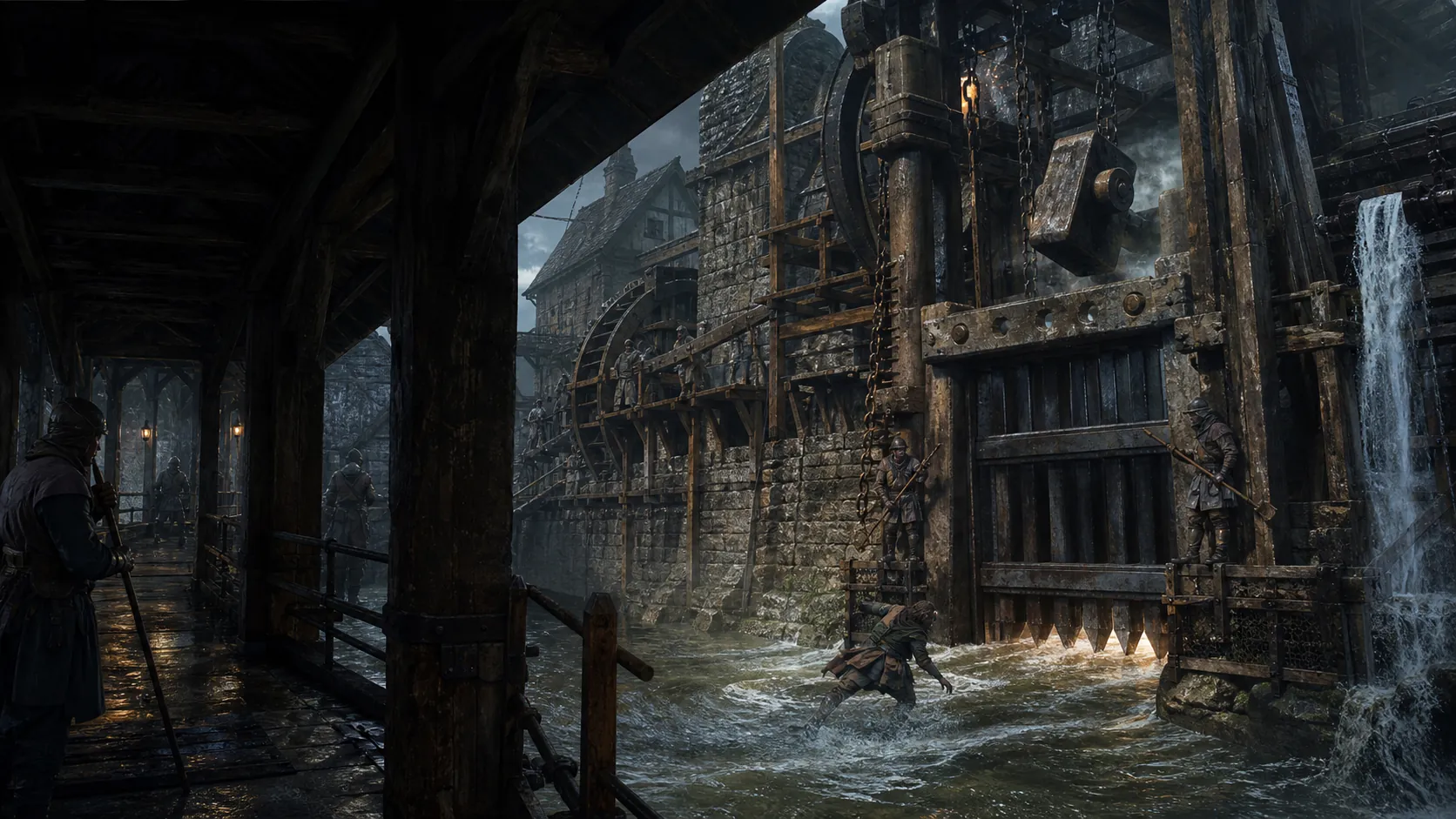
How TREADBOUND plays
You speak naturally to a connected AI Tread Master. The Chronicle Engine beneath that conversation constrains resolution, preserves what changed, and leaves your next choice open.
Evidence boundary: this page describes the governing play design, not a claim that the current Founder Alpha build meets every part of it. A build is credited only with what an installed player walk has shown.
The AI-run game loop
Every human participant is a player. You describe what your character wants and how they pursue it; the connected AI interprets the living situation through the Engine. Human Tread Master operation is not an alternate mode because the role depends on hidden state, durable records, and constrained resolution working together.
The player brings
What should change? What does this person actually do to change it?
The AI Tread Master brings
The AI narrator presents established truth, proposes bounded scene detail, and portrays what pushes back—without deciding what players choose or exposing what their characters cannot know. The Chronicle Engine validates what becomes authoritative.
The Chronicle keeps
What changed, who knows, what it cost, and which possibilities now exist?
One action, end to end
This example comes directly from the Player’s Handbook. No engine vocabulary is needed to follow it.
The situation
Orra needs to cross a watched mill floor and reach the lever before the guards shut the only open route.
The intention
That tells the table what Orra wants to change. It does not yet say how she makes the attempt.
The method
Orra crosses beneath the drive machinery while its stroke masks her steps, then climbs above the guards’ usual sightline.
The honest answer
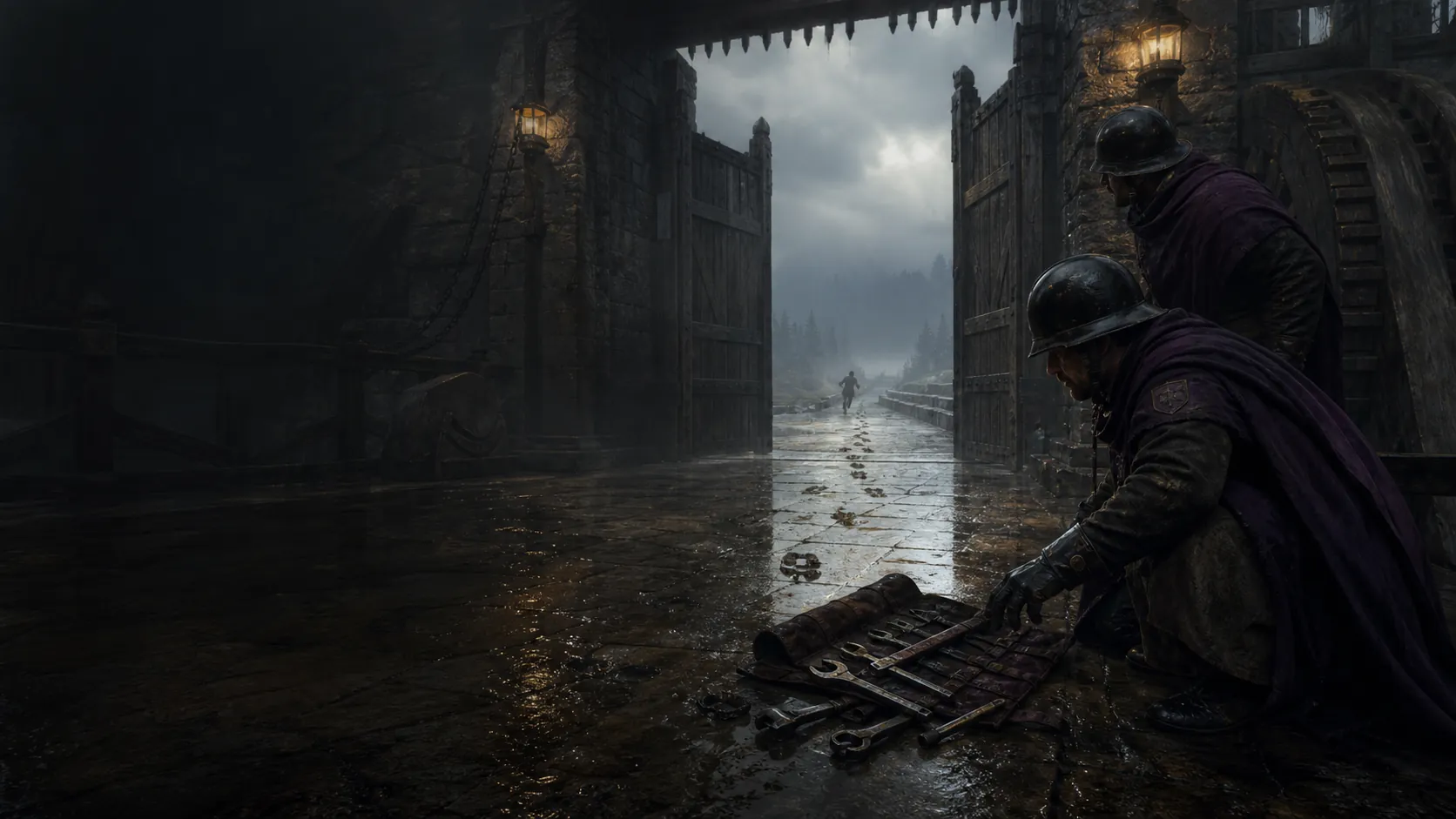
Her tunnel experience helps. The moving brace, unfamiliar machinery, guards, and short time resist. She reaches the lever, but drops her marked tool roll.
What the world remembers
The gate is open. The route is exposed. Orra has lost her tools, and their guild marks may tell the guards who passed through.
Why this matters
The Engine does not write the next scene or choose Orra’s response. It prevents the table from forgetting the open gate, exposed route, missing tools, and identifying marks. Those truths make every next option more specific.
When chance enters
A percentile draw is reserved for a transition where success and failure are both plausible and the difference matters. The AI Tread Master fixes the method and stakes; the Chronicle Engine compares effective Competence with Difficulty and makes one immutable d100 draw.
An impossible method cannot become possible through luck.
A clear answer does not become uncertain merely to create a roll.
Competence and Difficulty set a target from 5 to 95, in steps of five.
The distance between target and draw gives the degree of achievement or denial.
The player experiences the fictional consequence. The AI and Engine handle placement and resolution; no human player calculates or chooses the result. See a numbered example →
What makes it different
Rules remain firm, but they stay attached to the person, method, place, evidence, and consequence that give them meaning.
Your history supports what you know, what you carry, and which learned methods you can rely on. There are no levels or six-score build array.
Evidence, authority, trust, leverage, stealth, force, and retreat do not meet the same resistance or expose the same consequences.
If the established world makes the answer clear, it simply happens—or cannot happen. Uncertainty is resolved only when both outcomes are plausible and the difference matters.
Failure says what happened to this method in this moment. It cannot invent an unrelated punishment or secretly prove a new fact about the whole world.
A route, rumor, secret, or discovery is known by particular people for particular reasons. Unknown truth stays unknown until real evidence makes it available.
Promises, injuries, access, debts, discoveries, danger, and changed relationships remain true. They create what happens next without deciding what players must choose.
From shorthand to action
Familiar shorthand is welcome as a starting point. TREADBOUND follows it with the question that makes the choice belong to this person and this moment.
When a fight begins
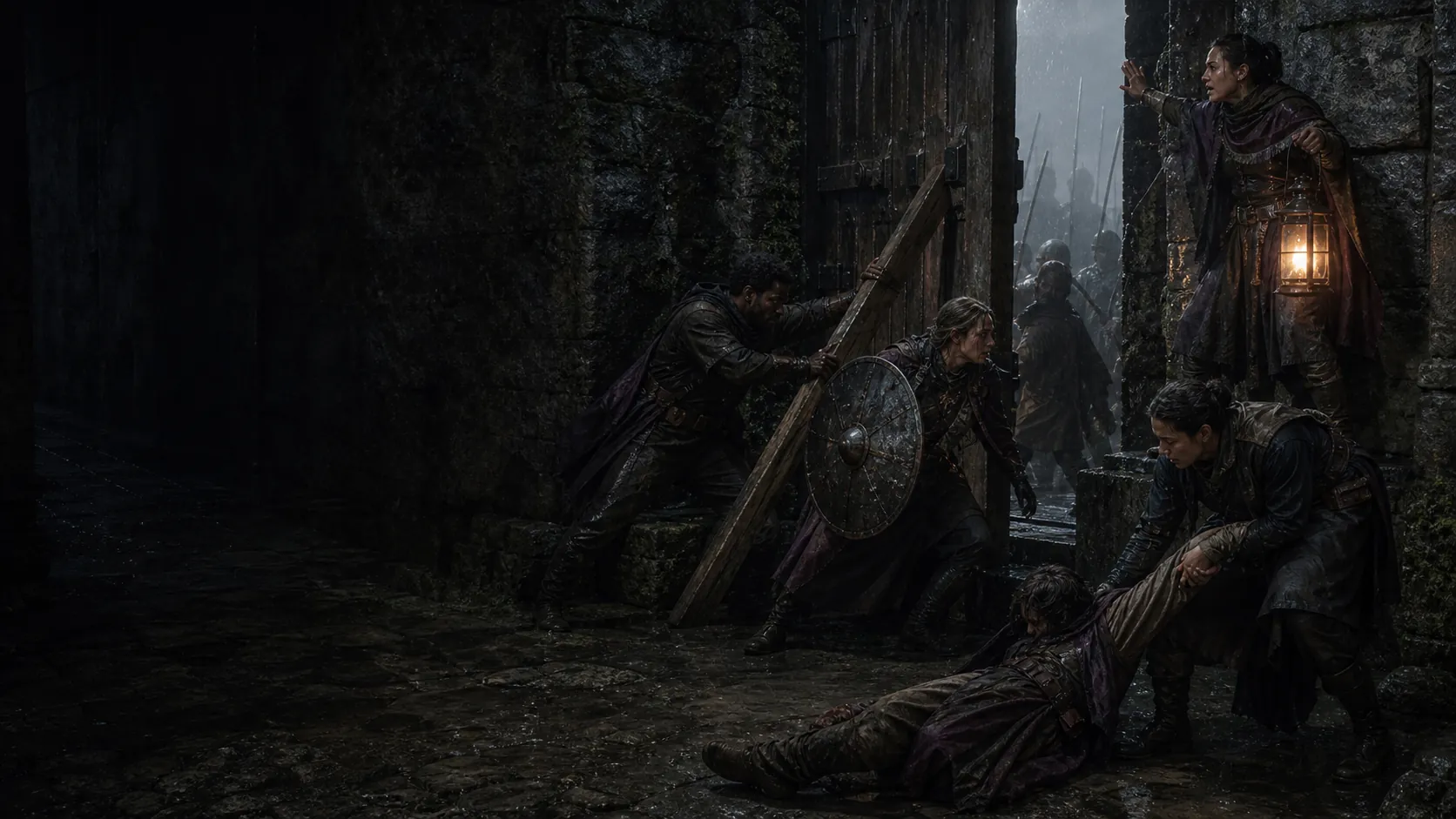
There is no initiative order, action economy, or grid to learn. A fight uses the same grammar as travel, negotiation, and discovery: state the intent, declare the method, face established resistance, and let the consequence land. Company action, footing, light, a closed door, a debt called in, or leaving may matter more than a blade.
Read Competency and ActionChoose your next question
I want to make a character
Character Discovery starts with identity, history, relationships, wants, and evidence—not a class package or point pool.
Start Character Discovery →I want to understand the AI
The public AI-facing guide explains how the Tread Master presents truth, protects player purpose, and operates without steering toward a preferred plot.
Open the AI reference →