

People, not encounter roles
The Peoples of the Tread
In this section
The first seven are playable Lineages; Underfolk and Bloomkin widen the shared world beyond them.
On this page 10 topics
I have kept this ledger for forty years and I have never once written down a person's people without being corrected by somebody. Usually by the person. — a harbor-reeve of the Sunken Coast, in the preface to her own tally
Everyone here is a people. Their presence in a Bestiary does not reduce them to anatomy, ancestry, or encounter role, and nobody on a Wanderer sorts their neighbors by whether a player may choose them.
The Player's Handbook covers what it is to be one of the first seven: what you inherit, what it looks like, how long you live, what it does and does not grant you, and — the part this book leans on hardest without restating — where each people says it came from.
Those accounts and the quarrels between them are canon. The Companions made to walk beside the Wanderers; the Protectors shaped from a titan's flesh; the Makers cut from its bone to supply the Protectors with tools; the one people who claim no maker at all and say so with relish. The disagreement is not a gap waiting to be closed. It is the established state of the question, and no account here or in the Handbook resolves another.
This Part does not repeat them. It is about how these peoples actually live — what they do for work, what they build, who they need, who needs them, who they marry, what they get wrong about each other, and what the rest of the Tread gets wrong about them. Which means it records what living with those accounts does to people: whose story offends whom, who has to be polite about it at a guild table, and which four-hundred-year-old insult still lands.
Where an entry below refers to the bone story, or to a people who were never made, that is the Handbook's ground and the argument is worth reading there first.
Prejudice here is social and specific. It is also real, particular, and has a history, and this book records it as a fact about societies rather than as a fact about blood.
Each of these is a region of possibility, not a culture. Two things follow, and they are the reason this Part is written the way it is:
- One people, radically different civilizations. The Stonekin below span a ridge aristocracy, a Deep salvage people, and a wandering guild that holds no territory at all. No single "Stonekin culture" survives that span, and the same is true of every people here.
- Similar lifeway, unrelated peoples. A ridge-citadel lifeway arises among Stonekin by craft, Tuskborn by frontier strength, and a height-adapted people by body. Lifeway is a solution to a situation, never a property of blood.
For playing any of the first seven, see Player's Handbook, Chapter III — The Seven Lineages.
#1a. How descent and belonging are reckoned
Before any entry below will make sense, one thing has to be said plainly, because it is the single most common mistake outsiders make about the Tread:
Lineage, descent, and belonging are related, but they are not the same record. Mixed heritage is the ordinary case rather than the exception.
In the Player's Handbook, Lineage establishes a body and inherited possibility. It does not change when a person joins a guild, is adopted into a house, or takes an oath. Communities also reckon family, legal descent, obligation, and belonging, and those records carry real consequences without becoming a second Lineage.
A traveler who assumes that every answer about a person's people names their embodied Lineage will misread nearly every household they enter. At least six ways of reckoning descent and belonging are in ordinary use, often two or three of them at once in the same settlement:
By blood, the familiar case, and still argued over. Who counts as issue, whose household claims a child, and what rights follow either parent are settled differently street by street. Embodied Lineage may follow this record, but the two are not synonyms.
By cohort. Where reproduction runs with a Wanderer's long seasons, or with a Convergence, children arrive in bands rather than in a trickle. A whole peer-cohort is born together, ages together, marries together and buries together. In such places "what year are you" is a more useful question than "who are your parents", and a person orphaned out of their band is considered to have lost something a household cannot replace.
By covenant. Belonging conferred by oath, apprenticeship, or rite and chosen and maintained rather than inherited. This is not a courtesy or an adoption-of-convenience. In the guild-lines it is the primary social and legal reckoning: a mason taken in at fourteen enters Stonekin guild descent, including inheritance, obligation, burial, and the answering. Their embodied Lineage does not change.
By institution. Where the young are raised by a body rather than a household from birth, so that family means something structurally different and a person's kin are their year and their house.
By place. Some inheritance follows being born somewhere, or being exposed to something, rather than following a parent at all. The Emberkin and the Wyldtouched are the anchors of this pattern. What is actually being passed — body, spirit, or some relationship the Tread has no word for — is exactly the thing nobody can answer.
By several, disagreeing. The one that most rewards attention. A community may track who-you-are by craft-line, covenant, migration-cohort, household, and embodied Lineage at once — and the records can produce different answers about the same person without giving that person two Lineages. A woman may be Hearthborn in Lineage and Stonekin by the guild that raised her. Both records are correct, and which one is read out depends entirely on which door she is standing in and what the question is asking.
That is not an edge case. In any settlement of size it is a substantial minority of the population, and among humans — who are everywhere, and who marry everyone — it is close to the majority.
What embodied Lineage a mixed child inherits is not predictable. Where a people's inheritance is placed rather than bloodborne, it may arrive, arrive faintly, arrive late, or not arrive. Two children of the same parents may differ. Their household, cohort, covenant, and legal descent may still name them differently. Families with long experience of this have vocabulary for it that outsiders find blunt, and communities without that experience tend to make a great deal of noise about a thing the family concerned regards as ordinary.
#2. Wyldtouched
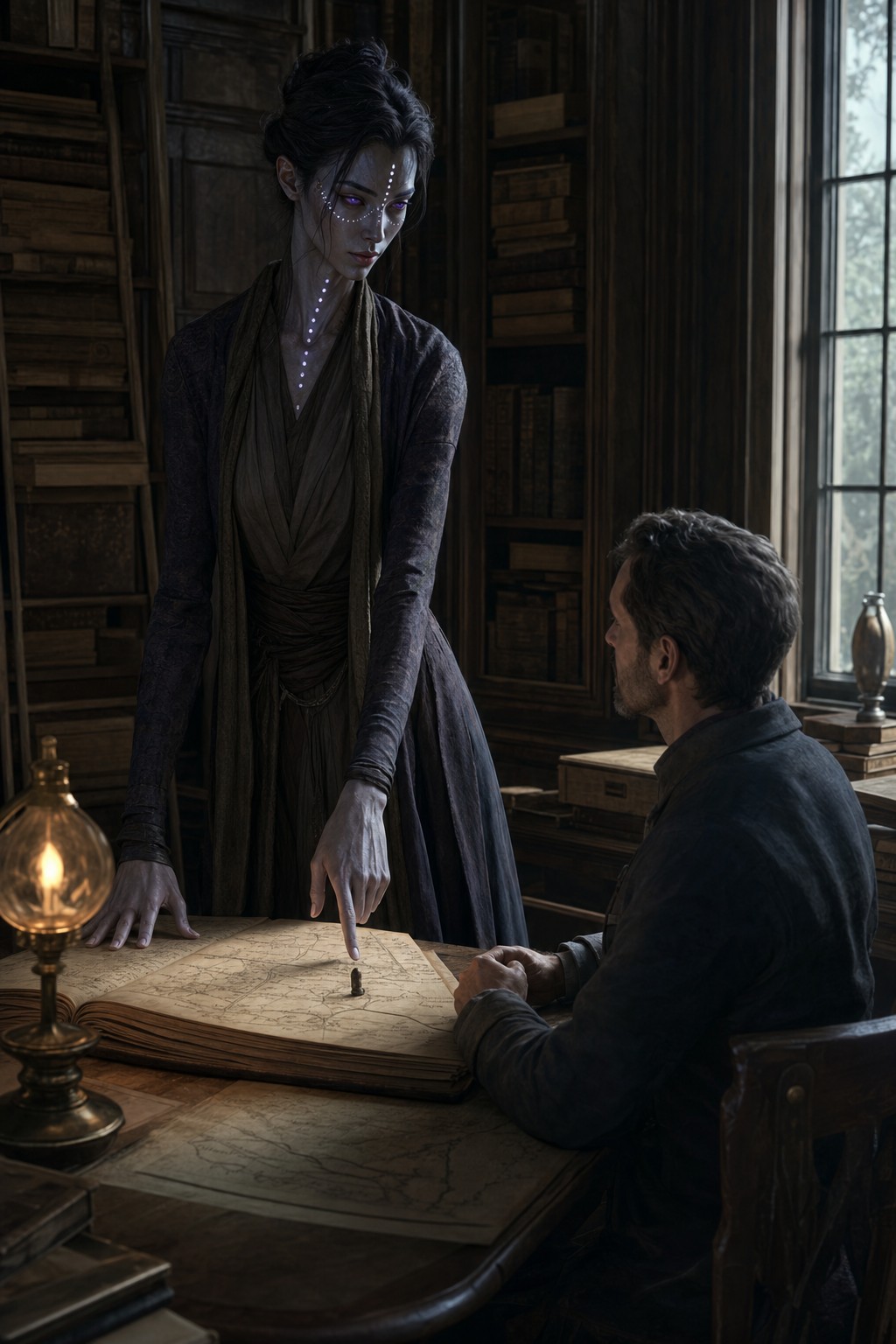
She showed me the ledger her house has kept since before the settlement had a name. Her own hand appears in it four times, in four different centuries, and the writing does not change. — a Sagebound archivist, on being refused access to the rest
The problem of the long branch. A Wyldtouched who marries outside their people — which is most of them — will bury that spouse, and then their children, and then their children's children, and go on. Wyldtouched households handle this by not pretending otherwise. A house of any age keeps its line in two registers: the long branch, meaning those who will still be here in three centuries, and the short branch, meaning everyone else. It sounds cold read aloud by an outsider. Inside the house it is the opposite: the short branch is the part that gets the attention, because the attention has to be spent now.
Most Wyldtouched of any age have raised somebody else's grandchildren. A great many have inherited a house they never wanted from a family that has otherwise ended. The Tread has an entire class of enormous, half-occupied, meticulously maintained old buildings for precisely this reason, and their owners are not sentimental about them so much as unable to be the one who lets them go.
Work. The obvious answer is the archives, and it is only half right. Wyldtouched do keep records, and keep them better than anyone, but the reason is not scholarship — it is that a person who remembers the last four times a thing was tried is useful, and settlements pay for it. A Wyldtouched of two hundred years is a walking precedent. Guild arbitration, land disputes, boundary law, treaty custom, and the maddening business of settling what a Convergence agreement actually said last time are all trades that quietly fill with them.
The other trade is the Depths boundary, and it is a matter of some bitterness that it fills with them too — see below.
Who they live beside. The working relationship at the Depths threshold is with Underfolk, and it is old, unequal, and genuinely warm at the level of individual crews. Both peoples end up at the same doorways for different reasons, and boundary settlements are full of Wyldtouched-Underfolk partnerships that have outlasted the institutions that licensed them. The Stonekin are a different matter: the Wyldtouched archives claim the Stonekin were made from Wanderer bone, and the Stonekin do not care for that story or for the people who keep telling it.
Being read as an omen. Everyone knows the Depths-stirring superstition. What the entry above does not convey is how practically it lands: not as pogroms, but as the small constant friction of being asked to leave a common room when the ground shifts, of being the last hired in a bad season and the first suspected in a strange one. Some settlements do the opposite and hold that a Wyldtouched at a delving is good fortune, which is equally untrue and considerably more comfortable to live inside.
Where they are not. Wyldtouched are rare almost everywhere and absent from a good many Wanderers entirely. On a titan without them, the omen stories persist anyway, attached to nobody — which is its own small evidence about where such stories come from.
#3. Emberkin
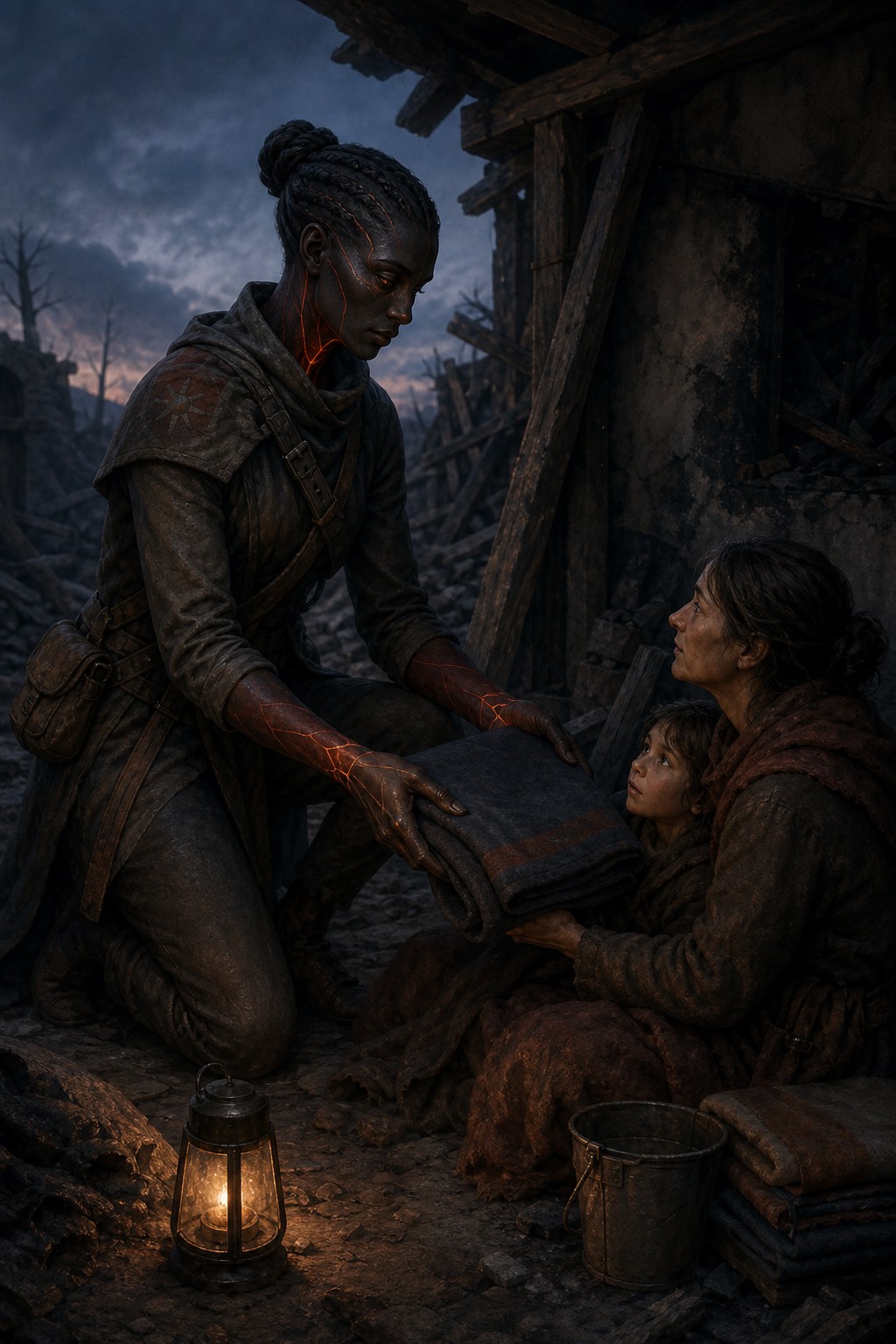
There is no Emberkin nation, and there never has been. The unit is the family.
This is the single fact that reorganizes everything else about them. What an Emberkin inherits differs from family to family — some mark, capacity, tendency, or susceptibility that is theirs and not the people's — so there is no shared trait to build a nation around, no common ceremony, and no center. What exists instead is several thousand houses, each with its own inheritance, its own account of what that inheritance is for, and its own quarrel with the house two valleys over about whose account is the older.
Marrying an Emberkin therefore means marrying into a specific house, and the house will tell you, at length, what that entails. A person who says "my wife is Emberkin" has said almost nothing. A person who says "my wife is of the Vennhold Emberkin" has said a great deal, at least to anyone within four hundred miles of Vennhold.
They turn up. When something goes wrong on the Tread — a collapse, a fire that jumps a firebreak, a season of bad water — Emberkin arrive. Not all of them, and not organized, and frequently not welcome. They take it personally, as a people, in a way that no amount of explaining seems to dislodge, and the consequence is a wildly disproportionate presence in every dangerous profession the Tread has: shoring crews, firebreak wardens, plague nursing, the people who go into a settlement that has stopped answering.
Some of them resent this bitterly. A young Emberkin who wants to be a baker and is treated as a disappointment by their own house is a very ordinary story, and "protector" is a word with a weight on it that the Handbook's summary cannot carry.
Welcomed before, blamed after. Both happen, often in the same settlement inside a month, and the reason is that an Emberkin turning up is correlated with disaster — because they come toward disasters. The inference runs the wrong way round and it has never once been dislodged by anybody pointing that out.
They came within the day. They always come within the day. Afterward the council asked how they had known, and I said what I have said forty times, which is that they did not know, they came because we were burning and they could see it. — a Wardpriest of Ashfall, evidence to an inquiry
Who they live beside. A quiet mutual sympathy with Tuskborn, which surprises people who have not thought about it: two peoples that history sorted into the dangerous work, arriving at the same jobs from opposite directions, one because it was pushed and one because it insists. Emberkin and Tuskborn crews are common, effective, and about equally likely to be blamed for whatever happened.
#4. Stonekin
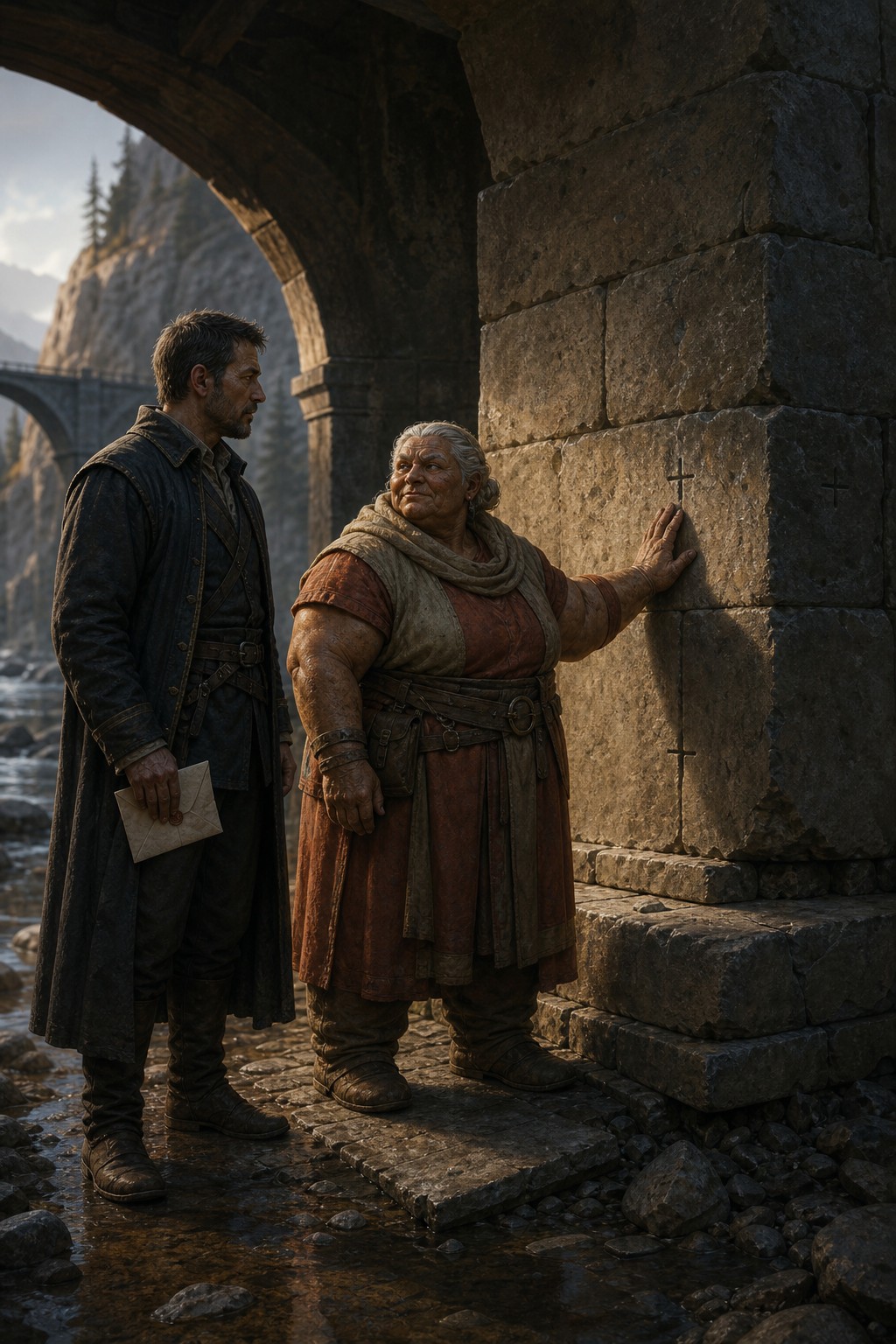
The letter was polite. It informed me that the western footing had been settled eleven inches and asked what I intended to do about it. It was signed by the mason who cut it. She is ninety-four and she was not asking rhetorically. — a Ridge magistrate, on the correspondence of his office
They outlive their own work, and are held to it. A Stonekin of three centuries has signed things. Bridges, footings, cistern linings, gallery props, the roof of somebody's grandmother's house. All of it is still standing or it is not, and either way the person who made it can be written to. This produces the most distinctive institution the Stonekin have, which is not a guild hall or a temple but the answering — the settled expectation that a maker remains liable to questions about the thing for as long as both survive.
It also produces an entire class of professional grievance. Nothing sours a Stonekin community like a mason who has begun refusing letters.
Ridge and Deep is a divide of air, risk, and money. Ridge Stonekin work nearer the surface and live mixed in with everybody else; their settlements look like anyone's, only better built. Deep Stonekin work close to the tunnels and the old excavations, and their communities are organized around the fact that deep work kills people. That single fact grows institutions: burial funds, crew law, the custom that a face is not opened without three consenting crews, elaborate and non-negotiable protocol about who goes last. A Deep settlement can look forbidding and legalistic from outside. From inside it is a very large apparatus for making sure fewer people die this year than last.
The two branches marry each other constantly and complain about each other permanently.
Covenant is real guild descent here. The guild-lines take apprentices at fourteen and bring them fully into Stonekin inheritance, burial, obligation, and the answering. This recognition does not alter an apprentice's embodied Lineage, but it is no courtesy and no lesser membership. A craft-line may run for six centuries without much blood in it at all. Outsiders reliably get this wrong, assume a courtesy where there is a binding descent, and cause offense they never learn about.
Who they live beside. The friction with Underfolk at the Depths boundary is the oldest labor dispute on the Tread and is fundamentally about permission: who may enter, extract, guard, and interpret. In some places it has settled into a functioning arrangement nobody would call friendly. In others it is a live grievance with a body count in its history.
With the Wyldtouched there is the bone story, which the Stonekin regard as a piece of condescension dressed as a compliment.
What outsiders get wrong. That Stonekin are dour. They are held to things, which is not the same and produces a very dry humor that visitors frequently fail to notice they are on the receiving end of.
#5. Tuskborn
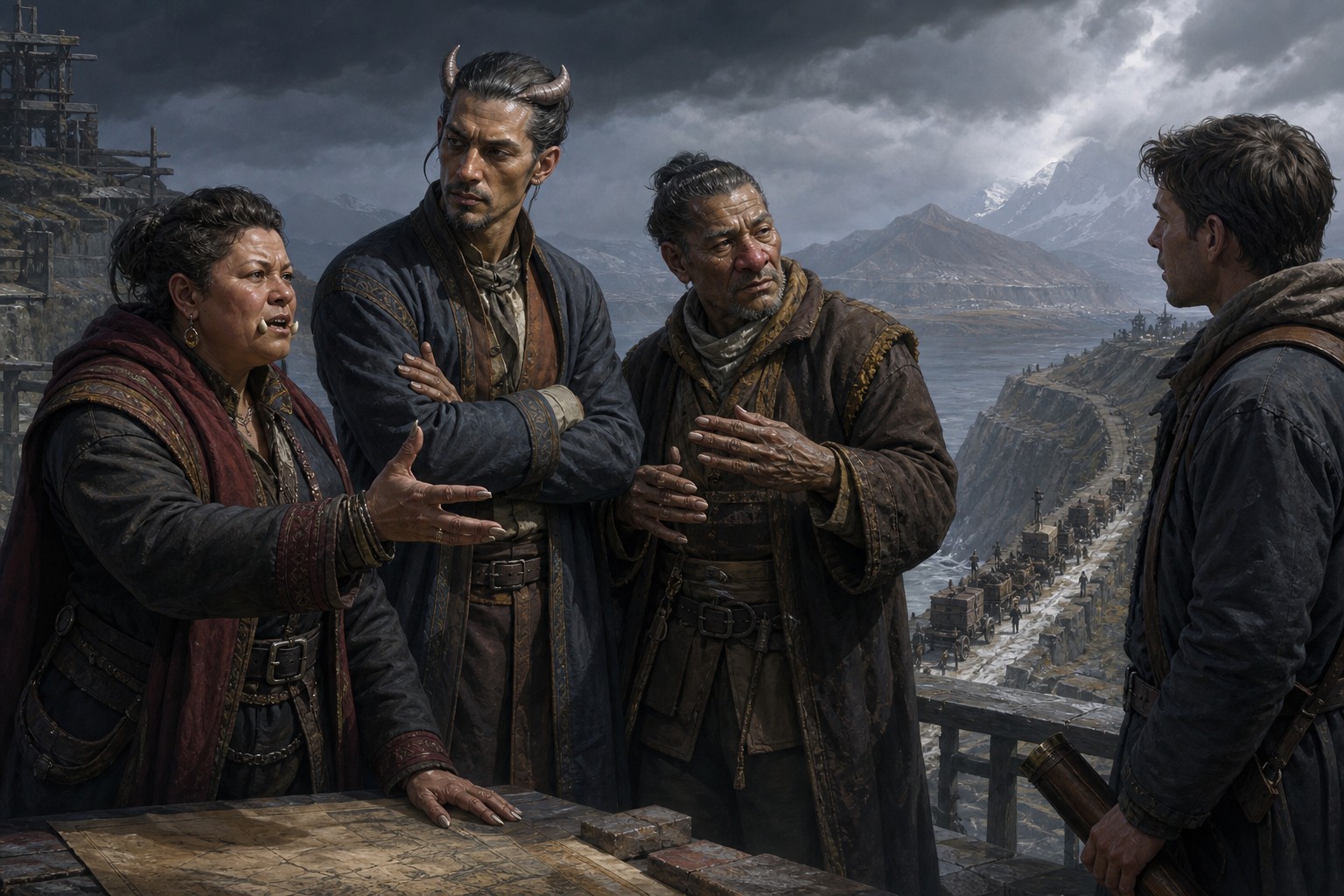
Eighty years, in a world that legislates in centuries.
Everything distinctive about Tuskborn societies follows from that arithmetic. A Stonekin guild can spend forty years deliberating a change and lose nothing. A Fleethollow order can decide to revisit a question next generation. To a Tuskborn, forty years is half a working life, and "we will look at it again in due course" is not caution, it is a refusal delivered slowly enough to be deniable.
So Tuskborn politics is urgent, direct, and frequently read by longer-lived neighbors as hot-headed. It is not. It is correctly calibrated to a lifespan that nobody else at the table is using. A Tuskborn who wants a thing changed while they are alive to see it has to push, and pushing is exactly the behavior that the class prejudice against them is built out of.
Never made, and they mean it. Most Tuskborn hold that their ancestors simply arose from the wildlife of the Wanderers, with no maker at any point. Among peoples whose accounts nearly all feature somebody doing the making, this is a position, held deliberately and defended with some relish. It is also the reason Tuskborn tend to be unimpressed by other peoples' origin quarrels, including the ones they are dragged into as witnesses.
The flank regions. Steep, exposed, weather-scoured, and — this matters — genuinely valuable: the flanks carry the routes between the back and everything below, they hold the good stone, and they are where a Wanderer's weather arrives first. Tuskborn holdings there are not a marginal people clinging on. They are the people who took the ground everyone else declined and then found themselves controlling several things everyone else needs.
The prejudice, precisely. History pushed many Tuskborn into dangerous labor and mercenary work. The prejudice that grew out of it now travels ahead of them into places where none of that history applies — a Tuskborn scholar, magistrate, or instrument-maker will spend a career being asked, warmly and without malice, whether they used to do something more physical. It is one lawful history and it is not the people's essence, and it is a live social fact that shapes Tuskborn lives whether or not any particular Tuskborn has ever done a day of that work.
Who they live beside. With humans, constantly and closely, for the simple and often unspoken reason that they are the two short-lived peoples. A Tuskborn and a human marry knowing they will age together and go at roughly the same time, and there is a whole vocabulary of comfortable dark humor between the two peoples about the others — about being the ones who will still be discussing it when everyone concerned is dead. Mixed Tuskborn-human households are among the most common on the Tread, and in several regions the distinction has worn thin enough that outsiders cannot reliably tell who is which.
With Emberkin, the working sympathy described above. With Fleethollow, a long professional relationship built on caravans and the flank routes, and a running argument about whose calendar is right.
Where they are not. Some Wanderers carry no Tuskborn at all, and on those titans the flank regions are held by whoever else was willing, generally at greater cost.
#6. Hearthborn
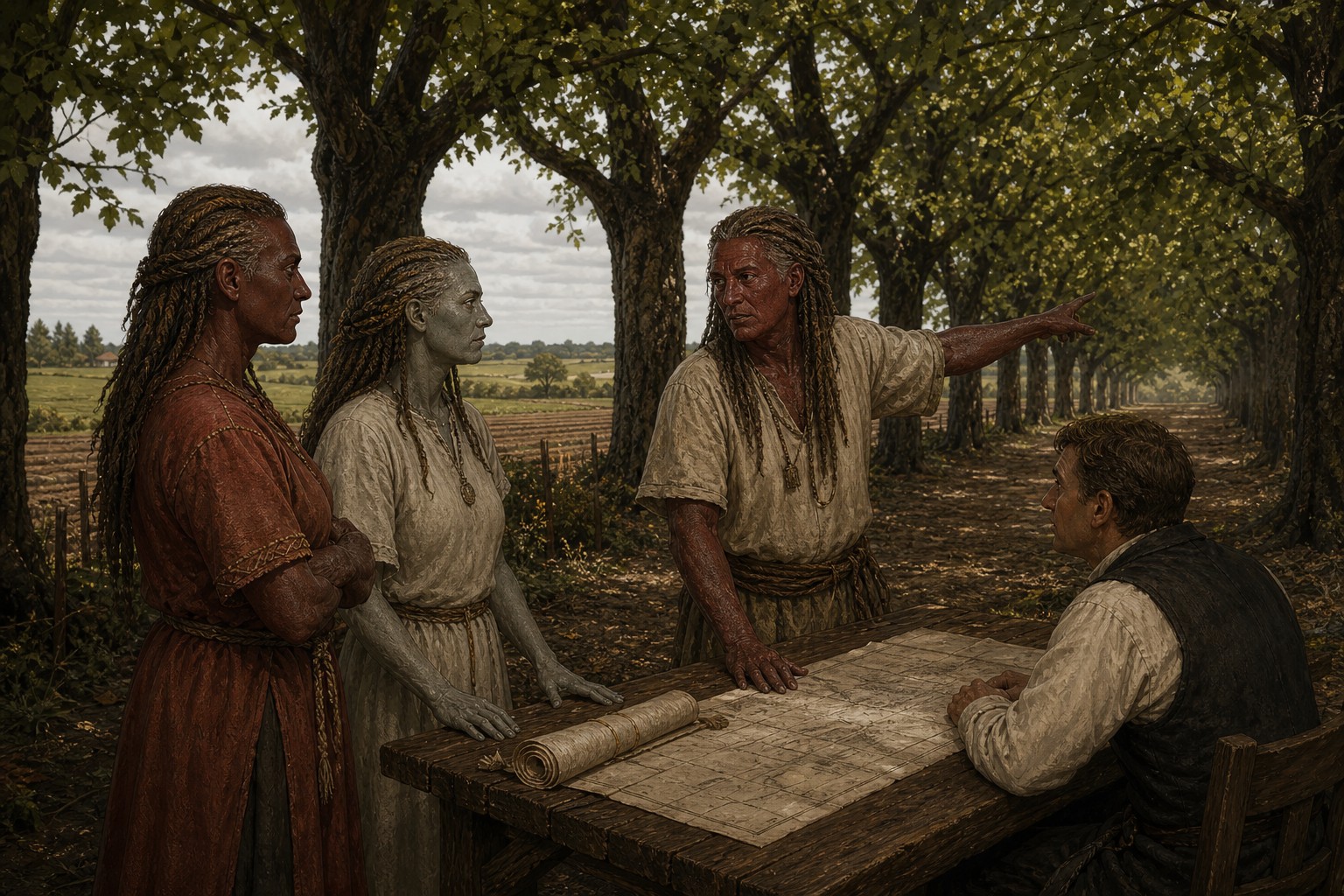
We do not sell the north field. I understand that the offer is generous. I am telling you that my grandmother is in it. — recorded in a land-court at Stillfield, and subsequently cited in eleven other land-courts
The Orchard is the center of everything. When a Hearthborn is laid, a tree grows where they are — nobody plants it, and everybody has seen it. The consequence for how these communities work is total and is almost never grasped by outsiders, who hear it as a charming custom rather than as the load-bearing institution of an entire agricultural civilization.
An Orchard is graveyard, family record, archive, court, and gathering ground at once. It is where you go to settle who owned what, because the evidence is standing there in rows and the rows are in order. It is where a community assembles when something has gone wrong, and the assembling is not symbolic — it is that the people who need to agree are all descended from the same twenty trees and they are standing under them while they argue.
And so the land does not move. Hearthborn land is functionally unsellable, because selling it means selling four hundred years of ancestors to somebody who will plow them. This makes Hearthborn communities economically immovable, politically stubborn, and extremely difficult to displace — a quality that has cost several ambitious institutions a great deal of money and at least one Convergence charter.
The open question everyone asks eventually. If somebody who is not Hearthborn is laid in an Orchard, does a tree grow? This is not settled. Some communities say yes and can show you which tree. Some say no and are quietly relieved. Some have never had cause to find out and would rather not. Some have found out and will not discuss it. There is no agreed answer and nothing in this book supplies one.
Marrying into a Hearthborn family means, sooner or later, being asked where you intend to be laid, and it is not a small question.
Roadwise. A minority carry the same traditions onto the road — traveling markets, circuit trade, seasonal work — and they take the question with them. Roadwise families keep track of which Orchard they belong to across generations of not living near it, and going home to be laid is a journey a whole family will make.
The pressure not to leave. Hearthborn culture discourages adventuring, and this is social pressure rather than any inability. But the pressure is real and it has teeth: leaving usually costs something at home — a share of work somebody else now carries, a place in a rotation, a claim on land that weakens with absence. A young Hearthborn who leaves is not defying a rule. They are making somebody else's year harder, and they know it.
Who they live beside. Everyone, because everyone eats. That produces the particular texture of Hearthborn relations: universally needed, frequently condescended to, and entirely aware of both. The Fleethollow are the closest working partners, because food that must move and calendars that say when the road is open are the same problem approached from two ends.
#7. Fleethollow
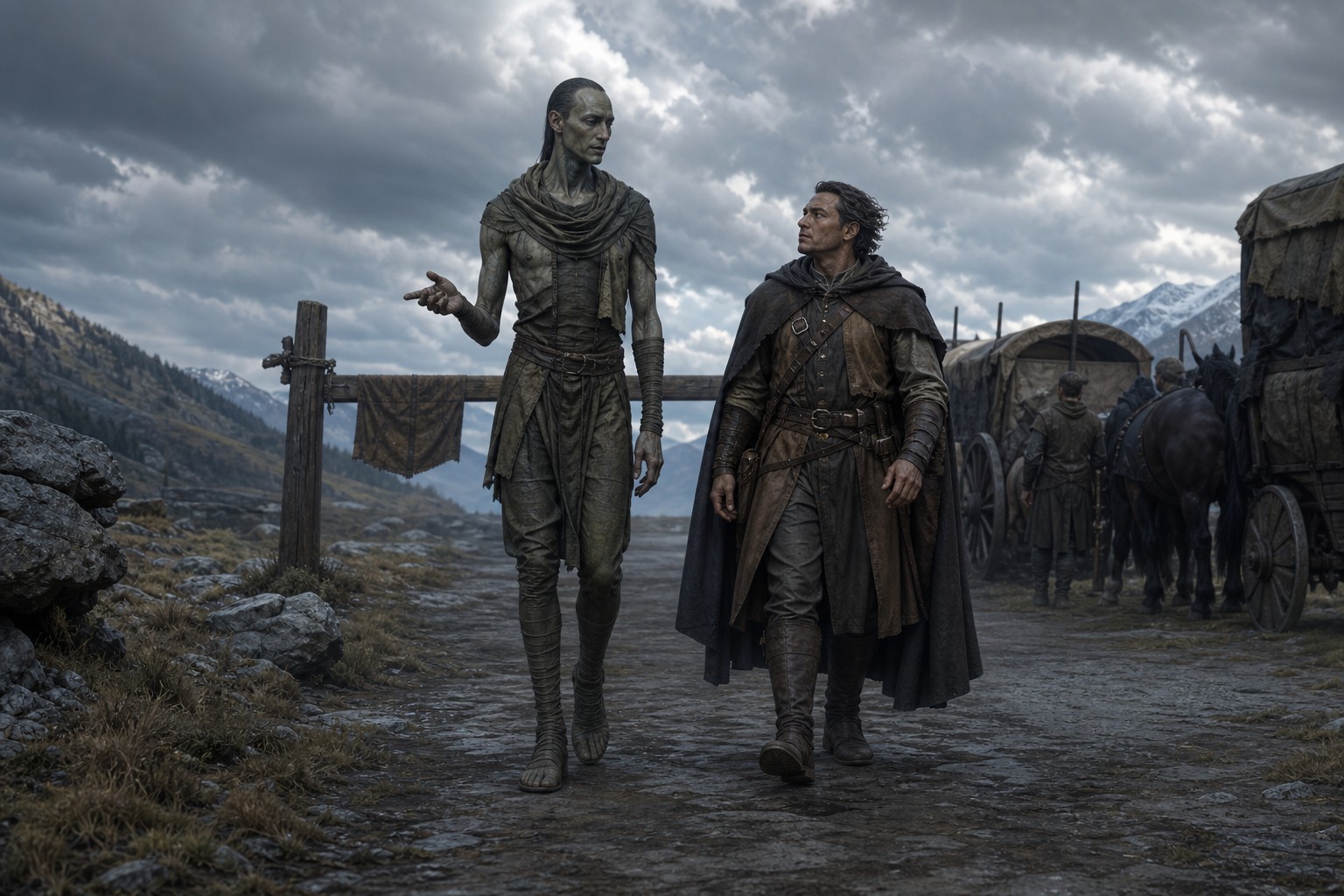
They are the people who tell you the road closes next month, and nobody has ever enjoyed hearing it.
The Fleethollow descend from the Pathreaders, who worked out the migration calendars and kept them. Three and a half centuries of life means a single Fleethollow can hold the whole recorded history of a route in their own memory — not as scholarship but as having been there for the last four times it changed. That is an enormous practical power and it is the foundation of everything the people are, including the parts that other peoples find insufferable.
High and Wild is a tradition, not a bloodline, and a person can change branch, though changing back is harder than anyone admits. High Fleethollow keep the archives, run the orders, and maintain the institutions that make route knowledge into a public good. Wild Fleethollow work the fringes: survival, exploration, the roads past where any reliable map ends. Each branch regards the other as a necessary embarrassment.
The argument. What the Pathreader records require of the living is the great internal quarrel of the people, and it is not academic. A calendar that says a crossing closes is either a prediction or an instruction, and Fleethollow have split settlements over the difference. The Tread changes. Old certainty gets people killed, and every Fleethollow of any age knows somebody it killed.
Direction is learned, and they know it. The reputation for unerring direction sense is earned and is entirely training, habit, route knowledge and hard attention in a culture that prizes it. The people themselves are quite clear about this. The consequence outsiders miss is the awkward one: anyone raised in route culture picks it up, so there are non-Fleethollow route-keepers who are simply as good, and the Fleethollow have complicated, not always creditable feelings about them. A human circuit-keeper with thirty years of the same road may be the best guide on it, and the local Fleethollow order may still not seat her.
Who they live beside. Everyone who travels, which is everyone with goods. Deep working relationships with Hearthborn over what moves and when, with Tuskborn over the flank routes, and an entire specialty concerned with Convergence timing — the small number of people in any generation who can say with authority when two titans will pass close enough to matter, and who are therefore worth a great deal to anyone planning anything.
Mixing. Common and structurally interesting, because route culture is transmissible. A mixed household raised on the road produces children who are Fleethollow by upbringing and something else by blood, and which of those two facts a given order will honor is exactly the sort of thing that gets argued in front of them.
#8. Humanity
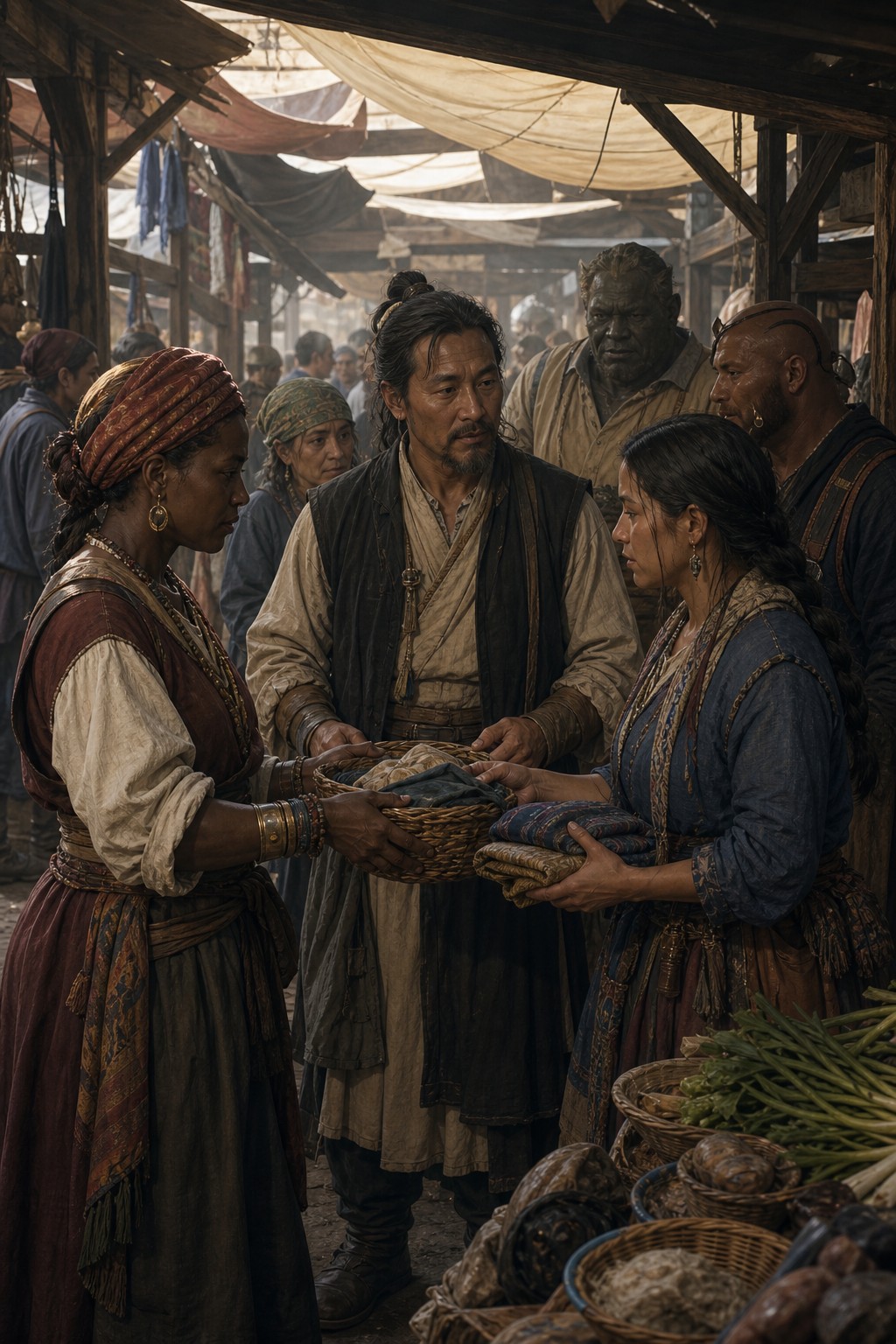
If you want to see the Tread all in one place, stand in a human market.
Humans are everywhere, they are shaped far more by where they grew up than by being human, and they borrow from everyone — practices, tools, rites, arguments, recipes, law. That is a habit of history, not a talent, and it has one enormous consequence that this book cares about more than the Handbook does:
Human settlements are where the peoples meet. Not by design and not by virtue — by numbers, and by the fact that a people with no strong inherited claim about how things must be done is easy to live beside. A human town of any size will have Stonekin masons, a Hearthborn grain factor, Fleethollow carters passing through on a schedule, a Tuskborn foreman, an Emberkin family everyone is polite to, and an Underfolk crew working the boundary. Very few other settlements look like that.
And so most mixed people have a human somewhere. Simply by arithmetic. A large fraction of the Tread's mixed households are human-and-somebody, and in the older mixed regions the categories have worn soft enough that people give an answer about their people that depends on who is asking and what for. That is not confusion. It is an accurate report of genuinely mixed belonging under several reckonings at once — see §1a.
What they are not. Not a blank people, and not the default. Humans borrowing everything is frequently described by other peoples as having nothing of their own, and it is worth noticing that this is a slur with a rebuttal: a tradition that survives being carried into four other cultures and argued over is doing something a sealed tradition is not.
The youngest-people question. Many traditions call them the youngest. Others dispute it. Some say they descend from another people, or several, or none, and none of it can be proven. Humans themselves are mostly unbothered, and the ones who are bothered are usually bothered on behalf of somebody else's argument.
Where they are not. A Wanderer whose peoples are all more specialized may carry no humans at all, and such titans are frequently described by human visitors as "efficient", which is not a compliment.
#9. Underfolk
Everyone above assumes we go down because we are small. We go down because we are the only ones who ever agreed to learn the doors. — a boundary-crew foreman, Kelt Rethin
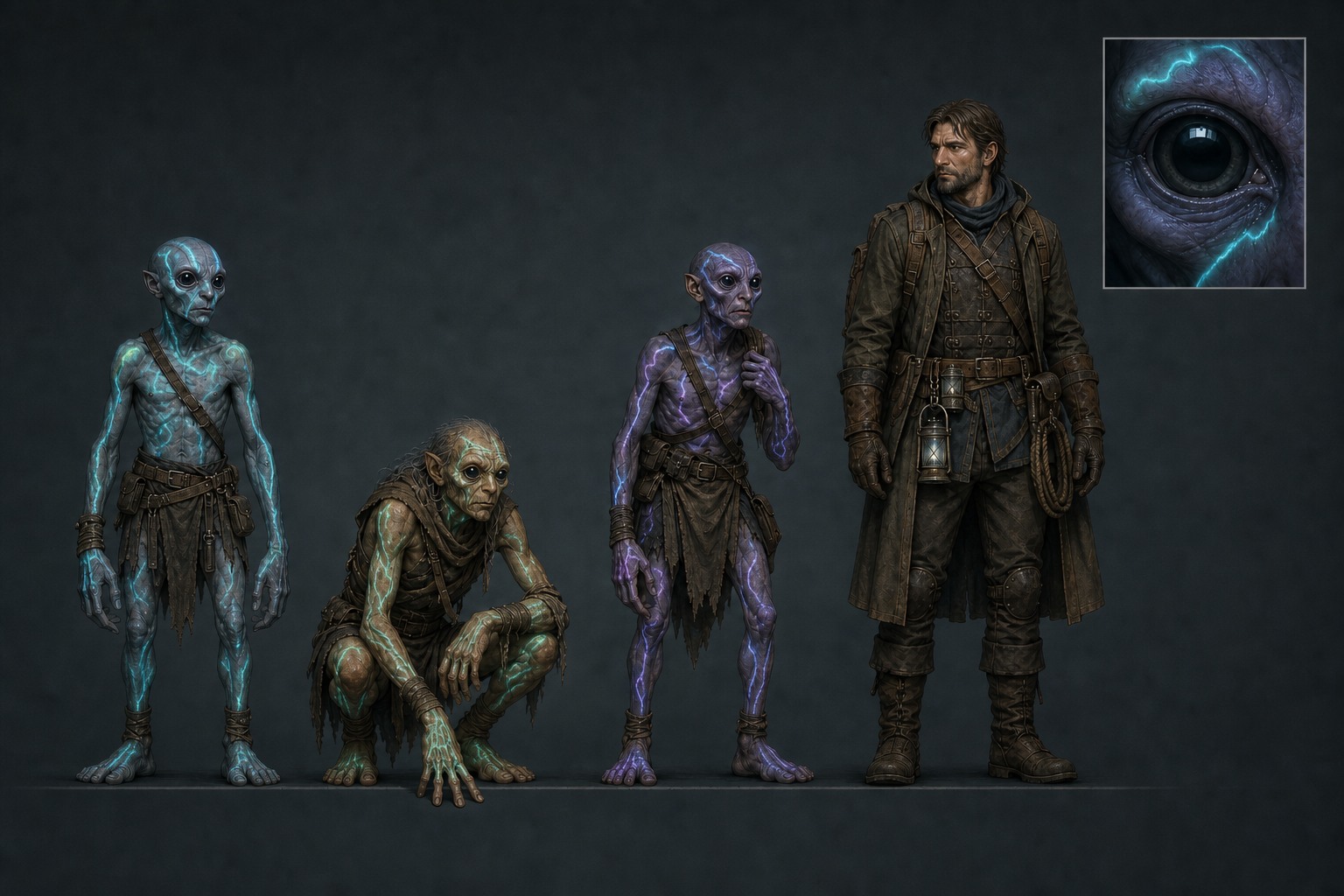
Small, quick, and inseparable from the threshold between surface settlement and the Wanderer's interior. Underfolk have often been marginalized into scavenging and labor, and those social positions do not define what an Underfolk person may be — but they have shaped where the people actually are, which is nearly always at a doorway.
How you know one. An Underfolk adult is diminutive without being childlike: gaunt and sinewy, narrow through the trunk, long in the forearms, and carried on oversized flexible hands and feet. An upright adult reaches roughly to a human delver's chest — distinctly smaller, but not half-height. Their low resting posture can look awkward or unsettling to a surface observer, but it belongs to a quick, capable body rather than a frail one. The unmistakable feature is the eyes — large, bulbous, dark-pupiled, and made for the little light of the interior. They reflect a lamp but do not glow.
Their complexions run through the colors of the interior: slate and blue-grey, iron umber and ochre, smoky violet, charcoal, and related living tones. Constant exposure to the Depths leaves stronger signs. Smooth channels and irregular patches of turquoise, sea-green, cyan, or violet light develop beneath the skin, differently on every person. The marks can throw a little color onto a nearby strap or knuckle, and help an Underfolk body disappear into the living light of home, but they do not replace a lamp. The glow belongs to the skin; the eyes remain dark.
The light is not neutral. Open daylight and an unshielded lamp hurt. Underfolk live through the shallow Depths and farther in, not on the open surface; at a bright threshold they remain in shade, shield their faces, or use hoods and protective lenses. Surface and delving communities therefore meet them at doors they understand better than anyone else, under conditions neither side entirely controls. The relationship is necessary, awkward, and too old to simplify into either friendship or hostility.
The doorway is a profession and an inheritance. Salvage economies, boundary communities, and the whole apparatus of who may enter, extract, guard, and interpret the Depths run through Underfolk hands, and much of the knowledge is held in crews rather than in writing. A crew is a descent line in the covenant sense: taken in, trained, owed to, buried with.
The oldest labor dispute on the Tread is with the Stonekin, and it is about permission — who opens a face, who is licensed, who is owed a share, and whose law applies at a doorway that two peoples both consider theirs. In some regions this has settled into arrangements that function without anyone calling them friendly. In others it remains a live grievance, occasionally violent, with a long memory on both sides.
With the Wyldtouched the relationship is entirely different and much warmer: two peoples that end up at the same thresholds for unrelated reasons, working the same hours, sharing the same superstitions aimed at them from above.
What outsiders get wrong. That proximity to the Depths says something about a people. It says something about an economy.
#10. Bloomkin
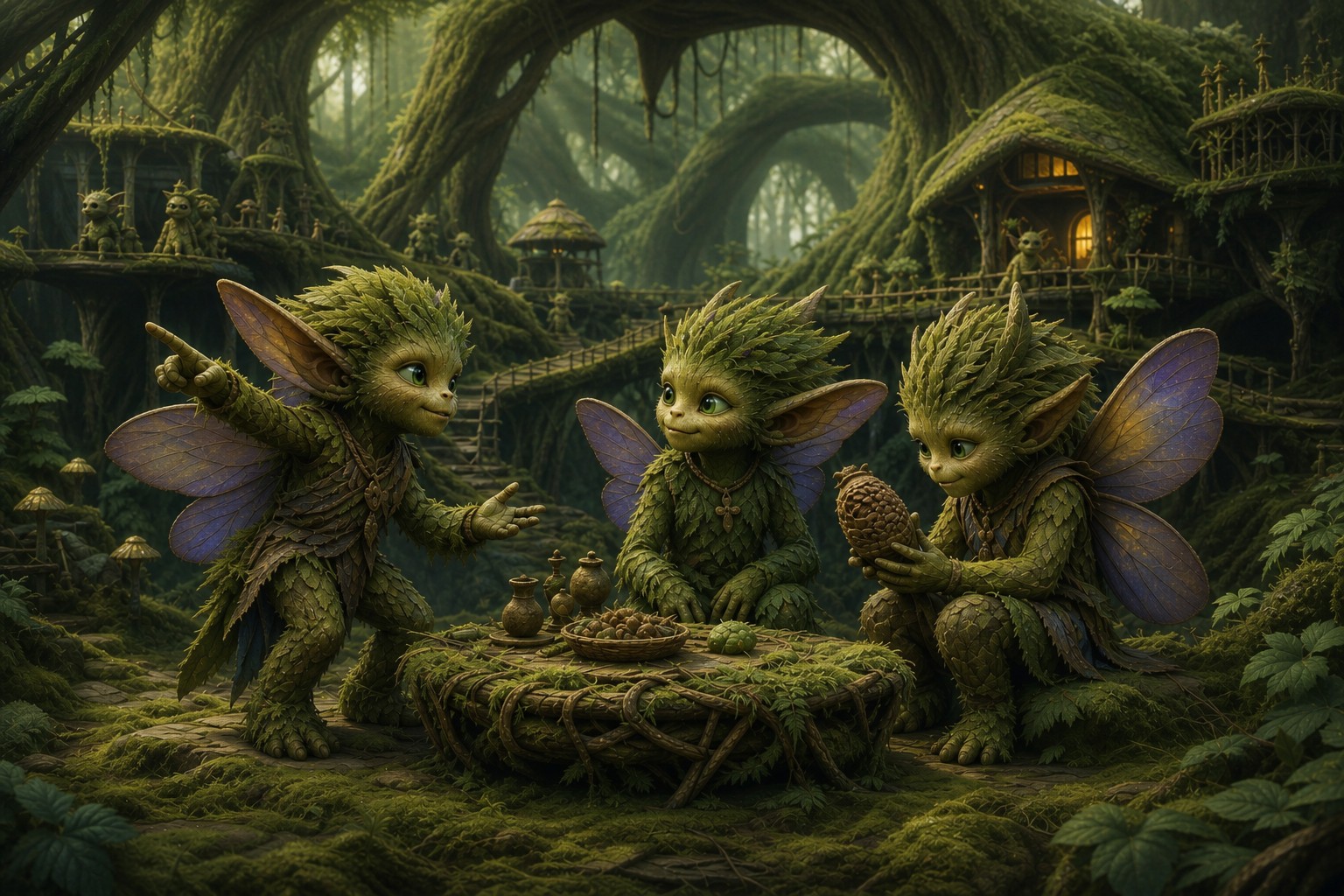
Small, fey-touched, tied in the shared setting to the moss-forests and root systems and to the Wildcaller tradition. Whimsical and alien by disposition rather than malicious, and a people rather than an encounter.
They are the standing proof that the hide is not terrain. A Wanderer's back supports living systems with relationships running between people, growth, weather, animal life, and the titan underneath — and the Bloomkin sit at the middle of one of them. A moss-forest with Bloomkin in it is a different place from a moss-forest without, in ways that take a season to notice and a lifetime to catalog.
Descent among them is not household descent. Where a people disperses offspring on the wind of the back, or gestates communally, family means the grove rather than the parents, and a Bloomkin asked who their mother is may answer with a place. This is one of the clearest cases on the Tread of the reckoning problem in §1a, and it produces genuine legal difficulty whenever a Bloomkin community has business with an institution that assumes households.
Who they live beside. Wildcallers, obviously and famously — though the relationship is reciprocal standing rather than command, and a Bloomkin community that has decided against a Wildcaller is simply not available to them. Beyond that, hide-native neighbors of every sort, and a wary, mostly courteous distance from settlements that clear moss-forest for farmland.
Curiosity, obligation, exchange, fear, humor, territoriality, ritual and misunderstanding all occur between Bloomkin and everyone else without implying one universal Bloomkin personality. There are many other hide-native neighbors a Chronicle may establish; the Bloomkin are not the sole expression of that ecology.