

Where knowledge falls away
The Depths
In this section
Worked ground is documented; the deep workings disagree; the undocumented has no reliable account.
On this page 11 topics
#12. The Depths
It is not a cave system. It is an interior.
Old tunnels and chambers run through flesh and bone-rock, some of them cut and some of them found, most of them older than whatever settlement now stands over the mouth. Delvers go down for bone-iron, for growths that grow nowhere else, and for relics nobody can put a date to. They go down on a schedule, in crews, on a shift pattern and a wage — which is the part visitors never quite absorb. The strangest place on the Tread is somebody's job, and has been for longer than most guilds have kept records.
Most of it is dark. A work lamp buys a crew a small island of certainty and very little beyond it. The next support, the roof, and the continuation of a passage may all disappear into the same black. There are pockets of wonder — a stand of immense luminous fungus, a narrow stream carrying cold living light, veins in a wall that glow when the rest of the face does not — but they are interruptions, not the condition of the whole interior. The Depths remain overwhelmingly grim around them. That contrast is part of why a crew remembers such places.
Not everything below is an enemy. A great deal of what lives down there is harmless, avoidable, or useful, and the crews know the difference far better than the stories do. The first animal in the section below is one a delver is glad to see. Being unfamiliar, hard to understand, or frightening in lamplight does not make a thing malevolent. The Depths are not a moral place, any more than weather is.
Some of it will still kill you, and §12.2 is entirely about that. None of that is malevolent either. A scouring is an animal event with a cause somewhere underneath it, and being eaten by something that had a reason is not materially better than the alternative.
And nobody knows what they ultimately are. Several traditions are certain and none of them agree. The deepest nature of a Wanderer, and of the Pulse running through it, is not settled here — including in the pages below, which come nearer to it than anything else in this book and still stop.
There is no universal roster down here. One titan's interior is not another's, and a Chronicle's own strange organism should remain its own rather than becoming the explanation for every Depths phenomenon anyone has ever reported.
For what the Depths are, why anyone goes down, and why depth itself is dangerous, see Player's Handbook, Chapter II — The Depths. For running a delve — pacing it, telegraphing what a crew can read, and keeping what a character knows apart from what a player knows — see the Tread Master's Guide.
#12.1 Three depths, and what is known at each
The Pulse gets stronger the deeper you go, and strong Pulse is unstable Pulse. That is the governing fact of this chapter and the reason depth is dangerous in its own right, before anything down there has noticed anybody. Instruments disagree. Practices work differently rather than failing cleanly. Prolonged exposure makes people sick, and generations of it mark a family. This book does not explain any of that; see Player's Handbook, Chapter I — The Pulse, especially “More is not better” and “Pulse sickness.”
Knowledge falls off with depth for two reasons, and the second is worse. The first is economic: delving pays, so worked ground has been surveyed, charted, argued over and re-surveyed for generations, and nobody surveys what nobody comes back from. The second is that the instruments a survey depends on grow less trustworthy exactly as the ground grows less known — so the deep record is not merely thinner than the shallow one. It is thinner and less reliable, and the people who made it knew that while they were making it.
The three strata below are a reading aid, not a map. No Wanderer has a line painted on the rock.
The worked Depths. The first stretch in from any established mouth. Charted, re-charted, and better documented than most of the surface — a delving settlement can tell you which galleries flood in which season, which faces are worked out, and what lives where, with a confidence no frontier hamlet has about its own moss-forest. Entries here are definite, and a Tread Master should treat them that way. This is the one place in the Bestiary where a local expert can simply be right.
The deep workings. Beyond the surveyed edge: old excavations, abandoned faces, galleries cut by people whose descendants no longer live here. Charts still exist and stop agreeing with each other. Danger rises, knowledge becomes local and disputed, and the honest answer to most questions is that two crews have said two different things and both were experienced.
The undocumented. Below and beyond that. There is no reliable account, no agreed extent, and no bestiary. It is not written down because the people who went there did not come back to write it down, and a Chronicle should preserve that rather than resolve it.
#Tap-crawlers · Nuisance. · Worked Depths.
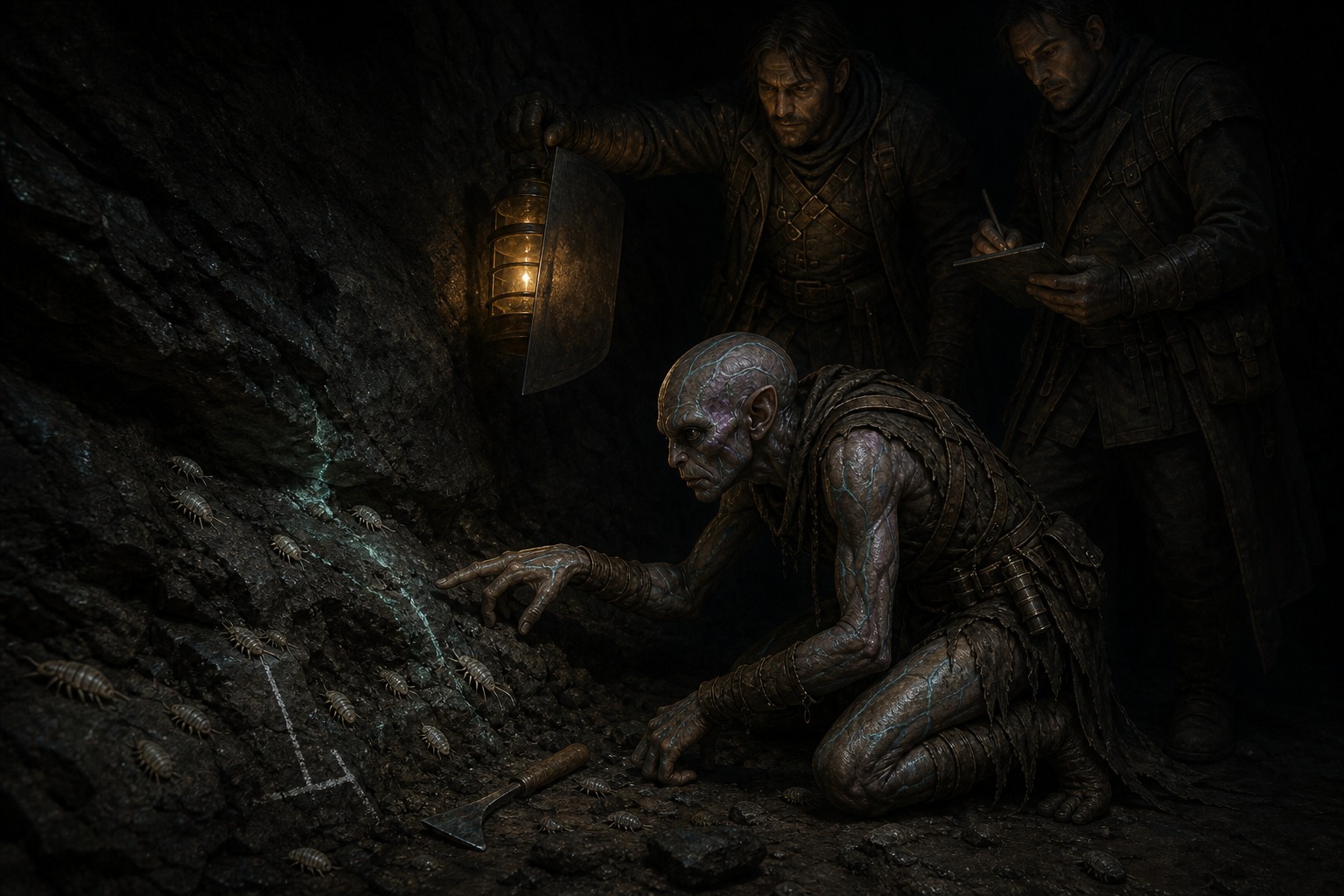
What you see: a finger-length plated crawler like a pale woodlouse, dull ivory, with far too many short legs and a tail segment it taps against stone as it goes. That tapping is where the name comes from, and it is the sound of a good seam.
Utterly harmless, and the most useful animal in the Depths. Tap-crawlers followed people down. They eat the fine tailings that bone-iron extraction leaves behind, which means they are not a species a delver finds so much as one a delver makes, and a new face grows a population within a season of being worked.
So they are an indicator, and delvers read them constantly. Where tap-crawlers are thriving the seam is good. A face they begin to abandon is a face about to disappoint somebody, usually before the assay says so. Surveyors regard this as folklore, delving families regard surveyors as people who have never been wrong in a way that cost them a winter, and both positions have a record behind them.
The sound is the real instrument. A worked gallery with a healthy population is never silent — there is a constant fine irregular ticking off the walls, and crews sleep in it and stop hearing it within a day. What they notice is when it stops. Tap-crawlers thin out as the Pulse thickens and are gone entirely below the worked ground, so a crew that suddenly registers the silence is a crew that has gone further than it meant to. More than one company owes its return to somebody waking up because a room was too quiet.
Delving families name the lucky ones, keep them in jars for a season, and are entirely unembarrassed about it.
#Glassmice · Nuisance, and welcome. · Worked Depths, beside cold seep-water.
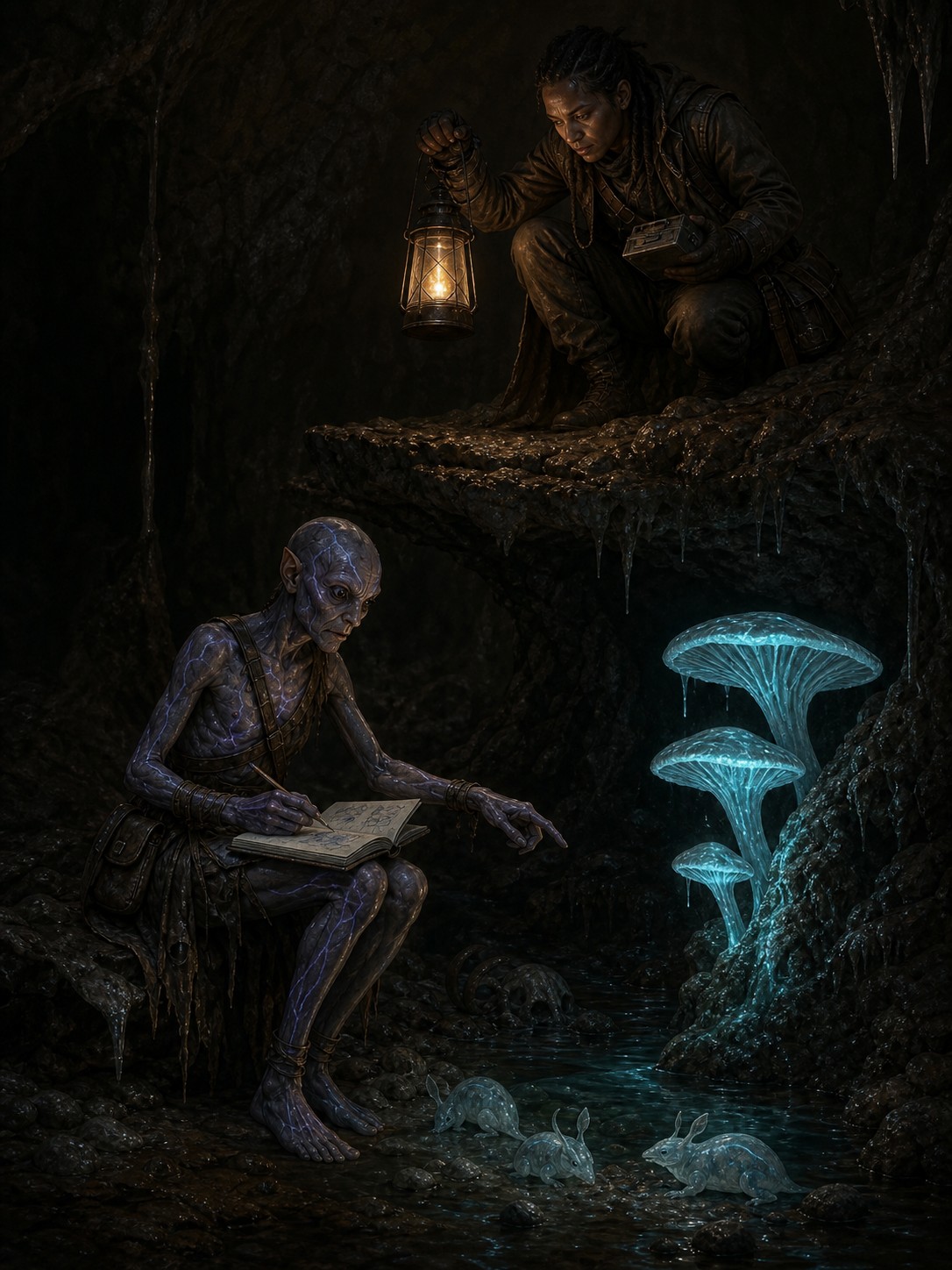
What you see: something with the shape of a long-eared mouse and none of the proper material. A glassmouse is hand-sized, hairless, and nearly transparent, its blue-gray body showing a pale coil of gut and vein-light beneath the skin. The ears are too long for a surface mouse, the feet are broad enough for wet stone, and a startled colony glows all at once like spilled stars in shallow water. They are not mice. Nobody has proposed a better name that survived contact with an actual crew.
They graze the skin of a clean seep. Fungal film, crawler eggs, mineral bloom and the small soft things carried in cold runoff make up most of the diet. A settled colony keeps a pool remarkably clear. It does not make the water safe: glassmice tolerate metals and Pulse conditions that make people ill, and more than one visitor has learned the difference between clear and drinkable.
The useful sign is movement. A colony feeding in the open means nothing larger has disturbed that ledge recently. When every glassmouse climbs above the waterline together, an experienced crew starts packing before it starts asking why. Floodwater, a changed seep, heavy vibration and approaching life all produce the same answer. The animals cannot tell a delver which one is coming. They can tell one that staying to debate it is foolish.
They are a nuisance because they like salt, wax and map paste. A glassmouse will sit within arm's reach of an Underfolk surveyor for an hour and then eat the corner that surveyor needed. Worked-Depths crews hang journals high, close ration tins properly and leave colonies alone. Some name a whole colony; very few name individuals, because telling them apart is an argument nobody wins twice.
They are not surface pets. Bright daylight damages their eyes and skin, and a glassmouse taken above the threshold stops feeding within days. Anyone selling one in a market is selling a dying animal to somebody who has mistaken wonder for ownership.
#Chokevine · Hazard. · Worked Depths.
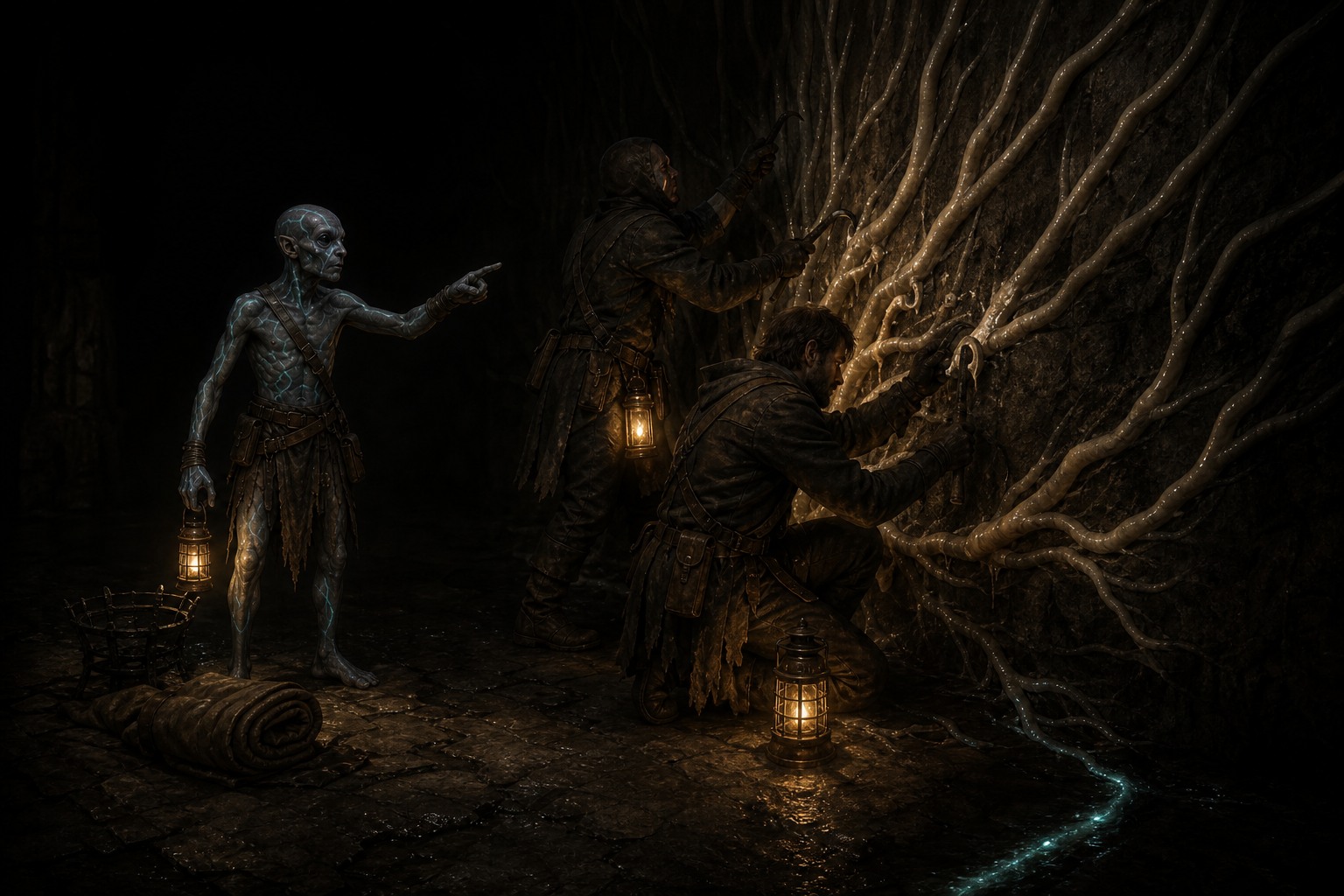
What you see: a pale growth like tallow-colored rope, thumb-thick, hairless and faintly translucent, spreading across gallery walls in a fan rather than a line. No leaves, no flowers. Cut ends weep clear.
It follows warmth and breath, and it does not move quickly. It moves toward you, and it has been moving toward the last warm thing in that gallery since long before anybody arrived. A camp that sleeps two nights in one place wakes to find the walls closer. Cutting it is trivial. Cutting it is also how a crew spends four hours it did not budget.
The fan points. A chokevine grows toward what was warm, so the shape of a stand is a record of where something living stopped — a camp, a working face, a person. Rescue crews use this, and it is one of the few pieces of Depths craft that outsiders find beautiful rather than grim until somebody explains what the older, denser fans mean.
It sets the maintenance calendar. Worked galleries are walked and cleared on a schedule for this reason and not only for the roof. A gallery nobody has entered in a season is a gallery that has partly closed itself, and delving concerns budget hours against it the way a farm budgets weeding.
Where it is not: dry cold galleries carry none, and the crews who work them are notably careless about camping twice in the same place, which is a habit that does not travel well.
#Marrow-hounds · Contest. · Worked Depths, and up.
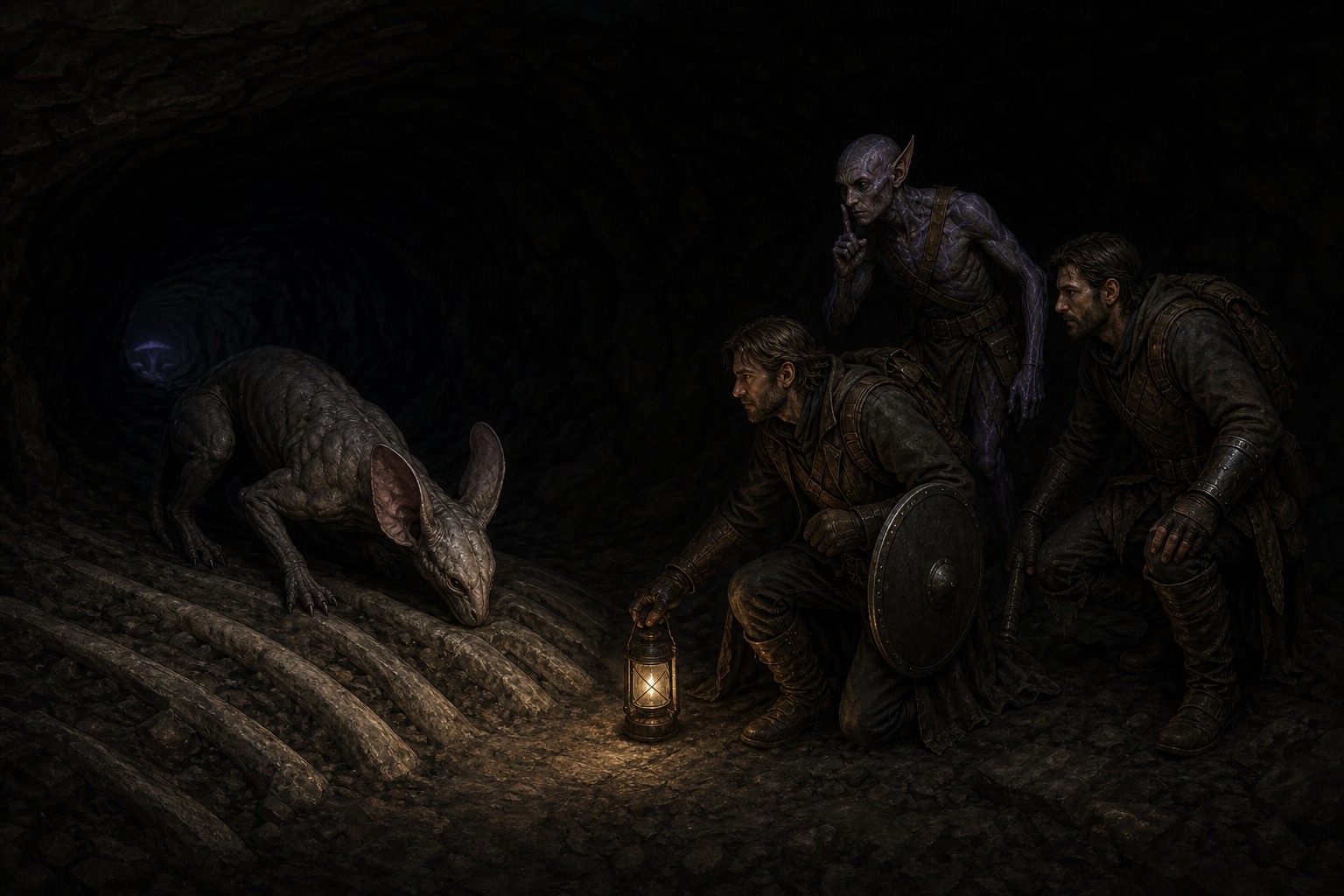
What you see: a long low animal the size of a big dog, hairless, its skin slate-gray and loose over a narrow frame. The skull is smooth and eyeless — not blinded, never had them — carrying a great deal of jaw and a great deal of ear instead. The ears are enormous, thin, and never still.
Scavengers first, hunters when it is worth it. They live on what the Depths kill and what people leave, which for most of the year is enough. In hard seasons it is not, and then they come up to the boundary settlements.
They hunt by sound conducted through bone-rock, and that single fact inverts everything a company thinks it knows about a fight. The Stonekin who can stand still on stone is safer than the Warblade who can fight on it. Dropping a lamp is worse than dropping a sword. A person who freezes lives, and freezing is the one thing nobody trains for.
The stone answers, which cuts both ways. A thrown pebble tells a crew whether they are alone, and also tells everything within two hundred yards exactly where the crew is. Every company has an opinion about whether that trade is clever or suicidal, and the opinion generally reflects how recently they were last in the dark.
Boundary settlements have very old ordinances about noise after dark, older than most of their charters, and enforced with a seriousness that visitors find comic for about one season. Underfolk crews handle marrow-hounds as routine work and price it accordingly, which is a substantial part of why boundary contracts cost what they do.
#Bone-iron wardens · Peril. · Deep workings.
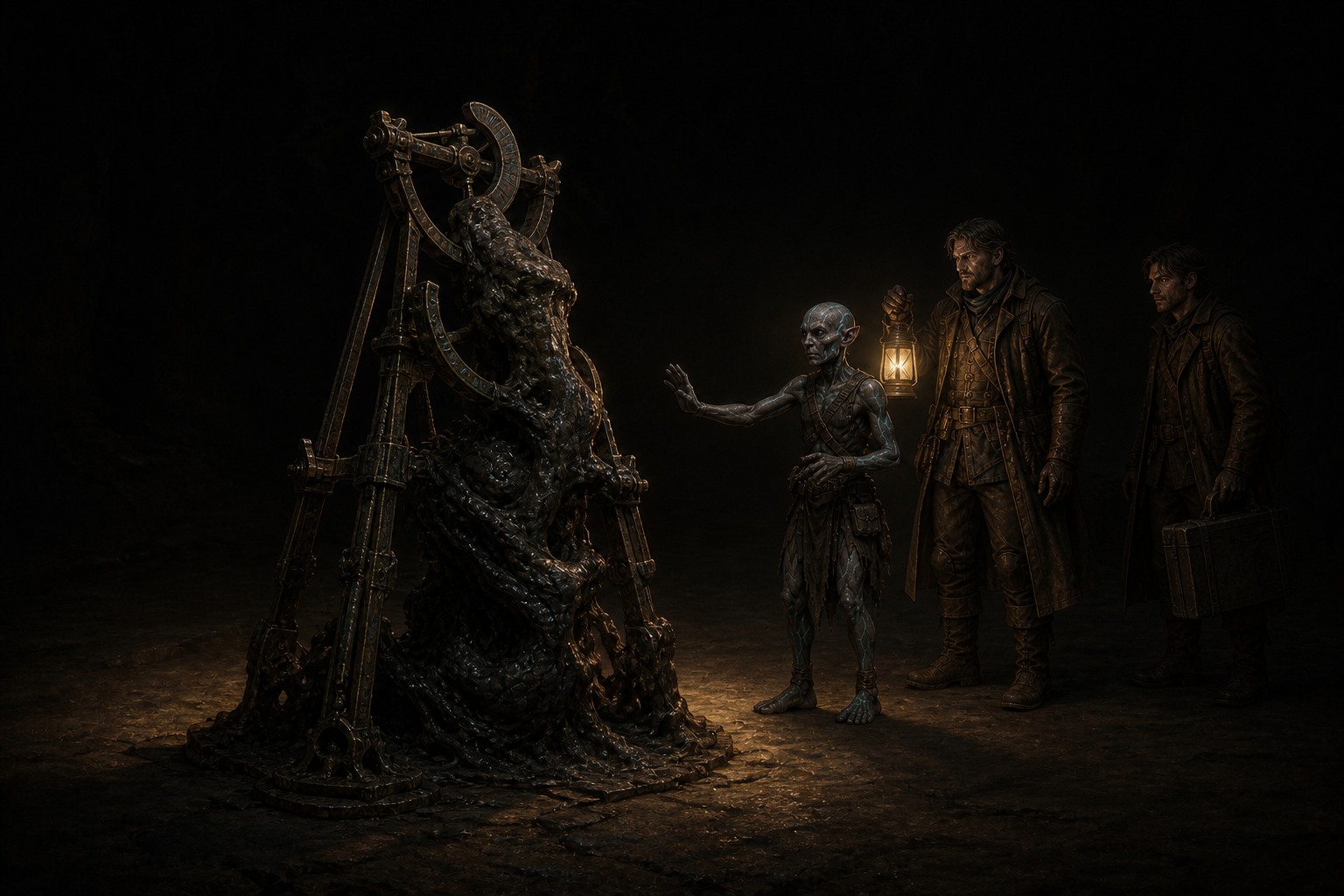
What you see: at first, a relic. Then its outline is wrong, and the wrongness is a mass of dark accreted growth that has taken the object's shape and thickened it, matte black-brown and faintly metallic, with the original workmanship still visible in places underneath. It has no front. It moves all at once and very rarely.
Less a creature than an accretion. Something living has grown around and through a worked object across a span nobody can date, until the two cannot be separated and possibly never could be. What the object was is usually still legible. What the growth is has never been established.
The leading theory is concentration. Deep workings sit where the Pulse is dense and unstable, and the argument is that a relic left long enough in that is not left alone — that a warden is what a made thing becomes down there, given centuries. The theory is untested and is going to stay that way, because testing it means going to one and sitting with it.
Sagebound want what is inside, and this is the whole of the danger. A warden initiates nothing and has never been recorded pursuing anybody. It has simply had a very long time to become the precise shape of its own defense, and every part of it that looks like a weakness has been one for centuries without anybody successfully using it.
The failed-attempt literature is extensive and is read in Sagebound houses for instruction and, privately, for entertainment. The sign is an absence: nothing else lives in a gallery with a warden in it, and a stretch of deep working that is unusually clean is not good news.
#Menders · Peril. · Deep workings, and below.
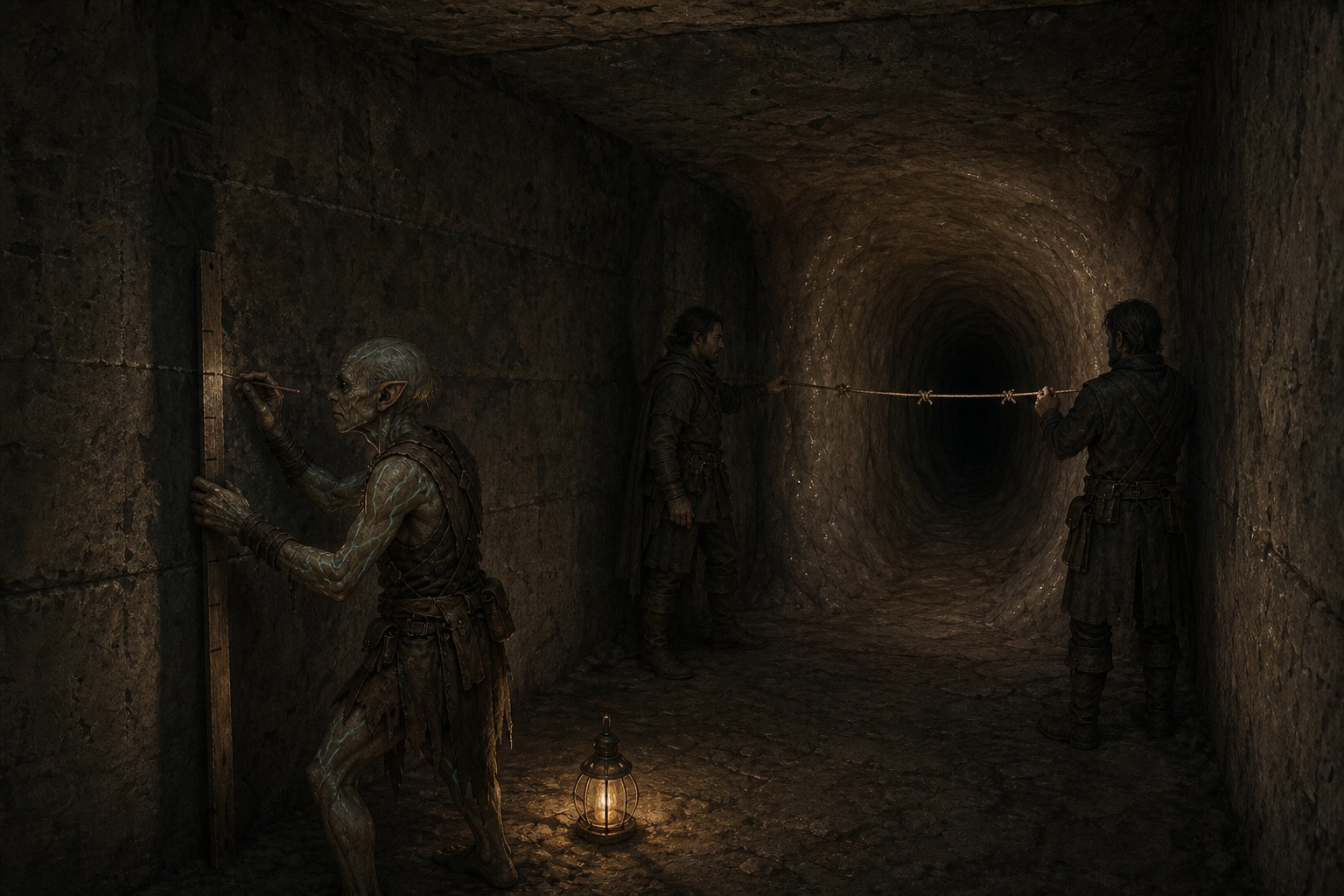
What you see: no reliable account exists, and that is not a coy way of saying it is horrible. Every description genuinely differs — a working of pale ropes, a slow flat sheet traveling along a wall, a crowd of small things behaving as one thing. What the accounts agree on is the tunnel afterwards, which is narrower.
This is the most important entry in the section, because it is what the Depths actually are.
A tunnel is a wound. The Wanderer is alive, and living things close wounds.
Near the surface this happens too slowly to notice, and delvers hold the worked galleries open by ordinary maintenance without ever once thinking of it as fighting a healing body. Deeper in it stops being slow, and it accelerates roughly as the Pulse thickens — which means the boundary between worked ground and deep workings is not really a matter of distance. It is the line past which maintenance stops keeping up.
Menders are what does the closing. They do not distinguish between a wound and a passage, or between debris and a person standing in one. A crew that goes deep enough finds its route narrowing behind it — not by collapse but by healing — and finds that much harder to explain to a rescue party than a cave-in would have been.
So deep crews measure. A knotted line, a marked stave, a scratch at a known height: something that will disagree with the gallery later. Measuring on the way in is the single practice that most reliably separates crews that come back from crews that do not, and it is taught before anything else.
Where a Mender and a scarwyrm want the same cavity (§11.2) is not recorded anywhere. Both are attested. The meeting is not.
#The Standing · Peril. · Deep workings, at abandoned faces.
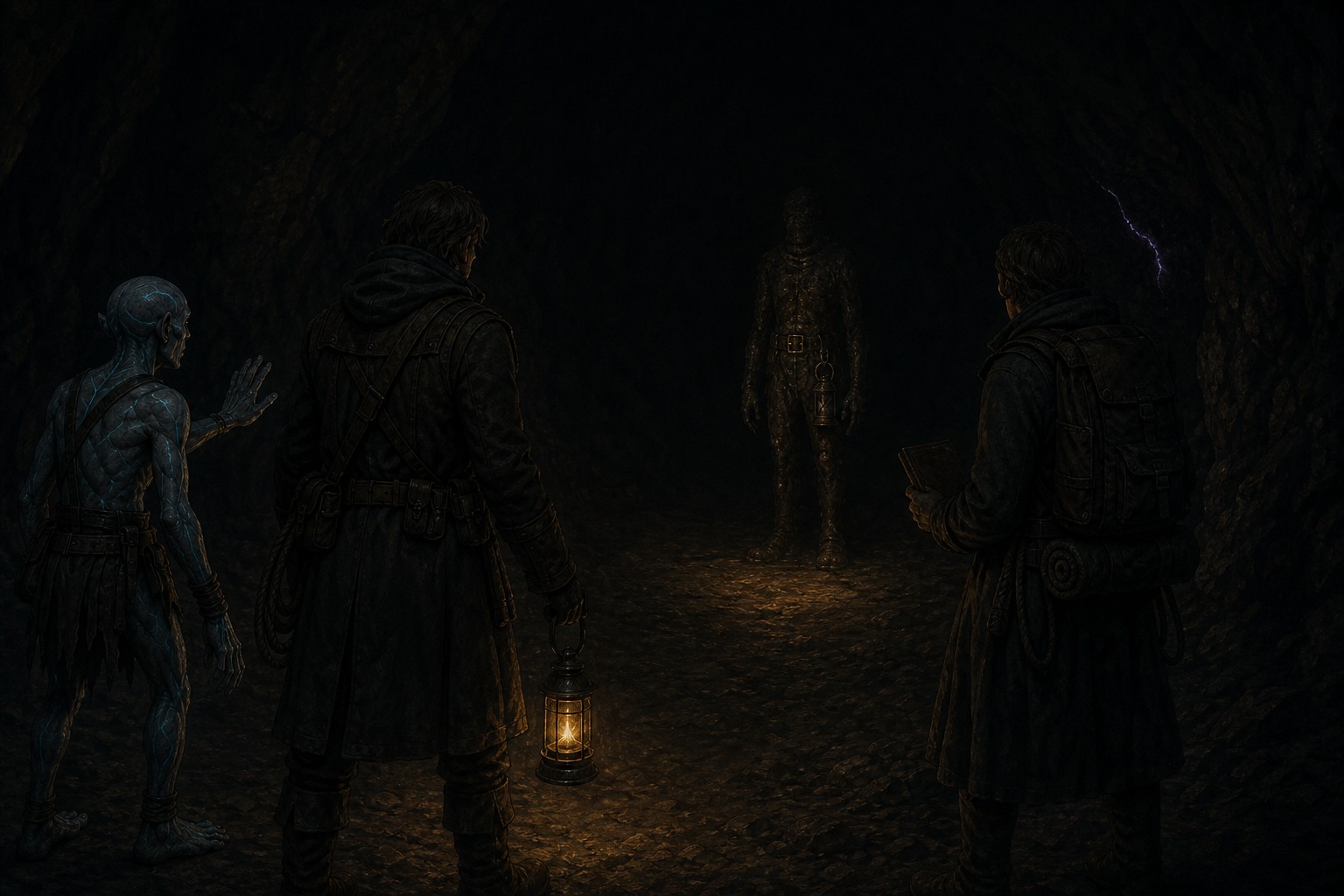
What you see: a person. That is the first read and it is always the first read — something person-sized and person-shaped, upright and motionless at the edge of a lamp's reach, and every crew's first instinct is to call out.
Closer, the proportions are wrong: too long through the arm, too narrow in the head, the stance slightly too settled, as though it has been holding it a very long time. The surface is matte dark-brown and faintly metallic, the same accreted growth that makes a bone-iron warden — and things are legible in it. A buckle. The sole of a boot. The hook of a lamp, at the height a lamp is carried.
Nobody has established what they are. The obvious reading is the one every delver arrives at unaided and nobody enjoys saying: a warden accretes around a worked object left long enough in concentrated Pulse, and a person who did not come back out is, among other things, a worked object left in concentrated Pulse.
Whether anything of the person remains is not answered here, and cannot be. The essence returns to the Pulse when a living being dies — that much is established, and it establishes nothing whatever about this. Songweaver traditions are divided and have been for as long as there have been deep workings. Some houses will perform a rite in front of one. Some hold that performing a rite in front of one is the worst thing a Songweaver can do. Neither side has ever produced anything the other accepted.
They stand. For years, as far as anyone can tell, in the same place, at faces that were abandoned and never re-opened. They do not hunt, do not follow, and have never been recorded leaving the working they are in. They move when something comes close enough, and what happens then is fast, and the accounts of it are short because the people giving them were leaving.
The custom matters more than the tactics. Delving families sometimes recognize the gear. There is a body of practice about what happens then — who is told, what is recorded, whether the face is sealed, and what is owed to a family whose grandfather is standing in a gallery — and none of it involves fighting. A crew that destroys one without asking has, in most delving communities, done something much worse than lose a day's work, and will hear about it for the rest of their working life.
Where they are not. Worked ground has none. They belong to the deep workings and to abandoned faces specifically, which is to say they are found exactly where the record stops being reliable and exactly where somebody had a bad enough season to walk away from a face and never come back for it.
#The Deep Quiet · Calamity. · Undocumented.
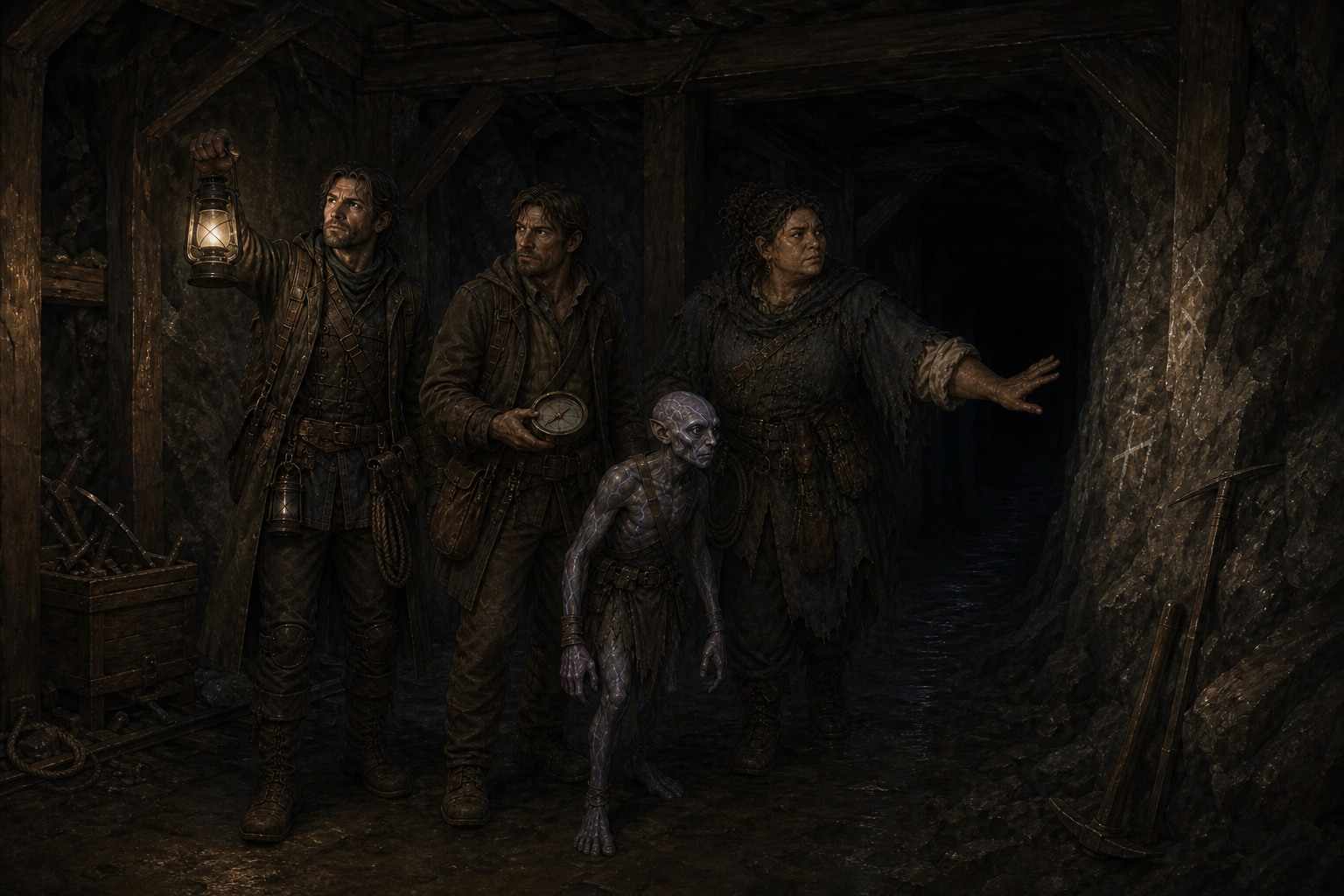
What you see: ordinary rock, ordinary galleries, and nothing whatever wrong. That is the entire difficulty. There is no boundary to see and no sign to read. A crew knows it has entered one because the lamp seems dimmer than it is, and because the Stonekin has stopped talking.
A Stillness that formed inside a Wanderer rather than on it. It is an absence in the one place the Pulse should be strongest, which is what makes it the least explicable thing anybody has ever brought word of.
A Pulsewalker's forms go uncertain, a Wardpriest's rites go unanswered, an airship will not hold, and the rock stops feeling alive under a Stonekin's hand. Instruments do not read low. They read nothing — a keeper's needle simply sits, which is a thing no keeper ever forgets seeing.
Nothing has to attack anyone. The place is the event. Companies have gone in and come out without everyone, and been unable afterwards to say what took them.
Nobody maps one. The practice is to mark the last known good gallery, abandon everything past it, and write off the workings — which delving concerns do, at enormous cost, without argument. They are not known to spread, and not known to is carrying more weight in that sentence than anybody would like.
#12.1a The shape of the dark
The Depths as a system never bottom out. A single chamber is a different matter. A passage forks, one branch opens into somewhere that splits eight ways, and the other stops at a wall — caves are mostly dead ends. A model where every room has a way on is a stack rather than a cave, and it loses the thing that makes a cave frightening: the way on exists, and it is not here.
Nothing in this section is what actually kills crews. Delving families will tell you so plainly and it takes visitors a season to believe them. What kills people is being somewhere they cannot name, choosing between openings they cannot tell apart, and walking confidently in the wrong direction for a day.
A company knows the way it came, and that is nearly all it knows. The other openings off a chamber are openings — visible, and not destinations. In the dark they are not even that. And having stood somewhere does not mean recognizing it on the way back: a five-doored chamber crossed an hour ago is a five-doored chamber, and this one may or may not be that one. Nothing has been forgotten. The knowledge simply does not attach.
So crews mark, and a mark is a good answer. Chalk wants dry rock, a scratch wants stone that will take one, a cairn wants loose stone to build from — and once it is made it stays. Marks do not fade on their own. A crew that finds one gone is not looking at bad luck. Something took it.
Deep enough in, that something is often a Mender: a tunnel is a wound, living things close wounds, and nothing doing the closing distinguishes between debris and somebody's chalk. Nearer the surface it is water, or an animal, or another crew working the same face who never noticed there was a mark to spoil.
And it may be taken on purpose. A mark removed is a crew lost. A mark moved is a crew walking confidently the wrong way, and anyone who understands what a delving company relies on has that available to them.
A way down is not a way back. A cut stair is. A hole somebody dropped through is not.
The list stops here, and it stops on purpose. Below the Deep Quiet the record is empty. That is not a gap this book intends to fill, and a Chronicle that fills it should understand it is answering something the setting deliberately left open.
#12.2 When the Depths come up
Most of what lives below stays below. It is adapted to concentration, to dark, and to pressure, and the surface offers it nothing.
So when something comes up, it came up for a reason, and the reason is underneath. A rising is a symptom. Companies are hired to fight the symptom, because the symptom is what is currently eating the settlement, and the people paying know perfectly well that this is not the same as solving anything.
The risings are getting worse. That is the observation of every boundary crew on every Wanderer that keeps records, it is consistent with a Pulse growing less stable at depth, and nobody has established the connection well enough to say so in a document that matters. See Player's Handbook, Chapter I — The Pulse, especially “More is not better.”
#Scourlings · Contest singly. A scouring is a Calamity. · Deep workings, and up.
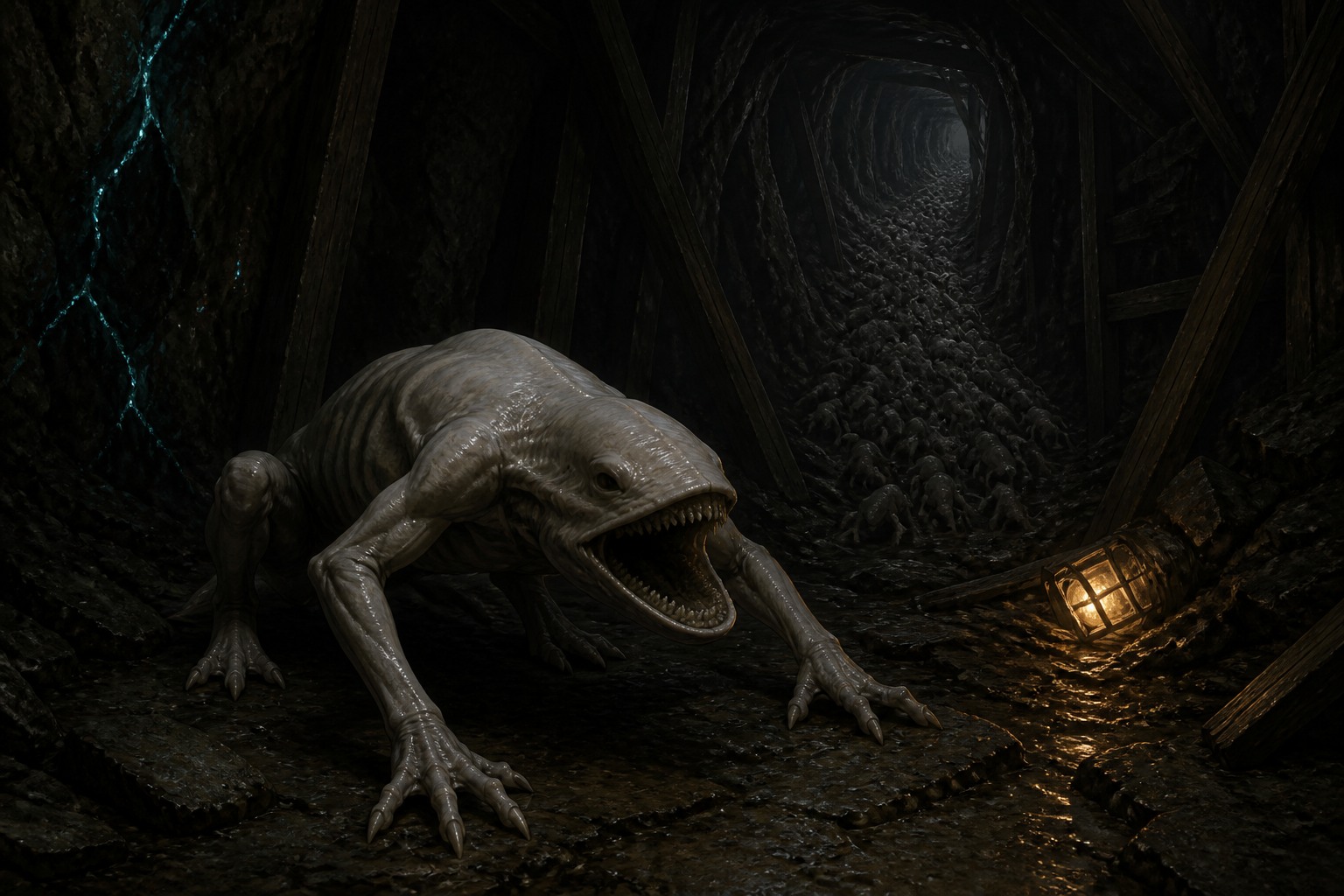
What you see: something between knee- and waist-high, pale gray and hairless, with skin like wet paper over visible ribs. The arms are long enough to reach the ground and end in four splayed digits with flat nails worn to points. The head is mostly jaw — wide, flat, and hinged far back — and the eyes are reduced to two dark slits that do nothing at all in daylight. It moves in a low scuttle on all fours and comes upright to strike, which it does with the arms and not the mouth. The mouth is for afterwards.
Below, they are solitary and scarce. A delving crew working the deep workings for a season might see one, alone, at a distance, and think nothing of it. That is their normal condition and almost everything anyone knows about them as animals comes from that.
A scouring is not that. Something drives them up — a collapse, a shift, a Pulse event nobody witnessed — and they come as a mass, in the thousands, moving fast and continuously and in a direction. They strip a region: livestock, stores, standing crops, anything cornered, anyone slow. They do not occupy ground and they do not hold it. They pass through it, and what they leave is not a battlefield so much as a place where the useful things have been removed.
You cannot negotiate with a scouring. People have tried, on the reasonable theory that anything that organizes can be reasoned with. It does not organize; it converges, which is a different thing, and the distinction has been established at unreasonable cost. There is no leader, no camp, no demand, and no faction inside it to play against another.
What actually works is unglamorous and civic. Chokepoints, prepared ground, fire, water, walls maintained in peacetime by councils who were mocked for the expense. A company is worth a great deal at a chokepoint and worth very little in the open, and the settlements that survive a scouring are almost always the ones that had already decided where their chokepoint was.
And afterwards the real question is still standing. A scouring means the deep workings became uninhabitable for the things that live there. Nobody has ever gone down during one. The crews that have gone down after report that the thing they were most afraid of finding was not there, and none of them will be drawn on what they meant by that.
#A Wakeful · Calamity. · Undocumented, surfacing.
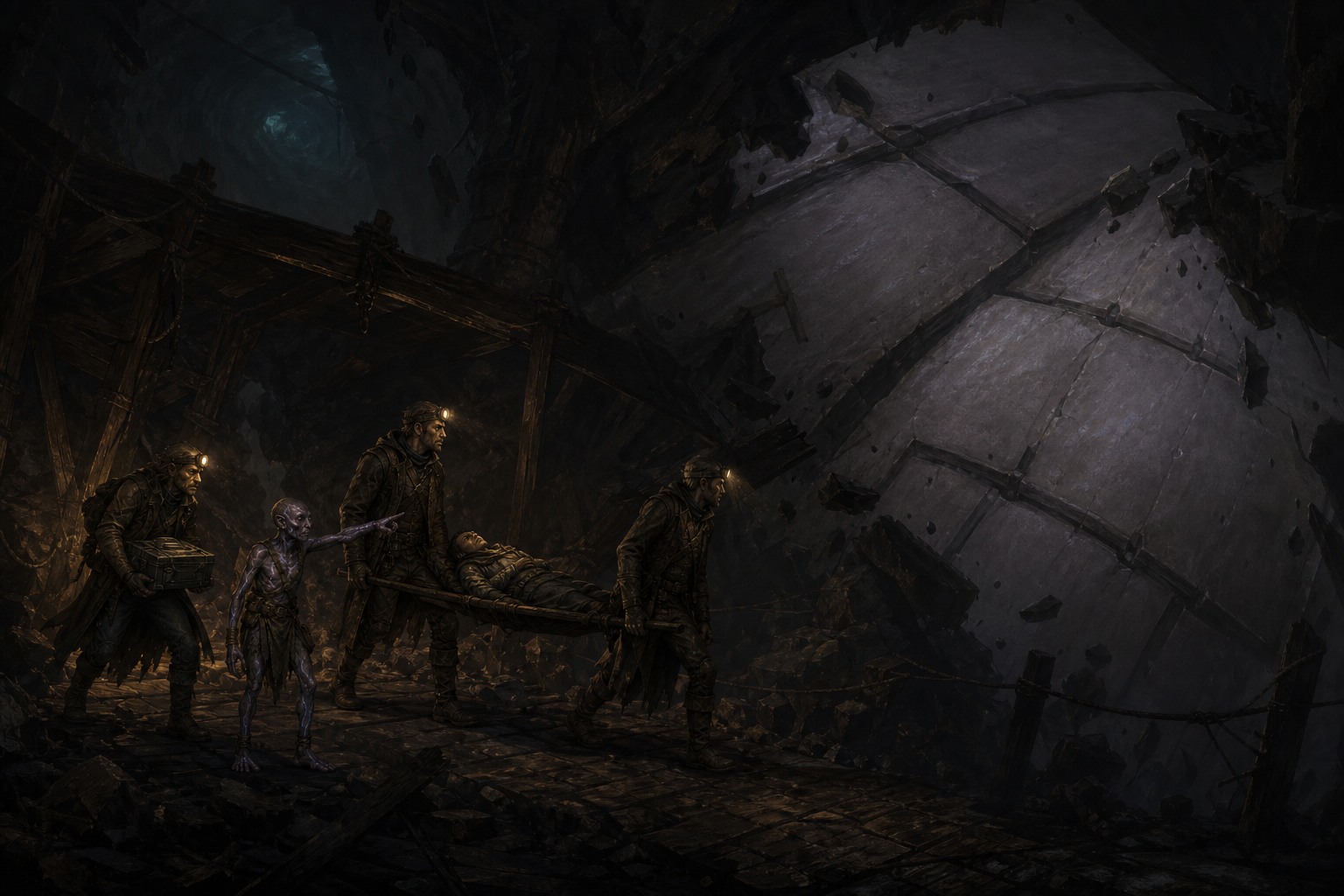
There are perhaps four accounts in the whole recorded history of the Tread, from four different Wanderers, separated by centuries, and they agree on almost nothing except the shape of the event.
Something that was down there and not moving begins to move.
What you see is never the whole of it. Every account describes a part — a limb-like mass the width of a gallery working itself up through rock that had been solid the previous week; a surface of something pale and segmented sliding past a delving face for the better part of an hour in one continuous motion; a shape standing above a ridgeline at dawn that was not there at dusk and was gone by the following dusk. No account describes a head, a face, or an eye, and the accounts that do are the ones later shown to be inventions.
It does not hunt anybody. Not one of the four accounts describes an attack. What they describe is displacement: galleries closed, a settlement's ground lifted and broken, a river's course changed, a delving concern that employed four hundred people ceasing to have anywhere to work. The dead were killed by falling rock and by winter.
Nothing has ever been done about one. They surface, they move, and at some point they stop being observed, and every account ends the same unsatisfying way. Whether a Wakeful is an animal, a Depths feature, a great many things mistaken for one thing, or something the setting has no word for, is not answered here and is not going to be.
What a Chronicle should take from this entry is the shape, not the creature. A Wakeful is what it looks like when the world stops being scaled to the company — when the correct response is to get the settlement out, and the heroism available is entirely a matter of who is carried and who is left. That is a story the Tread can tell. It is not a fight.