

Interest without malice
The Small Fey
In this section
Hide-native beings create trouble through attention, exchange, appetite, and curiosity rather than a universal moral nature.
On this page 7 topics
#16. The small fey
The hide grows things that are not quite animals.
Bloomkin are a people and belong to Part I. What follows is not. These are small, wild, and native to the seam between the living hide and everything growing on it, and they are not spirits of anything — not of the moss, not of the titan, not of the dead. Nobody has established what they are. Several traditions are certain and none of them agree with each other, and this book has no intention of choosing between them.
They are native, and that matters: a Wanderer without moss-forests has almost none of this. They are also not commanded. No Practice controls them, and a Wildcaller's standing is standing with life — whether these qualify is exactly the argument, and it is an old one, conducted by people who have never agreed on the terms.
What they have instead of malice is interest. Almost none of them attack anybody. Nearly all the trouble in this section comes of something small taking a sustained interest in a thing a company needed left alone, and interest — in a creature that cannot be reasoned with, discouraged, or bargained down — turns out to be enough.
#Spark-sprites · Nuisance. · Moss-forest and old growth.
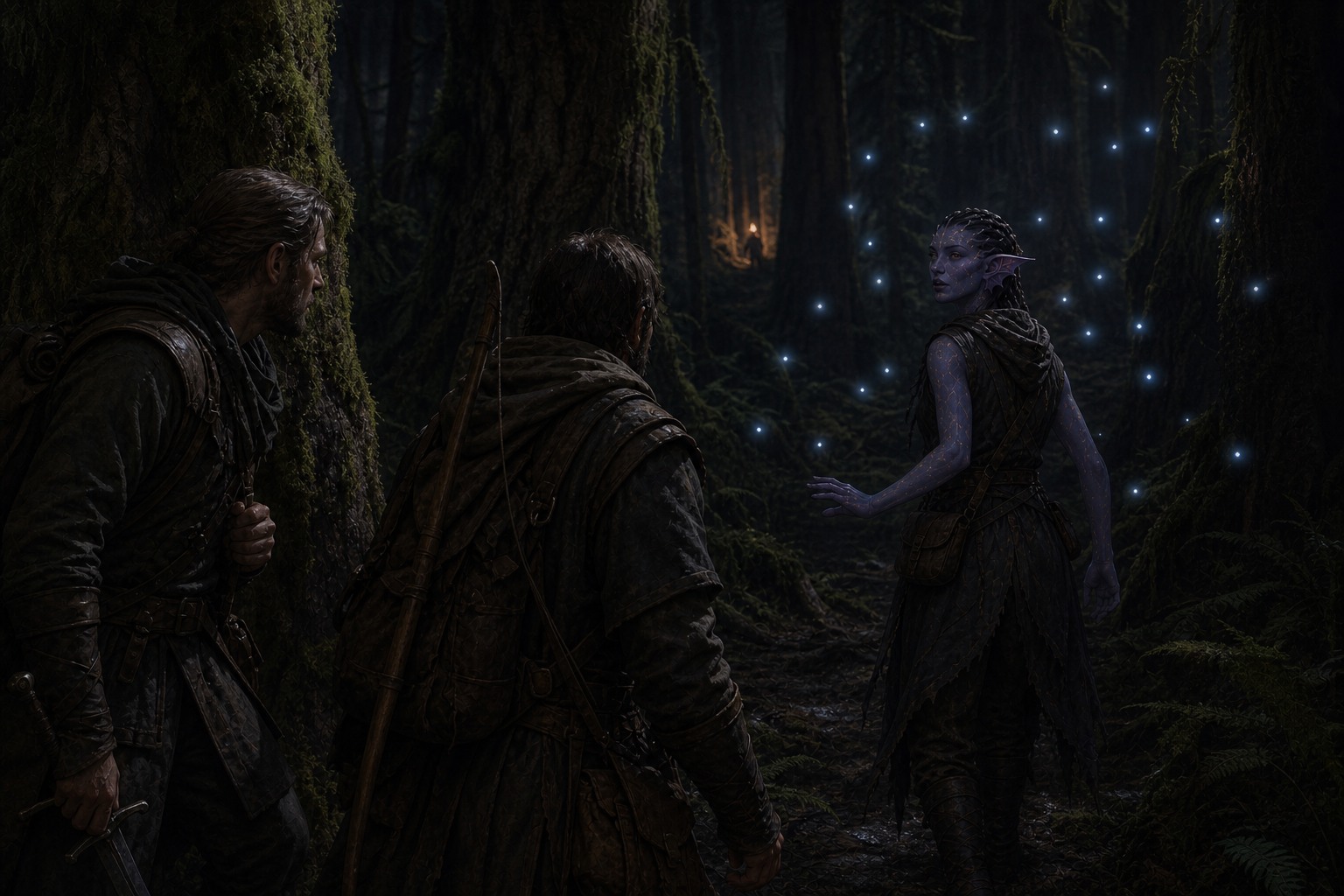
What you see: points of light the size of a fingertip, drifting at about head height, pale blue-white and steady rather than flickering. Close to there is no insect and no body — the light is the whole of it, and its edge is soft, like a lamp seen through cloth.
Moving pinpoints of light, drifting at about head height, most visible on the nights when nobody wanted to be visible. They gather around inherited possibility the way moths gather at a lantern, which in practice means they follow the Wyldtouched.
A Wyldtouched who wants to travel unnoticed learns this young and resents it early. There is no technique for it. You cannot cover them, outpace them, or persuade them, and they are brightest in exactly the conditions — dark, still, far from a settlement's own light — in which somebody would most like not to be seen crossing open ground.
The cruelty of it is that the omen story now has a witness. A settlement that already holds the Wyldtouched to be a sign of the Depths stirring (§2) does not need to argue the case when a Wyldtouched walks in with lights behind her. The superstition acquired a visible corroborator, and no amount of explaining that the lights are not doing anything has ever competed with the lights.
There have been accusations of summoning, and there have been hearings, and there is no way whatsoever to prove you did not. The defense that has actually worked, twice, is that spark-sprites gather at other things too — certain Emberkin houses report them, and so do a few places with nobody living in them at all — which undercuts the omen without ever quite dislodging it.
What nobody has shown is that they are drawn to the Spark itself rather than to something the Spark happens to do. The distinction is academic everywhere except in a room where somebody is being accused.
Children catch them in jars. They do not dim and they do not struggle; they simply stop, at some point in the night, and cannot be started again. Every Wyldtouched of any age has stood in somebody else's kitchen and watched a delighted child do this.
#The Obliging · Nuisance. · Anywhere there is growth and unfinished work.
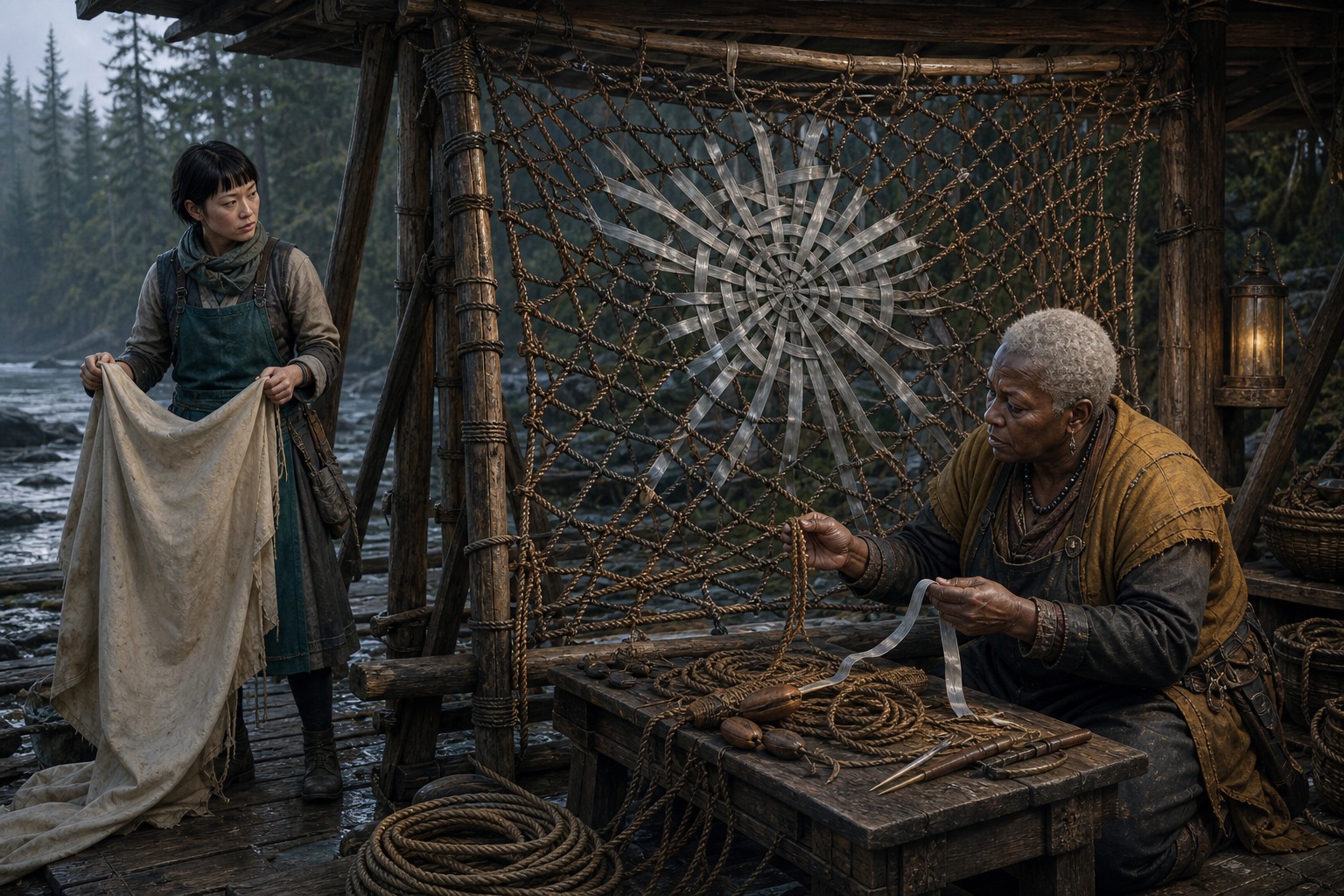
What you see: nobody has ever seen one. Not once, not badly, not in a way anyone credits. What exists is the work — a course laid up overnight in the wrong stone, thatch continued in an unknown pattern, a net mended with something that is not thread. That there is no description at all, on any Wanderer, is the strangest fact in this entry.
They finish things.
Work left out overnight is sometimes further along by morning — a course of thatch continued, a wall laid up another hand, a net mended, a fence closed. It is never done well, which is to say it is never done the way the trade does it. The thatch runs in a pattern nobody uses. The course is true and in the wrong stone. The net is mended with something that is not thread and holds anyway.
So every trade covers its work, and every trade covers it differently, and apprentices are taught the covering before they are taught the craft. Most are told why only when they ask, and a good many working adults have never asked.
The Stonekin problem is a body of law. A maker remains liable to questions about a thing for as long as both survive — that is the answering (§4) — and the answering assumes the maker made it. A mason written to about a course she did not lay, in a wall she signed, has a genuine and unsettled difficulty, and obliged work now appears in guild judgments as a category of its own, with opinions on both sides and no doctrine anybody is happy with.
What people get wrong is that they are helping. There is no evidence of intent anywhere in it, and reading intent into it is how people start leaving work out deliberately, which has never once ended well for the person who tried it.
A nuisance for a thatch. Emphatically not a nuisance for a footing, a gallery prop, or a rill-plank (§11.2), and boundary crews and Deep Stonekin cover their work with a thoroughness that looks superstitious from outside and is nothing of the sort.
#Namesakes · Hazard. · Old growth, near where people camp.
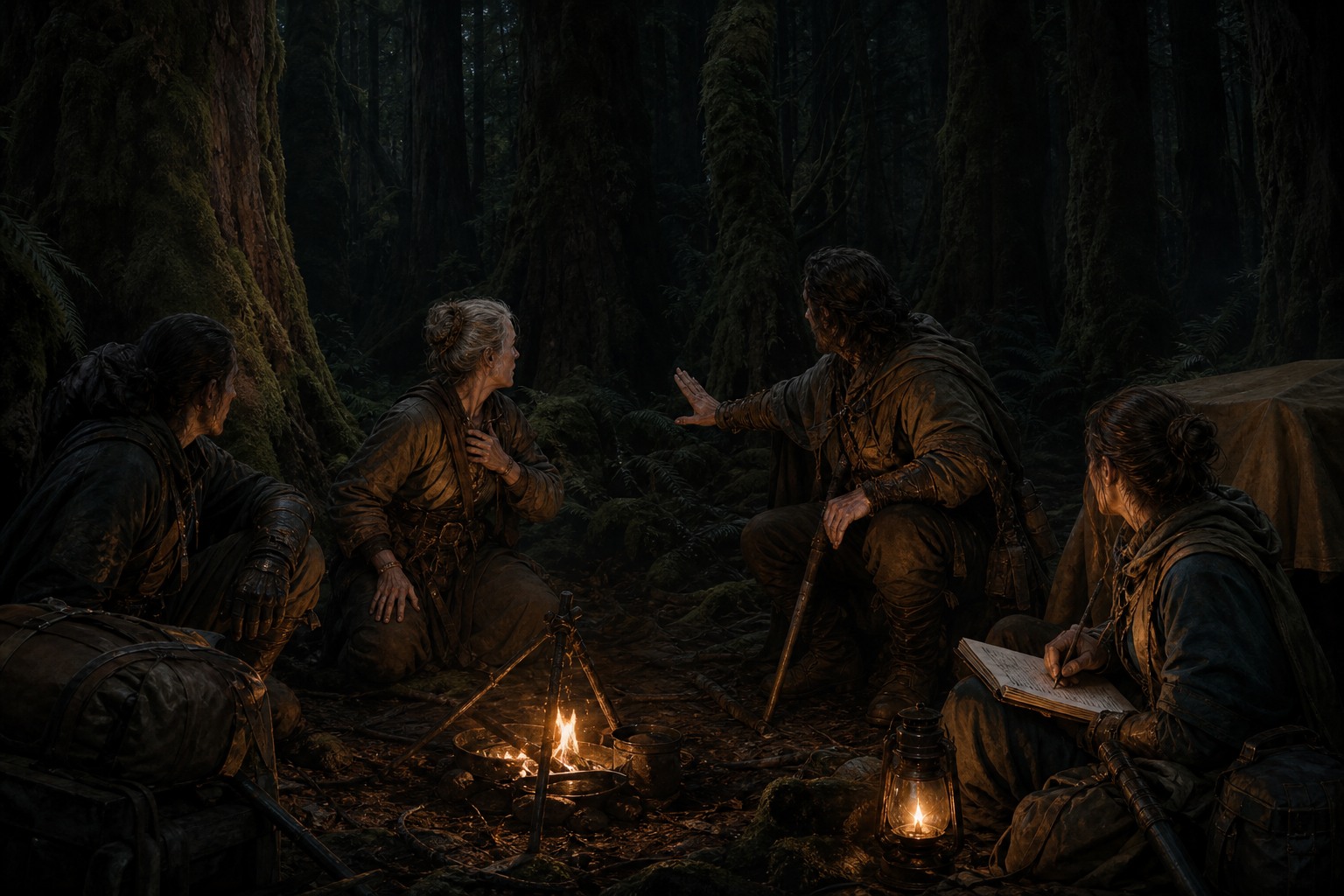
What you see: nothing, ever. A namesake is a voice in old growth, and there is no credible account of a body, a shape, or a movement in the moss — only the sound, which is a human voice reproduced exactly, from thirty to a hundred paces off.
Something in the moss repeats a name it has heard, at a distance, in the voice it heard it in.
They do not lure. They are not calling anybody, they do not answer when answered, and experienced people do not walk toward them. The trouble namesakes cause is not that anyone follows the voice. It is what a repeated name means.
A namesake working near a boundary camp has, to anyone listening from the next ridge, testified that a particular person was in a particular place. Crews discount this formally, and the phrase namesake-heard, not crew-seen appears in enough record books, on enough Wanderers, that nobody can say which crew wrote it first.
They repeat the name they heard, which is not always the name anyone still uses. A namesake can hand back something a person put down years ago — a Fleethollow who changed branch, a Stonekin apprentice's name from before the guild-line took her, somebody who left a house and meant it. Descent on the Tread is reckoned six different ways and they do not always agree (§1a); a namesake does not know that and repeats what it got. Several very old quarrels restarted this way, in front of witnesses, at the worst possible moment.
And a namesake near a settlement will sometimes carry a voice that has been dead for thirty years, saying a name that has been dead about as long. There is nothing to be done. They do not stop, they cannot be moved, and families have left good land over it.
What people get wrong is that it means something. There is no sign of understanding in it at all, which is the part that people find hardest to accept about the ones that hurt.
#Latchkin · Hazard. · Wherever people close things.
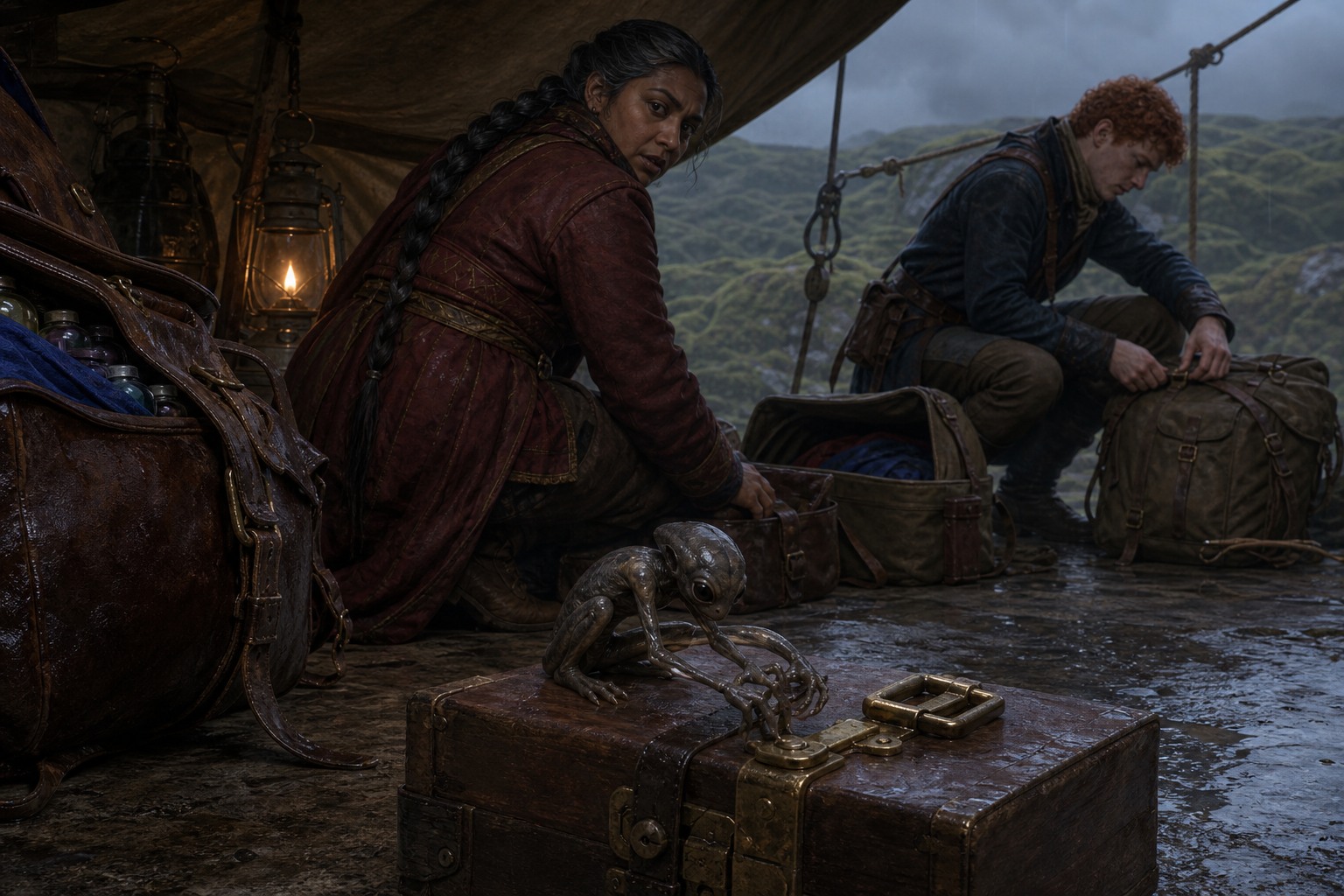
What you see, briefly: something hand-sized and long-limbed, gray-brown and glossy like a wet pebble, with fingers far too long for its body and far too many joints in them. The face is mostly a pair of large dark eyes. It does not stay to be looked at.
Quick, and interested in anything shut. They undo buckles, catches, knots, lashings, and locks a good deal better than a thing that size has any business doing — and they do not take what they open. They open it and move on.
So a camp wakes to its packs undone, its animals loose, and its most important case standing wide in the rain, with nothing missing from any of it. First-timers spend an hour looking for the thief.
The latchkin does not do the harm. It removes the thing that was preventing the harm. A pen gate above a rill. A reagent case beside a fire. A Depths mouth left barred for a reason nobody recorded, by people who are no longer available to ask. Hazard is the ordinary case, and the ordinary case is not the one that gets written down.
The answer is the double-tie — a lashing that has to be undone in two motions in a fixed order, taught to caravan hands in their first week and used on anything that matters. Latchkin have not worked it out. Everybody who explains the double-tie to a newcomer says yet, and means it.
Shadowhands regard them with professional irritation, and the better ones concede, privately, to having learned something from watching one work a lock it should not have been able to reach. The story is told in every Shadowhand house with the name taken off.
Where they are not. Bare-rock settlements with no growth nearby have none — and their people do not tie double, which visitors from moss country find unnerving in a way they have difficulty explaining without sounding rude.
#Miscairns · Contest. · Along routes through growth.
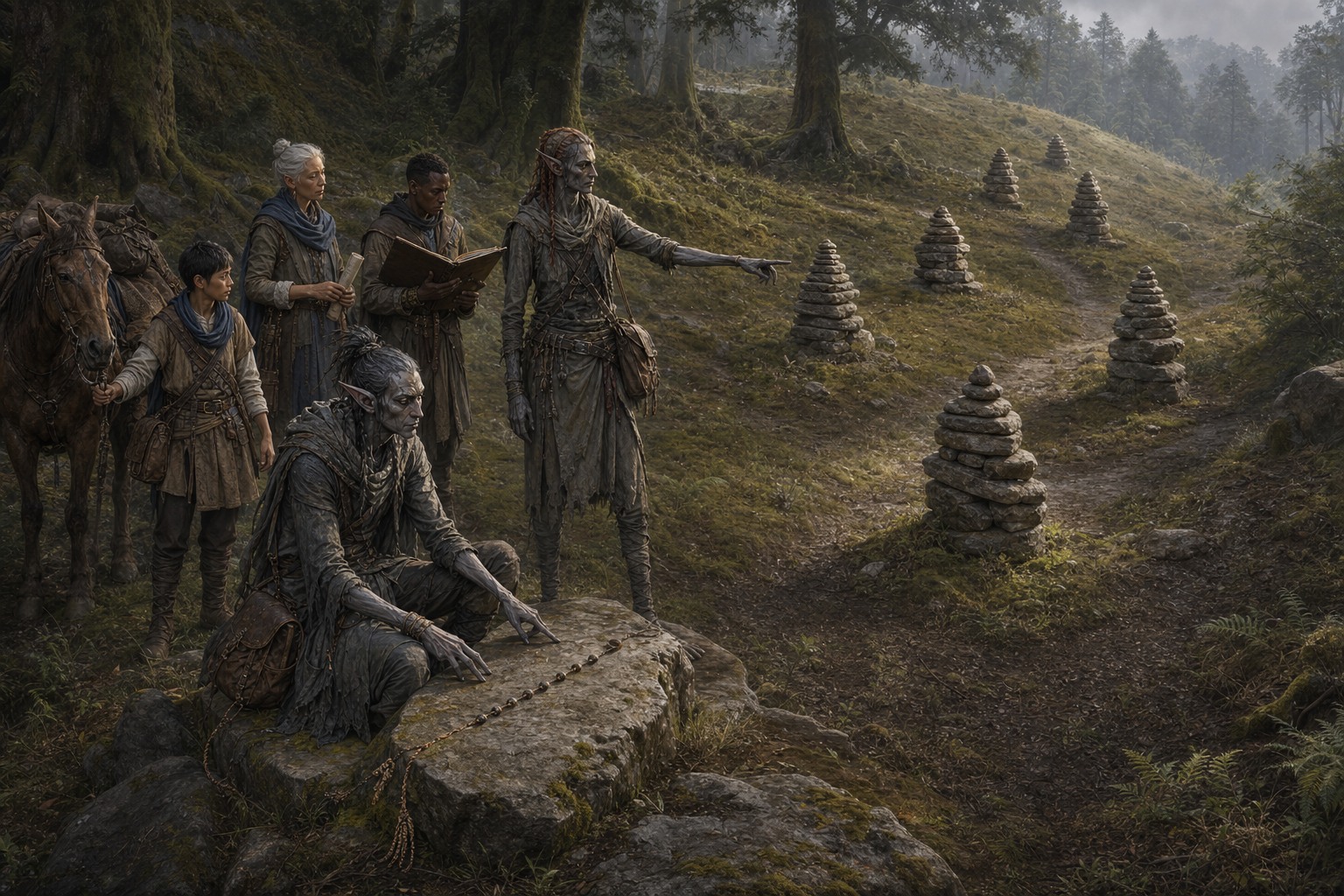
What you see: the cairn. In eleven recorded cases somebody also saw the builder, and the eleven accounts are close enough to be worth something — a knee-high shape, gray and rough-surfaced like the stone it stacks, four-limbed, working unhurriedly with its back turned. All eleven say the same thing about it: that it did not stop, and did not look up.
They build.
Cairns, blazes, stacked trail-marks, the small deliberate arrangements of stone that say this way — built well, built convincingly, and built in the wrong places. Nobody knows why they do it and nobody has ever caught one undoing anything. They have only ever been observed adding. Whether that is restraint, incapacity, or coincidence is unknown, and route law assumes none of the three.
The danger is arithmetic. A good false cairn is not distinguishable from a good true one, a route is a chain of them, and a chain with one wrong link in it is not a shorter route. It is a different one.
So the Fleethollow count. Route-records carry the number of markers on a stretch and not only their placement, because a count is the cheapest thing in the world to check and an addition cannot hide from it. A route-keeper who reaches a stretch and finds one cairn too many stops walking, sits down, and sends word — which is not caution but procedure, and the procedure is old.
Clearing a stretch is why this entry is a Contest and not a Hazard, and there is no fight in it anywhere. It is a season of work: re-walking the route, re-establishing every marker, and persuading everyone who uses it to trust the new set. Orders send crews. It is one of the few jobs that puts High and Wild Fleethollow on the same stretch of road, and neither branch has ever pretended to enjoy the other's company while doing it.
What people get wrong is that it is malice. That belief is very difficult to maintain after watching one build, unhurried, with evident care, in a place where a marker genuinely ought to go if the route had gone that way.
Where they are not. The flank routes cross bare rock and carry no growth, so they carry no miscairns — which is one reason the flanks are trusted rather further than their actual danger warrants.
#Orchard-quiet · Peril, and never hostile. · Old Hearthborn Orchards, after dark.
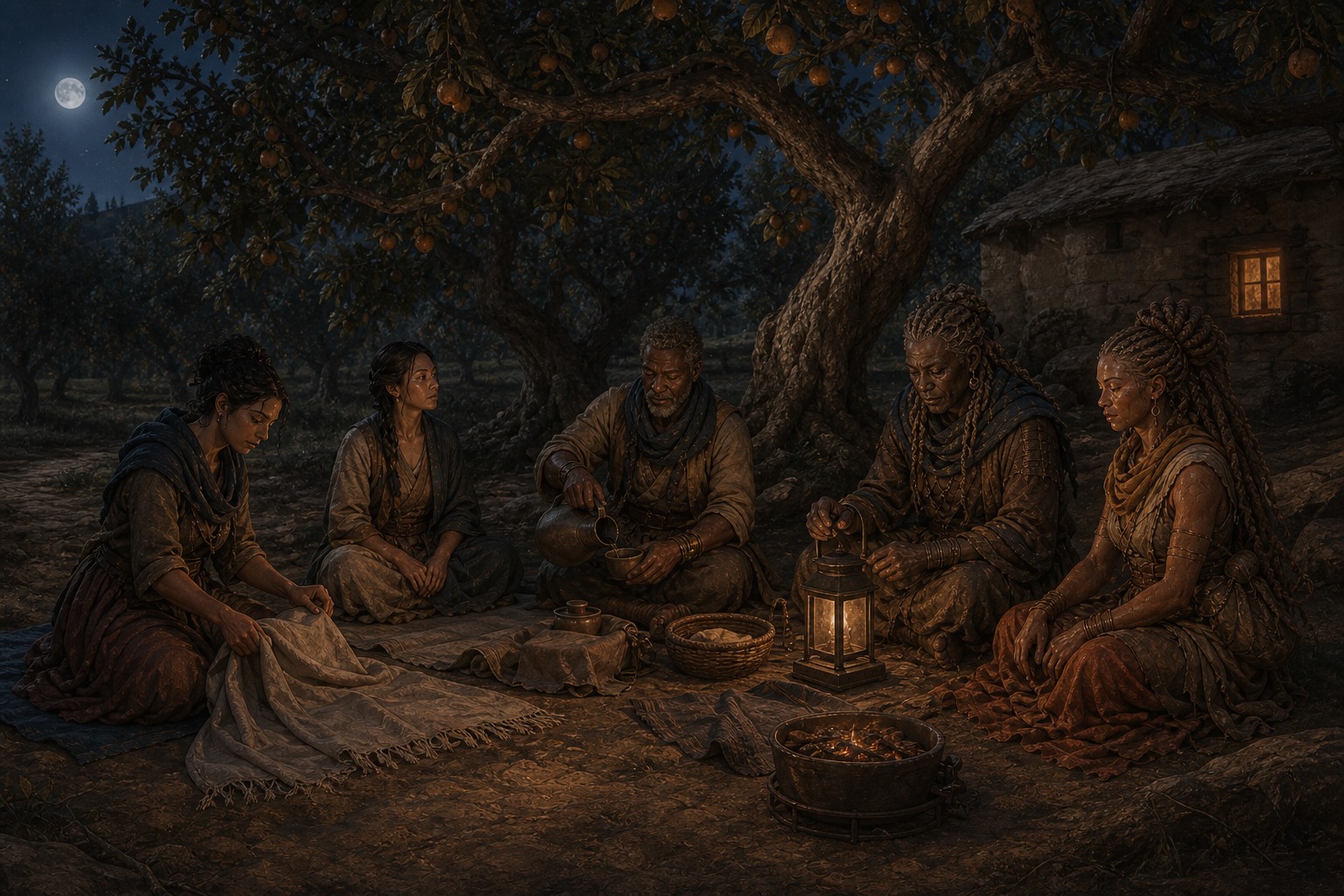
What you see: the Orchard. Nothing else, ever. It has no form and makes no sound, light, movement, cold or smell. People who spend a night in one do not describe seeing anything, and the consistency of that across four centuries of accounts is the reason nobody has managed to dismiss it.
In an Orchard where the trees stand over the laid and nobody planted them, something gathers that is not the trees.
It does not speak, obstruct, threaten, or harm. It is present, and it is more present the longer anyone stays, and that is the entire account of what it does. There is no version of this entry in which somebody fights it.
People who spend a night in a truly old Orchard sometimes come out changed, and decline to say how. They are not damaged and they are not improved. Most of them do not go back. Some of them go back, and those are the ones a Hearthborn community watches — courteously, without ever saying so, for the rest of their lives.
There is a form of words for asking to stay after dark and a form for refusing, both old, and neither of them mentions why. Outsiders who receive the refusal generally think they have been told something about hospitality.
Songweaver traditions have opinions about what gathers there, because the return of essence is their work and they consider this to be adjacent to it. Hearthborn communities have not invited them to share those opinions, and the two positions have coexisted for a very long time by the simple method of never being discussed in the same room.
Whether it has any relationship to the dead is exactly the question this book does not answer. Nor does it answer §6's — whether a tree grows for somebody who is not Hearthborn. Whatever is in the Orchard has never been asked, and there is no reason to think it could be.
None of this is a roster, and none of it is a ceiling. A few dozen named things do not populate a continent-sized living creature. They are worked examples of what belongs here: life built from the hide, the interior, the low world, and the peoples who arrived carrying their animals with them. The next thing a Chronicle needs should be built the same way and will be just as real.
For the Pulse itself, see Player's Handbook, Chapter I — The Pulse. For the anomalies that form where it folds — phenomena rather than creatures, and therefore not entries in this book — see Tread Master's Guide, Part V, §§32–33.