

What you learned to do
The Practices
In this section
Eight disciplines create specific possibilities without dividing the world into eight kinds of people.
On this page 20 topics
#What you have learned to do
A Practice is a discipline that changes what a character can attempt. Some work the Pulse. Some work through oath, rite, reagent, relationship, or returned essence. Two need no supernatural working at all.
None is a moral alignment, profession, rank, or complete description of a person. Any Lineage may learn any Practice when their history supports it. The choice tells the Tread Master where to look for training, obligation, tools, standing, and the kinds of action that have already shaped the character.
#What an opening method means
Each Practice begins here with three common methods. These are Techniques: learned ways to create a specific possibility in the fiction. They are not buttons that guarantee an outcome.
The Technique establishes the method. The character's Competency, the present conditions, the opposition, and the quality of the Performance determine what that method achieves. A method may have an unusual use when the same cause genuinely supports it; description cannot add a power the method does not possess.
Costs matter even when they are not formal conditions. A committed position can be lost. Surprise cannot be reused unchanged. Reagents are consumed. An oath narrows future choices. Living help creates a debt of care. Only Spent Voice is a named condition in this chapter.
#The eight Practices
| Practice | What a company expects from it |
|---|---|
| Warblade | hold dangerous ground, turn force, and break defended positions |
| Shadowhand | find an unnoticed line, exploit a real opening, and misdirect pursuit |
| Pulsewalker | counter in rhythm, cross unstable ground, and carry a usable cadence |
| Bloodmark | drive, endure, and answer through the reach of a witnessed oath |
| Sagebound | produce prepared magical effects through tested formulas and consumed reagents |
| Wardpriest | intercede, stabilize the living, and answer violations of a held boundary |
| Wildcaller | ask present life to restrain, lend an adaptation, or offer a passage |
| Songweaver | burden movement, break hostile workings, and sustain one failing living function |
The names later practitioners use—Wall, Herald, Green Guide, Relic-reader, and the rest—describe recognizable ways a life in the Practice has developed. They are not ranks, subclasses, or choices made before play.
#The Practices — I. The Warblade
#Force of arms, mastered without a working of the Pulse
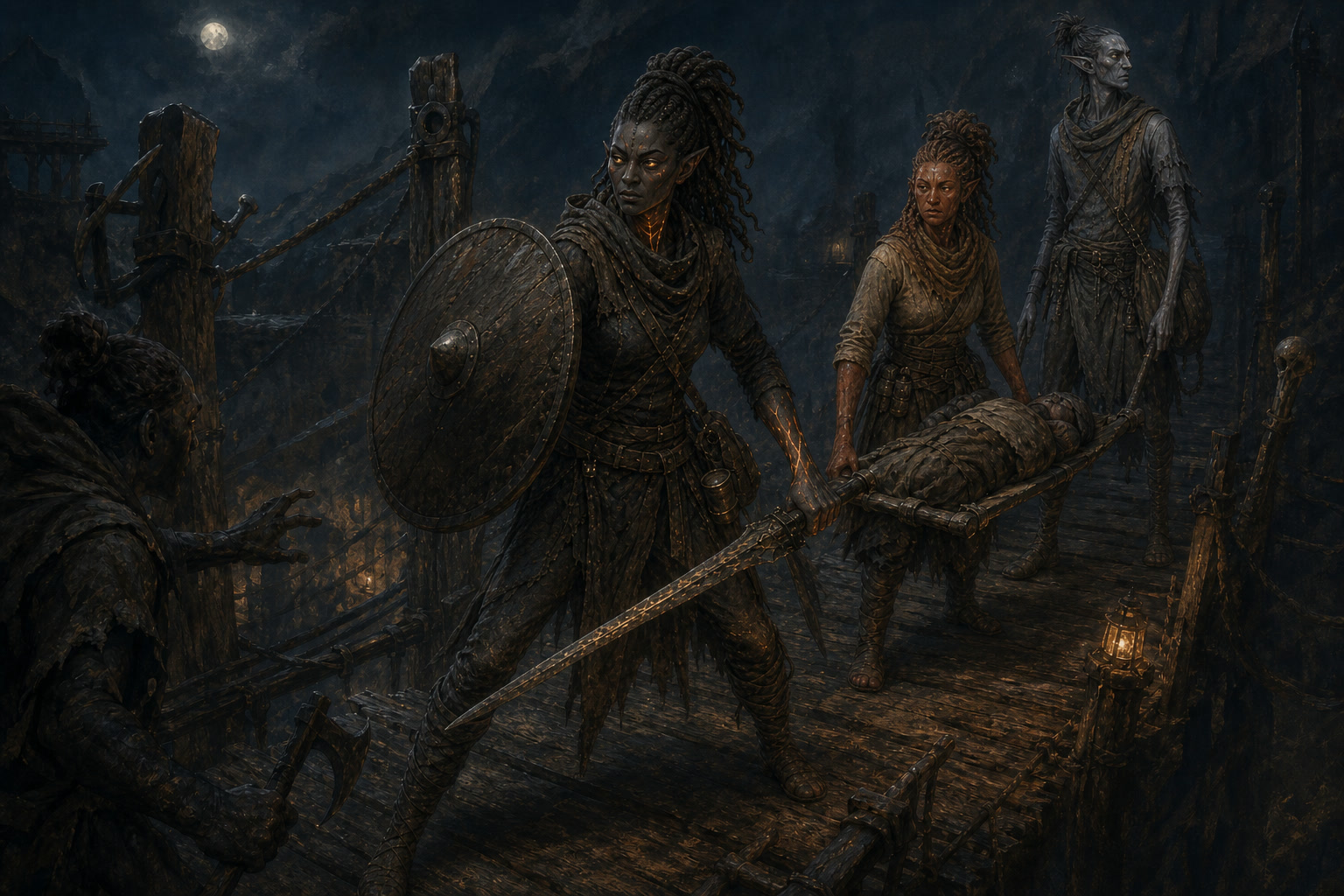
#The trained edge
Soldiers, guards, duelists, shield-bearers, hunters, caravan arms. The discipline of weapons itself, learned the long way, by people whose skill is entirely their own.
A Warblade needs no Pulse and no rite. That is the point, and it is placed first in this chapter on purpose: a Practice is a discipline, not a kind of magic. Nothing in this book requires you to be touched by anything.
He put himself in the doorway and he did not come out of it. I want to be plain, because the tale has grown since: he did not drive us off. He stood in a doorway with a shield he had clearly owned a long time, and every one of us who went at him came away worse, and none of us got past. We left because it was going to cost more than the house was worth. That is all. That is enough. — testimony taken at a hearing, name withheld
#What it actually is
Drill, until the body answers before the mind has finished deciding. Weapon, shield, stance, distance, footing, the handling of ground — worked over and over until a fight becomes something you read rather than something that happens to you.
Then the other half, which is the half nobody outside the trade thinks about: knowing what a fight is for. Most fights are not won. They are ended, avoided, survived, or turned into something else, and a Warblade who can only kill is a Warblade with one answer to every question.
They protect by standing in the way as surely as by striking. A great deal of the discipline is about being somewhere, on purpose, and not moving.
#What it costs you
Holding a line costs freedom of movement.
To hold a place is to give up every other place. You commit to the doorway, the stair, the body on the ground behind you — and while you hold it you are not pursuing, not flanking, not going to help, and not leaving. Everyone opposite you can see exactly what you have decided to protect, which makes you the most obvious thing on the field.
Commit to a strike and the same rule applies. A follow-through that misses leaves you extended, and the ground you gave up to make it is not waiting for you.
And nothing supernatural spares a Warblade a blade's ordinary consequences. Injury tells. Exhaustion tells. Reach, armor, and numbers all tell. There is no working here to make any of that stop being true.
#How it is learned
Everywhere, badly and well, and rarely in the same way twice.
Service teaches it in bulk — militias, house guards, convoy companies, the standing arms of a settlement — where you learn formation before you learn anything clever, and learn it alongside people who will be beside you when it matters.
Apprenticeship teaches it narrowly and deeply. One master, one school, one set of forms, often one weapon, and a body of opinion about all three that the student inherits whether or not they notice.
Survival teaches it worst and fastest. People who learned to fight because the alternative was losing tend to have terrible form, no vocabulary for what they are doing, and reflexes that trained practitioners find genuinely unpleasant to face.
None of the three is better. They produce different fighters, and each is visibly itself to anyone who knows the trade.
#What it is not
It is not lesser. The Warblade stands in the same catalog as every Pulse-working Practice, and stands there on merit. A world in which the disciplined body is a second-rate answer is not this world.
It is not a license. Being trained to fight does not make a Warblade a soldier, a killer, or anybody's weapon. Most of them spend most of their lives not fighting.
It is not universal. A Warblade who trained on a shield wall has trained on a shield wall. Put them in a knife-fight in a cellar and they are a person with a lot of relevant experience and the wrong tool.
#The opening methods
Brace and Turn. Meeting an incoming force in disciplined form and turning its line aside while keeping whatever is behind you behind you. It does not make you untouchable and it does not hurt the attacker. It decides where the blow goes.
Driving Cut. Committing weapon, footing and follow-through to break a defended position rather than trade harmless exchanges across it — wounding, breaking what they are holding, or moving them off it. It is not subtle and it is not meant to be.
Cover the Crossing. Holding an opening — a gap, a stair, a stretch of bad ground — for exactly as long as somebody else needs to get through it. This is the one that gets Warblades killed, and the one they are most often remembered for.
#The ways people name
The Wall holds. The Reaper ends things quickly and is not always welcome afterward. The Marksman works at distance, where the argument can be settled before it arrives. The Caravan Arm does all three badly and traveling, which is proof enough.
These names describe mature habits, not ranks. Some Warblades teach, some command, some spend forty years on one weapon, and many simply keep taking work where somebody needs a dangerous place held.
#The Practices — II. The Shadowhand
#Precision and stealth where a loud approach fails
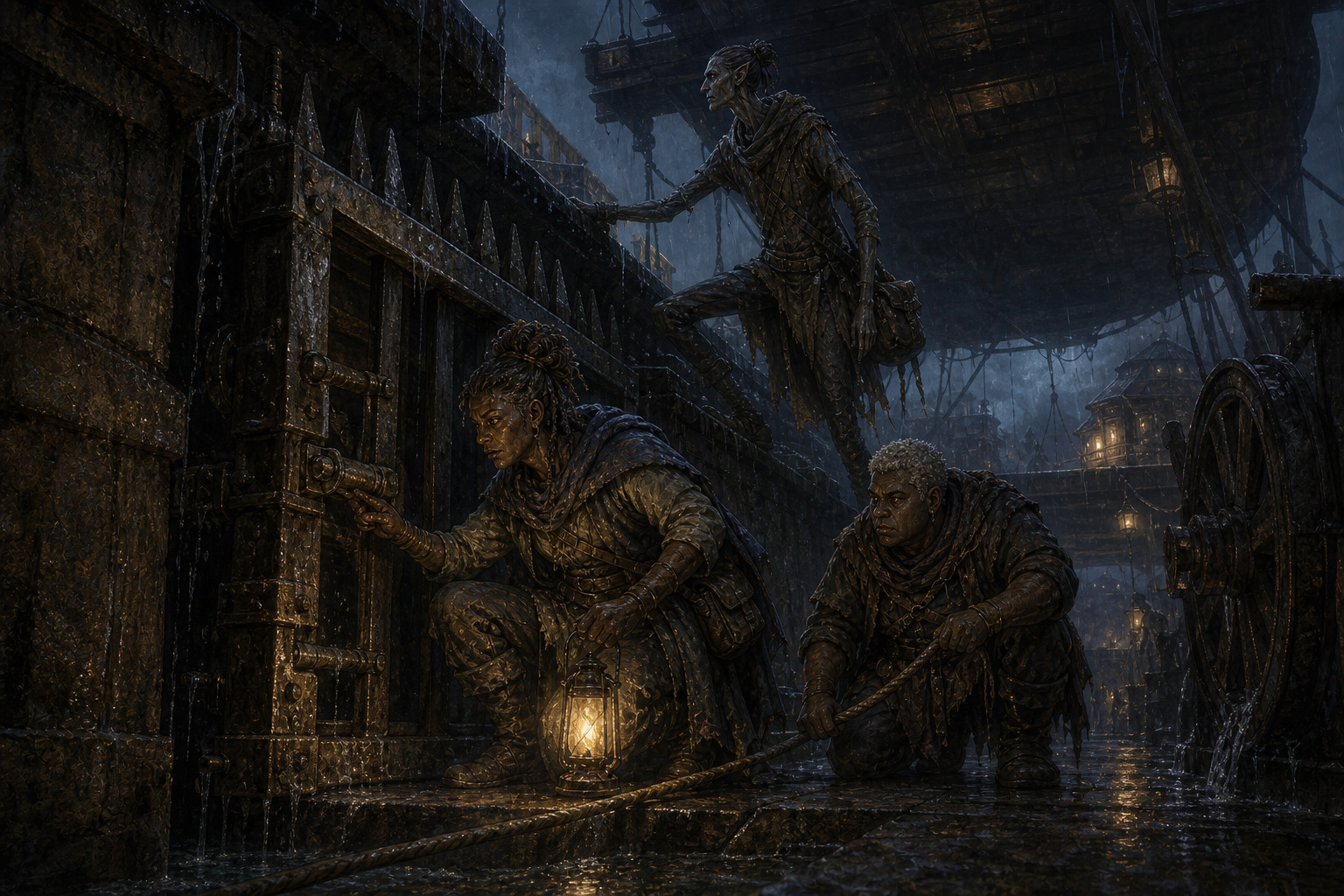
#The quiet way
Scouts, delvers, infiltrators, thieves, spies, locksmiths. People who work in the margins of a place — its timing, its inattention, the half-minute when the corridor is empty — and turn all of it into a way through.
Like the Warblade, wholly mundane, and no less to be feared for it.
There is no forced entry. I want that in the record because the family will not accept it. The shutter was unlatched from inside, which means somebody was inside first, and the only hour that works is the one where the house is at supper and the yard door stands open for the girl bringing water. Nobody saw anything. Nobody would have. It is a very good hour, and it is the same hour every day, and it is in the record now. — from a locksmith's assessment, filed after a household theft
#What it actually is
Reading a place the way other people read a page.
Not stealth as a talent for being quiet — that is a small part of it. The discipline is attention: where people are looking, when they stop looking, what a building's construction assumes, which routines are so old that nobody in the house can see them anymore. A Shadowhand does not become invisible. They find the line that was already there and take it before it closes.
The precision half follows from the same reading. If you know where a thing is weak — a lock, a routine, a formation, a person — you do not need force. You need to be in the right place at a particular moment, with something small.
Loud approaches fail for reasons. The Shadowhand is the study of those reasons.
#What it costs you
Surprise, once spent, does not come back unchanged.
Strike from concealment and you have revealed where you were. Use a line and you have shown its timing to everyone who was watching that ground. Tell a lie with your body and, once it is contradicted, it is known — you cannot sell the same false tell to the same person twice, and a careful opponent starts assuming it.
Everything a Shadowhand does spends part of a finite supply, and the supply is other people's ignorance. Work the same house twice and the second time is harder because of the first.
#How it is learned
Rarely taught, often absorbed, and almost never in a school with a name.
Trade teaches most of it. Locksmiths, surveyors, roofers, gaolers, night-watch, anyone whose work requires knowing how buildings are actually put together rather than how they look. A startling number of Shadowhands began by fixing the things they later learned to pass.
Delving teaches a harder version. The Depths do not care whether you are clever, and someone who has spent years reading unstable ground for a living reads a guarded corridor much the same way.
Necessity teaches the rest, badly and effectively, to people who had to get in or out of somewhere and had no other option. They tend to be excellent at exactly one kind of problem and alarming at the rest.
#What it is not
No working makes a Shadowhand unseen. There is no magic here and there never was. Everything they do is available to anybody who has read a room correctly, and the entire advantage is that almost nobody does.
The trade is not criminality, whatever a settlement's watch may assume. It is full of scouts, delvers, guild investigators, and the people hired to find out how somebody else got in. What the discipline is for is a question about the person holding it.
And nothing about it is a guarantee. A line that existed an hour ago may be gone. Someone may simply look up.
#The opening methods
Find the Quiet Line. Reading attention, construction and timing to take one line through a watched space that ordinary observation would miss. Good for three things, and the third is the one people forget: an approach nobody is covering, a flank — and breaking line of sight in the middle of an encounter.
A second's distraction and the right line, and you are simply not in the room any more. Nobody has to be fooled and nothing has to be fought. It will not make you invisible or open a sealed wall — the line has to already be there — but in a chaotic space there nearly always is one, and almost nobody is looking for it.
Exploit the Opening. Turning a vulnerability into damage, at the moment it exists.
The opening comes from somewhere — they have not seen you, something else has their attention, they are overextended, or you know how the thing they are relying on is built. What you do with it is your choice: wound them, ruin the equipment they are counting on, or interrupt what they were about to do. Any of the three lands harder than a broad attack, because you picked the moment.
You cannot manufacture the opening. Without one this is just a stab. And committing tells everyone watching where you were.
Misdirect Pursuit. Giving a chase something credible to follow that is not you — a planted trace, a sound in the wrong direction, a route that looks taken — while you move your people the other way.
This is what gets a group out. It buys whatever time somebody needs to reposition or leave, and lasts exactly until a pursuer thinks to test it. It confuses nobody's mind and tidies up after nobody: a trail you did not think about is still a trail. Once contradicted, the tell is spent, and that pursuer has learned what you sound like when you are lying.
#The ways people name
The Delver works ruins, tunnels, and unstable ground. The Shade works cities, households, and factions. The Listener collects, sells, and withholds what people say when they think the room is empty. The Locksmith works the physical world — doors, mechanisms, and the honest question of how a thing opens.
The names describe where the reading is applied, not ranks or promised destinations. The same discipline may go underground, social, legitimate, criminal, or entirely unaccounted for.
#The Practices — III. The Pulsewalker
#Working the world through a Wanderer's own rhythm

#The living resonance
A martial practice that moves in time with the Pulse — the body trained as an instrument tuned to a rhythm running beneath the bone-rock.
It is learned form by form. It is not a bloodright, and no people owns it.
Third day out we lost the road to a slide and the guard we had hired walked across it. Not quickly. That is the part I keep turning over. She went at the pace of somebody crossing a room, on ground that had already taken two mules, and she did not slip and she did not hurry. I asked her afterward how she knew where to put her feet and she said she had not been listening to the ground. — from a caravan factor's report on hires
#What it actually is
A Pulsewalker trains repeatable forms — stance, step, breath, guard, the handling of whatever they carry — until the body can perform them without deliberation. Then they learn to time those forms to the resonance underfoot.
That is the whole of the method, and it is less mystical than it sounds. The Pulse is not commanded and not spent. It is kept time with, the way a rower keeps time with a stroke that is already happening. What the discipline buys is not power. It is timing — the right foot on ground that is about to be steady, the deflection begun a half-beat before the blow arrives, a company of frightened people moving as one because somebody is holding a cadence they can follow.
A Pulsewalker on bad ground looks unhurried. That is the tell, and it is why they are hired.
#What it costs you
Reading a cadence commits attention and makes the reader legible.
Keeping time commits your attention — it is not something done in the back of the mind while you attend to something else. And a person keeping time is legible. Anyone who has fought one before, or watched one for long enough, can see where the next beat lands. You are never hidden while you are keeping time.
Each form commits body and breath to one answer. Reverse it halfway and you are off cadence, which is worse than never having begun — the ground is where it was, and you are not.
#How it is learned
There is no single school, and three roads into the discipline are common enough to have names.
Order-trained. Small scattered enclaves, descended from a tradition older than most of the settlements around them, still take students and still teach the forms in sequence. A hermit's life, where it happens, tends to come after that training rather than instead of it.
Mentor-taught. One practitioner, one student, often a former Order member who left or was asked to leave. Everything the student knows arrives through one person's reading of the discipline. It may be complete, deeply personal, or quietly at odds with the old forms. The student will not know which until they meet someone else who walks the Practice.
Self-taught. Rarer and stranger. Some people reconstruct the whole thing alone, out of years of repetition and injury and paying attention, with nobody to correct them. It works. Whether what they arrived at is the tradition or something they invented that behaves identically is a question the Practice does not answer, and a self-taught Pulsewalker is a Pulsewalker regardless.
#What it is not
It needs no rite, no posture, and no permission. Standing on a living Wanderer is contact — there is no threshold to cross, nothing to open, and nobody to ask. A Pulsewalker in a cellar and a Pulsewalker on a ridge are equally in contact, and neither of them did anything to become so.
It is not a bloodline. Any people may take it up, and none has a claim on it.
It is not universal combat mastery. A Pulsewalker who has trained one set of forms has trained one set of forms. The discipline does not hand over a weapon they never learned.
And it goes uncertain when the Pulse does. A Stillness thins the resonance for every Pulse-dependent Practice alike, and a Pulsewalker feels it the way a musician feels an instrument going out of tune under their hands. What remains possible then is not a settled question.
#The opening methods
Three forms are common enough that most practitioners meet them early. None is a spell and none is guaranteed.
Resonant Counter. Deflection, step, and answering strike timed as one trained form, so that turning aside a blow and answering it are not two decisions. It commits you to that exchange.
Resonant Step. A short driven burst across ground that should not carry you — unstable footing, a threatened gap, a contested line. It commits your momentum, and stopping halfway is its own problem.
Dormant Form. A Pulsewalker can turn the discipline inward and enter a state patterned after a Wanderer's dormancy. Breath and movement fall almost away. The body keeps time with the deepest rhythm it can find and spends that stillness on its own repair.
Given safety and uninterrupted time, the form stabilizes injuries and lets the Pulsewalker recover beyond what ordinary rest in the same interval would allow. It is accelerated healing, not restoration. It cannot regrow destroyed tissue, instantly replace lost blood, purge poison, or guarantee survival from a mortal wound.
The cost is helplessness. A dormant Pulsewalker is inert, difficult to rouse, and unable to defend themself or watch the road. Disturbance, danger, or choosing to wake ends the form before its full benefit is gained. It is a technique for surviving because someone else made safety possible, not a way to leave a fight and return whole.
#The ways people name
The Still Fist turns everything inward — endurance, recovery, the body kept as the one piece of equipment that never fails. The Deep Current works the rhythms nearer the Depths and accepts what that costs. Road Cadence is the convoy guard's version, built for long ground and other people's cargo. A Bearing Guard keeps time as a trade, hired not to fight but to make sure everyone else can.
These are not ranks and nobody picks one at the start. They are what a settled Practice gets called by the people watching it. There are others already, in places that never sent word.
#The Practices — IV. The Bloodmark
#Conviction sworn until it reaches the Pulse
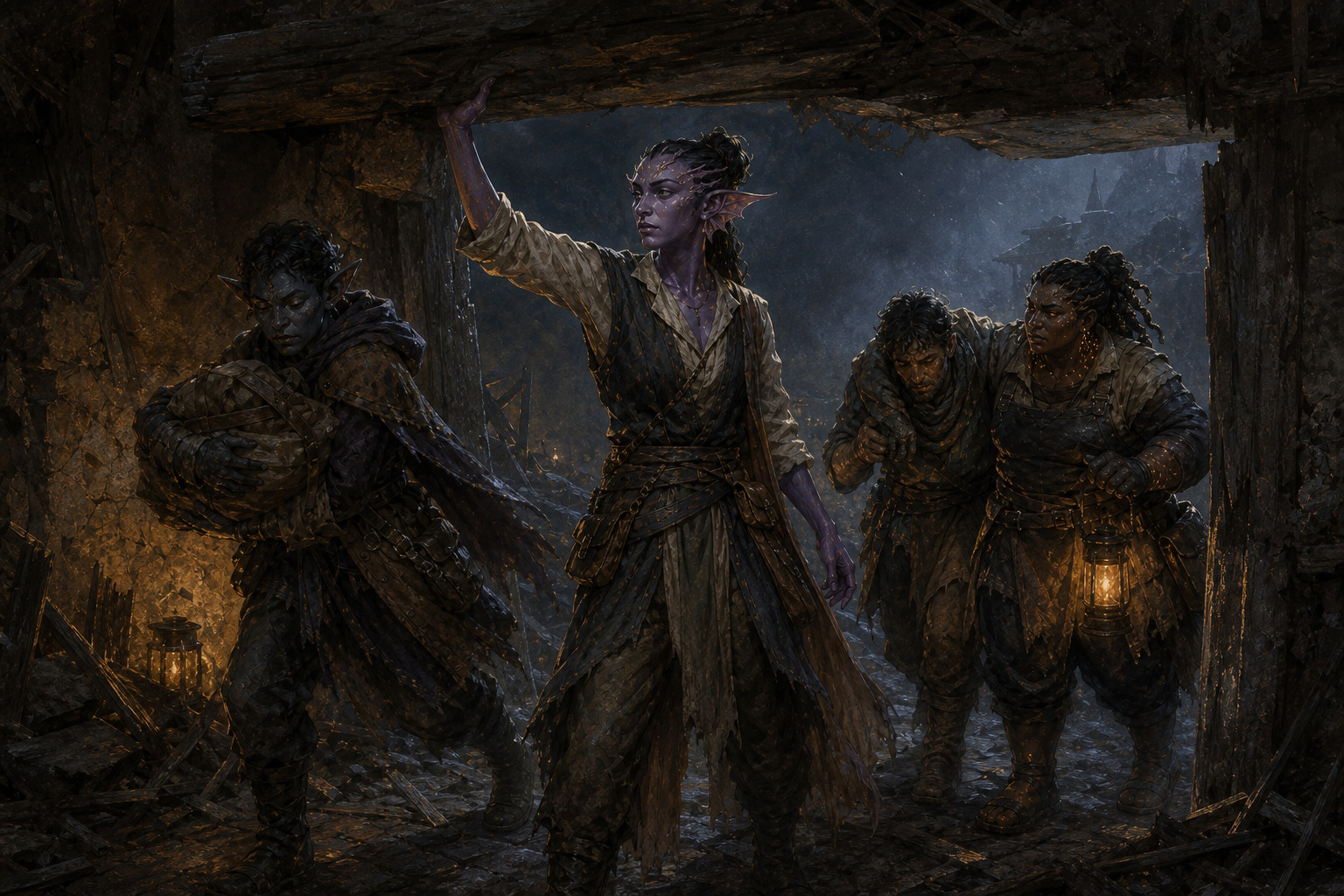
#The sworn
Not study. Not covenant. Not birth. An oath held so hard that it becomes a channel.
A Bloodmark swears — to a debt, a person, a cause, a place, or a Wanderer itself — and lives inside that promise. Under the right pressure, the conviction reaches the Pulse where discipline and learning cannot.
It is the rarest way of all, and nobody can tell you why it works.
Sworn this day before the assembled house: that I will see the child returned, or account for where she went, and will not take work, wage, or roof that carries me further from the answer than the day before. Witnessed: the steward, the smith, both of her aunts. Recorded against the objection of one witness, who asked that it be noted she thought the terms too wide. — an entry in a settlement's oath-register
#What it actually is
An oath, specific enough to constrain you, held in earnest, and recorded — sworn where somebody heard it and wrote it down.
That is the whole substrate. There is no rite to learn, no order to join, and nobody to grant you anything. What a Bloodmark does under pressure comes through because of what they have refused to put down, and it comes through only where the oath actually reaches.
The terms matter enormously. I will protect this town is a channel. I will do good is a sentiment, and does nothing at all.
A hollow declaration is no channel. People try. It does not work, and the trying is usually visible.
#What it costs you
The oath binds future choice.
Every time the oath opens, it narrows what you may do next. You have declared, in front of witnesses, which thing you will not walk away from — and the world, and everyone in it, now knows where to find your limits. A person with a public oath is a person who can be predicted, cornered, and used.
And breach is not a private failing. Abandonment, contradiction, or an oath quietly set aside becomes a real consequence in the world: relationships change, access closes, and what was recorded against you stays recorded.
Nothing about the channel makes you right. It does not prove your cause just, your target guilty, or your judgment sound. It only proves you meant it.
#How it begins
Almost never on purpose.
Debt is the commonest. Somebody did something, or failed to, and the swearing is what a person does when there is no other way to carry it.
Loss is the next. An oath sworn over a body, or over an empty place where somebody should have been, and held long past the point where anyone else expects it to still be running.
Refusal is the rarest and the strangest: a person who looked at how a thing was and simply declined, out loud, in front of witnesses, and has been living inside that refusal ever since.
None of these is training. You do not become a Bloodmark by deciding to be one — you become one by swearing something you turn out to be unable to break.
#What it is not
No oath makes you a good person. The Practice is entirely indifferent to whether your cause deserves you. Oaths of revenge work. Oaths sworn in error work. An oath may remain strong long after everyone who loves you has begged you to stop.
It compels nobody but you. It does not bind the person you swore about, place obligations on anyone else, or entitle you to anything. A person you swore to protect may tell you to leave, and your oath is your problem.
It grants no permission to strike. What comes through answers to conviction, never to convenience. The channel opens against what actually obstructs the oath, and against nothing else.
#The opening methods
All three run on the same rule, and it is worth having straight before the descriptions: they work against what is actually in the oath's way, and nowhere else. The guard on the door you swore to get through, yes. The man who insulted you at the gate, no — even if he is worse.
Oathbound Blow. A strike that carries the oath into the thing obstructing it.
You swore to bring the girl home, and there is a man in the doorway who will not move. That blow lands harder than you can otherwise hit — enough to wound him, put him down, or break what he is holding. The same swing at the innkeeper who overcharged you is just a swing. And putting a man through a wall does not establish that he deserved it; you will still have to answer for him afterward, and the oath will not help you there.
Stand Under Oath. Naming the oath as the thing you are doing, out loud, and then being unable to stop doing it.
You are holding the stair, you have been holding it too long, your arms have gone, and there is a perfectly sensible way out to your left. You do not take it. Not because you are brave — because you said what you were doing and the saying is load-bearing. It heals nothing, blocks nothing, and grants no protection at all. It removes the option of leaving. Fear, exhaustion, persuasion and good advice all stop working on you, which is not always a gift.
Answer the Oath. The one you do not decide.
Somebody reaches for the person you swore over. You are already moving — across the room, between them, or after whoever it was — before the thought has finished. It closes distance that exists; it will not carry you over a gap that is not there. And it does not ask permission: the person you have just thrown yourself in front of may be furious with you, may not have wanted it, and may say so at length.
#The ways people name
Oath of Debt — sworn to repay or answer something specific. Oath of the Wanderer — sworn to the titan itself, and stranger to hold than it sounds. Oath of Keeping — sworn to preserve rather than to act, which is harder. Oath of Redress — sworn to set something right, and the most likely of the four to end badly.
These names describe the promise, not a rank. An oath may be discharged, made permanent by its own terms, broken, or outlived by the person still trying to keep it.
#What remains unanswered
Why conviction should reach the Pulse at all, when study and rite and covenant reach it by their own long routes, is not known.
The scholarly traditions have theories and dislike each other's. The Bloodmarks themselves are, as a group, remarkably uninterested in the question.
It works. They swore. That has always been enough for them.
#The Practices — V. The Sagebound
#Understanding taken by study, worked by instrument
#The measured world
The most book-learned of the traditions — and defined less by what a Sagebound knows than by what they refuse to take on trust.
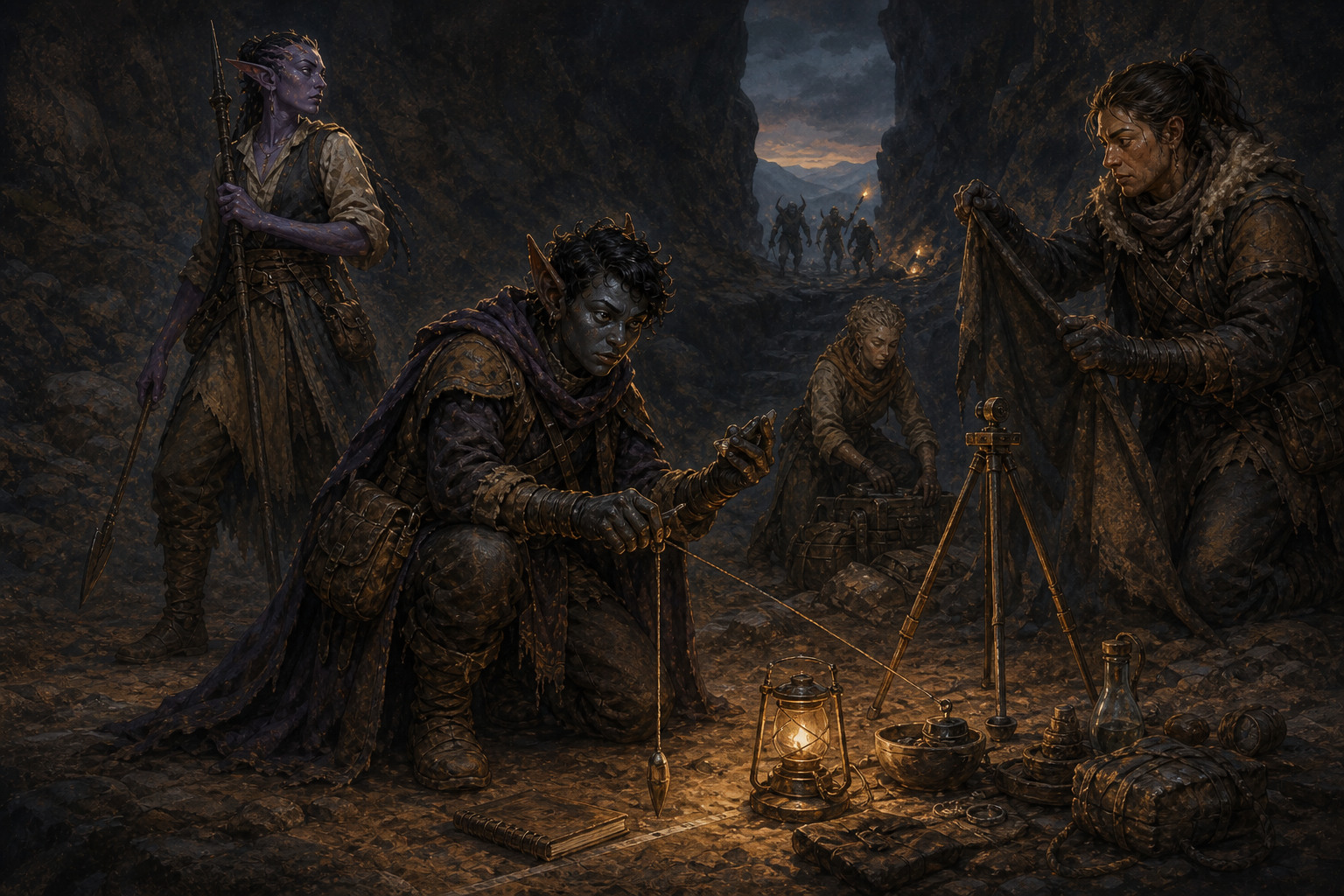
They study refined bone-iron and the relics that come up out of the Depths, and turn what they understand into worked effect. Where another tradition might trust feel, faith, or communion, the Sagebound ask what an instrument can prove.
Fourteenth attempt. Same array, same shard, quarter-grain more of the ember-salt. Result as before: nothing, and the shard is gone. I record this because it is the fourth night I have proved the same thing and I want it on paper that I was wrong in a specific way rather than generally. The array is sound. The salt is sound. The thing I was told about how they combine is not. Nine shards spent proving the guild wrong about one line. Worth it. Not saying so aloud yet. — a working notebook, hand unidentified
#What it actually is
Reading, testing, and formalizing — and then building an instrument that makes the formalized thing happen on purpose.
A Sagebound holds no stocked list of workings. They hold understanding, a focus, and whatever they have prepared, and the work is in the preparation. What they can do is what they have actually worked out, written down, and got to function twice.
The discipline underneath is a habit of doubt. The characteristic Sagebound question is what does everybody believe that may not be true — and the tradition is full of people who are difficult at dinner and indispensable in a crisis for exactly the same reason.
#What it costs you
The reagent is the most literal cost in this chapter.
A conductive shard. An ember-salt ampoule. A measure of prismatic dust. The working consumes what it names the moment it begins, whether or not it succeeds. A Sagebound who misses has still spent the material. A Sagebound with an empty case has a method they cannot perform, and knowing why it should work cannot replace what is missing.
That leaves every Sagebound with a supply problem. Reagents cost money, travel badly, run out at inconvenient moments, and can be taken from you.
There is also the body. Most workings need a spoken part and a gestured part. Gag a Sagebound and half the work is gone. Bind their hands and the other half is. Everyone who has fought one knows this.
#How it is learned
Guild training is the common road — formal instruction, a library, supervised work, and a hierarchy with opinions. It produces well-grounded practitioners and a certain amount of orthodoxy that the next generation will spend its career arguing with.
Apprenticeship to one scholar produces something narrower and often stranger, especially where the scholar was working on something the guilds had lost interest in.
On the evidence is the rarest: someone who came into a relic, or a body of notes, or a problem, and worked out the underlying grammar without anyone teaching them the vocabulary. They tend to have gaps a first-year student would not, and results nobody can reproduce.
No guild membership is required to be a Sagebound, whatever a guild may imply.
#What it is not
There is no spell list. Nothing is memorized and slotted. A Sagebound holds understanding, and what they can produce follows from what they have actually established.
Nor is it free-form. Understanding one worked effect does not license inventing a different one in the moment. The formula is the thing that works, and improvisation with a live array is how Sagebound get hurt.
And it is not authority. Knowing more about bone-iron than anyone in the room does not entitle a Sagebound to be believed, and much of the tradition's history is people being right in public and losing anyway.
#The opening methods
All three are worked rather than willed: a formula, a component, and a body free enough to perform both halves.
Arc Bolt. There is a thing across the yard and you would prefer it further away. Spoken and gestured formula through a bone-iron focus and a conductive shard, and a directed bolt of worked energy goes where you are pointing — harming it, or ruining the equipment it is depending on. It travels in a line to something you can see. It will not bend around cover, and it cannot pick out a target you have not laid eyes on. The shard is gone either way.
Cinder Burst. They are coming through the gap and there are more of them than of you. Break a prepared ember-salt ampoule through the array and fire blooms across an area you declare. It works exactly as well on everything in that area — your allies are not exempt, the crates are not exempt, the floor is not exempt. Declaring the area is the whole of the skill, and Sagebound are judged on it.
Veil Image. You need them to look at the wrong doorway for thirty seconds. Prismatic dust, gesture, and focus anchor a convincing image and sound in a place you name — a figure, a light, a sound of movement — for as long as you keep sustaining it. It harms nobody and controls nobody. It lasts until somebody tests it, and somebody eventually walks into it.
#The ways people name
The Guild Scholar works inside an institution, with its library and its politics. The Hedge-sage works alone, outside any of it, and is consulted quietly by people who would deny it. The Relic-reader specializes in what comes up from below — what it is, what it did, and whether it is still doing it.
Some spend a life on one question; others make reagents, instruments, or arguments with guilds. These are mature directions, not ranks or starting selections.
#What remains unanswered
A Sagebound measures the Pulse. That is the tradition's whole claim to method.
And measurement is how you notice that something has changed. A few of them have — readings that will not settle, results that were stable a decade ago and are not now, arrays that need more than they used to.
Most write it off as instrument error, because that is what a careful person writes it off as. Some have stopped publishing.
#The Practices — VI. The Wardpriest
#The living Pulse focused through prayer and rite
#The motion kept
The discipline of protection, preservation, and ordered care — and not, first of all, a faith.
A Wardpriest is whoever stands between what matters and what would unmake it: a person, a community, a place, a tradition, a boundary, a promise. Many of them do it by focusing a Wanderer's living Pulse through prayer and through the civic covenant-rites that a settlement keeps to see its titan keep walking.
The office is real and carries real authority. But the office is not the Practice, and the heart of it is guardianship.
Fourth day. Dawn observance kept in full, both verses, nine present. Also this day: set the Harlow boy's arm. Sat with Neth, who is not going to recover, and will say so to nobody but me. Told the council for the third time that the east retaining wall is moving and was thanked for my concern. Evening observance kept. Six present. It has been six all week. — from a keeper's daybook
#What it actually is
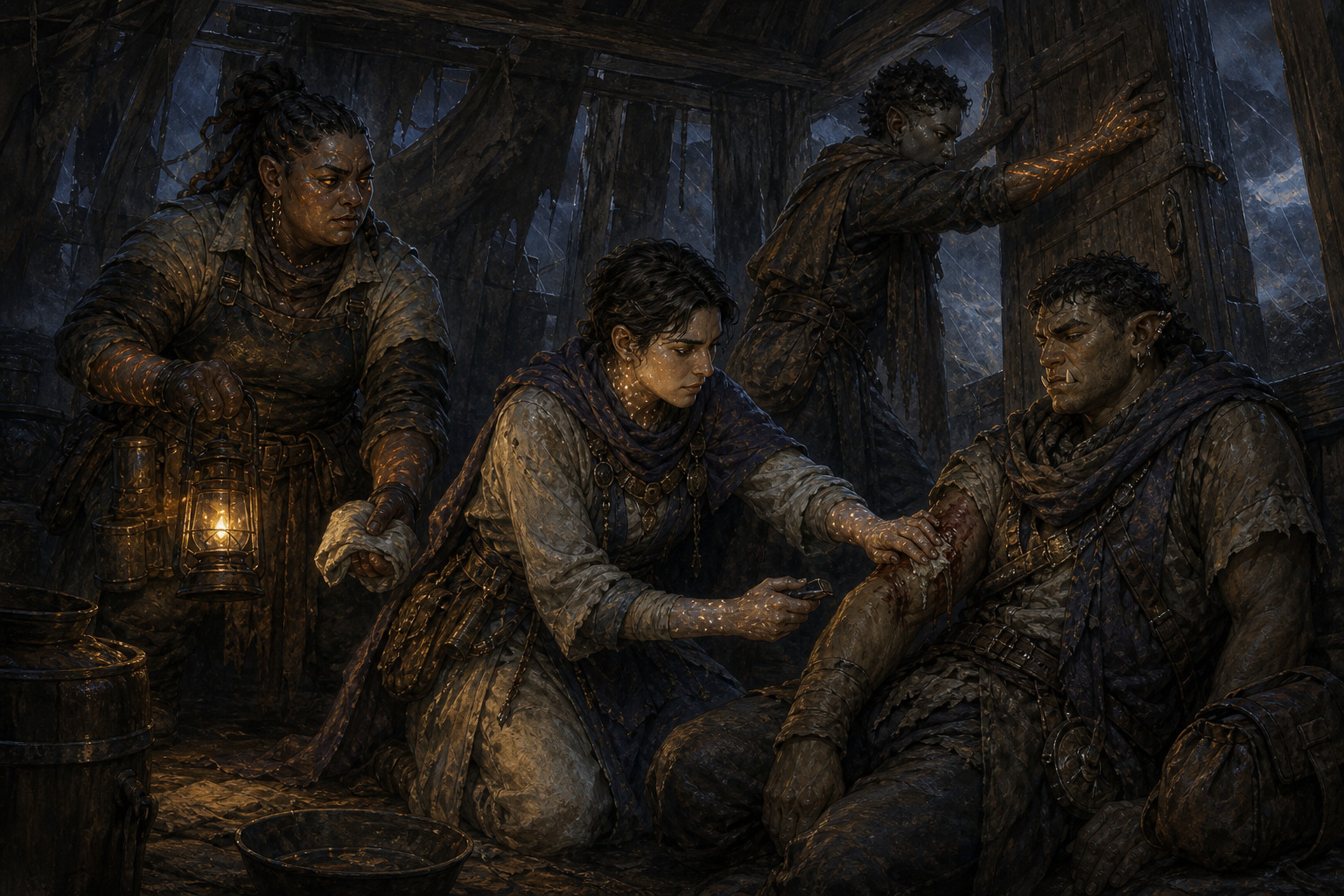
Guardianship, first and mostly. Standing where the harm is going to land. Holding a line around people who cannot hold one themselves. And then the unglamorous part that follows — stopping bleeding, steadying the shocked, keeping somebody alive long enough for ordinary medicine to have a chance at them.
And the observances, which is the part outsiders see. Every settlement keeps a set of rites for the Wanderer it lives on, and somebody has to hold them: on the day, in form, in front of whoever turns up. This is civic work rather than private devotion — done for a community, on its behalf, by a person the community can hold responsible for it.
Most Wardpriests would tell you these are not two jobs. Keeping a place going and keeping its people whole are the same work at different distances.
Where the Wardpriest draws is the same living Pulse a Pulsewalker moves in time with. They just reach it from a different direction — through rite and observance rather than trained form.
#What it costs you
Intercession costs exposure and responsibility, much of it accepted for other people.
To intercede is to accept the thing you are intercepting. You take the exposure, you commit where you will be standing next, and the harm you turned aside from somebody else has to go somewhere. To name a boundary is to be answerable for everyone who has stepped behind it — and they will step behind it, whether or not you invited them.
Tending the living costs time, closeness, and real materials, in the middle of whatever else is happening.
And none of it makes you enough. You cannot build a wall that holds. You cannot return the dead or regrow what is gone. You are one person who can be in one place, and there will be days with more than one place needing you — and you will choose, and live with having chosen.
#How it is learned
Apprenticeship, most often — attached to a keeper of observances and taught the forms in order, because a rite performed nearly right is a rite not performed.
Inheritance, in places where an office runs in a family and a child grows up knowing the calendar of it before they know what any of it is for.
Recognition, where a settlement that needs one names somebody who was already doing the work. This is commoner than the traditions like to admit, and produces some of the best of them.
#What it is not
Devotion is optional. Some Wardpriests are deeply so. Others hold the observances the way an engineer holds a maintenance schedule, and the rites do not appear to mind either way.
The office is not the Practice. A Wardpriest stripped of an office, exiled, or simply traveling far from anyone who recognizes them is still a Wardpriest — they have lost the office, its duties, and the standing it carried, but kept the Practice. A settlement lends that standing, and it can take it back.
And it does not carry a settlement on its own. A Wardpriest's rites are one part of a much longer cycle, kept from one end while the funerary traditions keep it from the other. Neither substitutes for the other, and no failure of any one office simply causes a titan to stop.
A Wardpriest keeps motion and covenant. A Songweaver works at the return of essence — the other end of that same cycle. They are complementary, not interchangeable, and a settlement that has one still wants the other. For the funerary side of the cycle, see VIII. The Songweaver.
#The opening methods
Warding Intercession. Getting focus, body and covenant mark between an ally and something about to reach them — reducing it, turning it, or taking a share of it yourself. It builds no wall and grants nobody immunity, and it does nothing about harm already done.
Mend the Living. Touch, focus, and ordered care, to arrest immediate harm and get a living person functional again. It does not return the dead, regrow what is destroyed, or remove consequences. It buys the time that rest, surgery, and alchemy need — it does not replace them.
Consecrated Rebuke. Naming a boundary aloud and driving focused Pulse through whatever crosses it with hostile intent — staggering it, driving it back, harming it. It reaches only what crosses the line you named. It consecrates no ground permanently and compels nobody's belief.
#The ways people name
The Keeper of Observance holds a settlement's calendar and answers for it. The Ward of the Threshold works boundaries, doorways, and the edges of places. The Hand does close care and little ceremony. The Circuit Priest serves several small places that could not each keep one.
These names describe where the work has settled, not ranks. A Wardpriest may be civic, itinerant, care-centered, or consumed by the argument over what a settlement owes its Wanderer.
#What remains unanswered
The covenant rites are old, and nobody can demonstrate what they do.
That a Wanderer's Pulse is sustained by the return of essence is observable. That a settlement's observances are part of how that works is believed, argued for, and never proven — and the Wardpriests keeping them at three in the morning in bad weather are aware, generally, that they are taking it on trust.
They keep them anyway. That is more or less the discipline.
#The Practices — VII. The Wildcaller
#The Practice of keeping faith with the living hide
#What passage costs
The hedge opened before the fire reached us. It closed behind the last cart. At dawn our guide turned back with three waterskins and every able hand she could shame into following. Not to thank it, she said. To repair what our lives had cost. — a line from a refugee tally
#What it actually is
The country on a Wanderer's back is alive at every scale. Forest rises from moss. Roots grip old ridges. Burrowing things turn the soil above cities that will never know their names.
A Wildcaller does not rule that life. They become someone it has reason to answer.
That takes years. They clear rot without stripping healthy growth. They learn which nests can bear disturbance and which should be walked around. They return after storms, fires, bad harvests, and other people's carelessness. Knowledge begins the Practice. Reliability makes it work.
When the hide answers, it uses only what is there. Root may tighten. Thorn may bend. A creature may intervene or offer the one thing its body does better than yours. Plant life and wildlife can each answer any of the Practice's methods when the particular life can provide what is asked and the Wildcaller has standing to ask it. None of this reaches the Wanderer beneath. The relationship is with the country, not the titan carrying it.
#The Unbreakable Bond
One life comes with the Wildcaller.
It might walk beside them. It might grow in a case, root through a cuff, sleep beneath a collar, or wait as a seed through years of wrong country. What matters is not its shape. The Wildcaller has kept faith with this particular life long enough for each to be changed by the other.
That is the Unbreakable Bond. It is not ownership, obedience, or a list of powers. It is the one relationship distance cannot take away and another practitioner cannot cut apart.
The danger comes from inside it. A bond repeatedly used and never tended will fail. There is no violent breaking and no final warning. The answer simply becomes less certain until, at last, there is none.
The bond is why the Practice can leave open country. A bare room may offer nothing, but a Wildcaller who has guarded the bond has brought one living answer through the door.
#What it costs you
Life that changes for you must recover from the change.
Roots tear when they hold a body. An animal tires or risks injury when it intervenes. Thorn bruises when it lies flat beneath a cart. A borrowed sense leaves its source strained. Even a clean passage can damage or expose the life that made it possible.
The debt is paid in ordinary work: water, food, shelter, pruning, binding, hours spent with both hands in damaged soil, and the judgment not to ask again too soon. Danger may justify borrowing against that work. It never cancels it.
Ignore the debt and the Practice does not punish you. The relationships do.
#How it is learned
Most Wildcallers begin where living ground is already part of daily labor: forest settlements, hide farms, caravan gardens, survey camps, and communities responsible for a stretch of country.
A teacher can show what to watch and stop a student from mistaking appetite for permission. The rest is repeated care. A person can memorize every species on a ridge and remain a stranger to it.
The bond comes when one relationship outlasts instruction. It cannot be assigned on a timetable.
#What it is not
The Practice creates no life and calls none from elsewhere. It works through the plant life, wildlife, or living bond actually present.
It gives no authority over unrelated life, weather, minds, or Wanderers. Knowing one creature or growth intimately grants no claim on another.
It also does not turn care into payment for obedience. Standing makes a request possible. It does not make an answer certain.
#The opening methods
Rouse the Hide. Ask present plant life or wildlife to seize a threat: roots catch ankles, vine pulls at a weapon, an animal harasses a weapon hand, or the bond bars one narrow line. The answer may harm, entangle, disarm, or hold only while that life can sustain the effort. It creates or summons no life and leaves disturbance the Wildcaller must later tend.
Borrowed Adaptation. Express one structural, sensory, chemical, or metabolic adaptation the bond actually uses: a wolf's scent, a hawk's distance sight, a squirrel's balance, ivy's grip, bark's resistance to abrasion, or a desert plant's water retention. One adaptation, translated to the Wildcaller's body and scale—not the whole organism and not an imagined best version of it.
The adaptation brings its limit with it. Distance sight can lose close detail. Scent does not charm. Adhesion adds no strength to hold unlimited weight. Water retention does not replace water. Protective tissue covers what it can cover; it does not turn the body into armor.
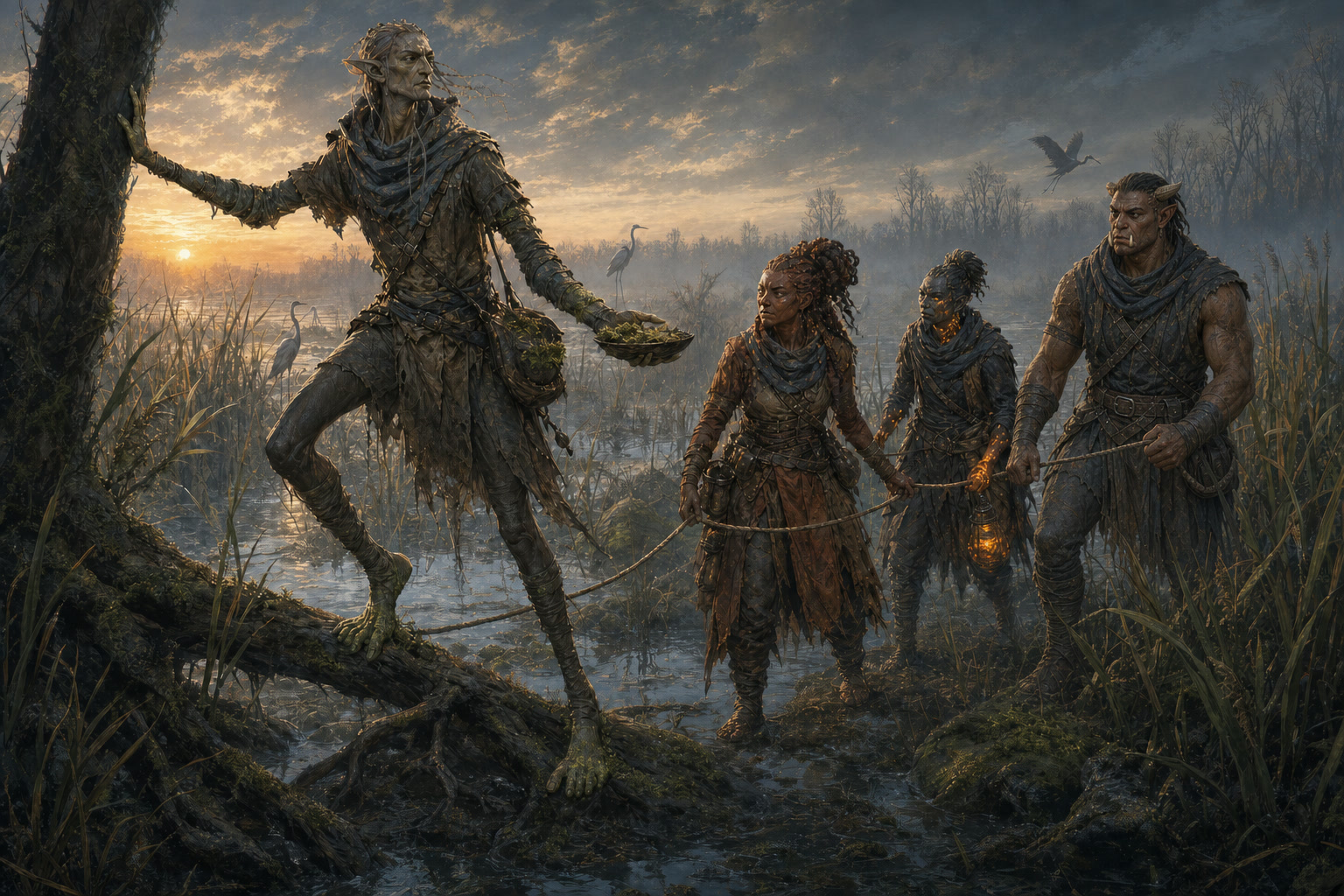
The Offered Path. Ask present plant life or wildlife with which the Wildcaller has standing to yield or disclose one physically possible passage. A woven hedge loosens. Reeds expose firm ground through a marsh. Roots lift enough to turn a sheer bank into a climb. Local wildlife reveals an existing trail, crossing, shelter, or line the Wildcaller had not perceived. The way lasts for the declared crossing and for willing companions who take it.
It ends when the passage is complete, the living pattern changes, the Wildcaller abandons it, or the relationship refuses. It moves no bare stone, gives wildlife no knowledge it does not possess, creates no missing bridge, promises nothing about danger beyond the route, and compels nobody to follow.
#The ways people name
A Hidewarden answers for one country over decades. A Bondkeeper builds a life around a few particular living relationships. A Green Guide earns standing in unfamiliar country and spends it bringing others through. Some work failing ground and become healers to an ecology their neighbors notice only when it is gone.
These names describe where the work has led. They are not ranks or paths chosen at the beginning.
#What remains unanswered
The living hide is not the Wanderer. Every useful distinction in the Practice begins there.
The difficulty is deciding where the distinction ends. Roots enter cracks. Moss feeds on heat no surface fire made. Old ecosystems move in rhythms that may belong only to weather—or may not.
Wildcallers study those signs. They do not claim the answer.
#The Practices — VIII. The Songweaver
#The Practice of carrying a return through voice

#The line that ends
When the last verse ended, everyone in the room drew breath together. Mara did not. That was when I understood the singer had not come to call her back. — from a daughter's account
#What it actually is
A Songweaver begins with permission.
When a person dies, their essence returns to the Wanderer's Pulse. Funeral and remembrance rites give that return form: a sequence kept by the living while the dead pass beyond anyone's ability to follow. A Songweaver performs at that boundary.
The rite takes a small real toll. It remains a net good for the Pulse and the community, but it is not free. Contact with the return changes what the performer's voice can carry afterward. A low verse can make that carried weight resist a living body's movement. A cutting phrase can break a hostile working. A sustained line can help a failing body hold one function through the distance to safety.
Songweavers do not measure what remains with them. A song is not a vessel being emptied note by note. The Practice is sustained by continued participation in legitimate rites, communities, and the responsibilities that come with both.
#Who may authorize the rite
The answer belongs to the culture whose dead are being tended.
Authority may rest with the dying person, a family, a community, a civic or religious office, customary law, or another body people recognize. Traditions disagree. The Practice imposes no single procedure across them.
It does impose the need for standing. A technically correct rite performed without it may be desecration, theft, corruption, or crime. Skill does not make permission unnecessary.
#What it costs you
A full funeral or remembrance performance leaves the practitioner with Spent Voice.
Ordinary speech remains. Voice-work does not. Meaningful rest and care restore it over days, and trying to force another working does not deepen the condition or get around it.
Shorter workings do not install Spent Voice merely because they are difficult. Their cost is immediate: breath, attention, and position. A Songweaver at work can be heard. One sustained line prevents another. An enemy rarely needs help deciding whom to interrupt.
#How it is learned
The verses often pass through families, but blood is not the rule. Apprentices enter by carrying water, keeping names, watching rooms, and learning when silence matters more than a beautiful line.
There is no universal guild and no single funeral order. A teacher passes on discipline rather than one culture's ownership of the dead: secure permission, keep the form, assist the return, take no more than the rite permits, and never confuse an impression with proof.
#What it is not
Songweaving does not prove that identity, memory, personality, or consciousness survives in returned essence. A voice may produce an impression. That impression authenticates nothing.
It does not return the dead, preserve them inside a performance, or deny the Pulse what is returning to it.
It is not required for every safe death. Communities without a Songweaver are neither abandoned nor doomed.
#The forbidden draw
A practitioner can reach for essence during the death itself, before rite, permission, or proper return. The force comes quickly because it has not been ordered. The harm follows for the same reason.
The act robs the Pulse and violates the person and community whose authority was bypassed. At extreme scale it may contribute to lasting Wanderer injury, dormancy, or worse, but no catastrophe is automatic and no one transgression explains every Stillness.
Songweavers do not teach this as a dangerous fourth method. They organize against it.
#The opening methods
Each method requires voice and is blocked by Spent Voice.
Burdening Verse. Hold a low return-bearing verse against one living subject within clear hearing. The toll carried in the line settles as resistance through gross movement: starting, stopping, turning, rising, advancing, withdrawing, and being displaced all become harder.
Against a resisting subject, the verse can impede pursuit, escape, or rapid repositioning. A willing subject may accept the same burden to hold their footing against forced movement. The burden does not favor them afterward; if they try to move while the verse remains, it resists them too.
The Songweaver must sustain the line and cannot perform another voice-work. It alters no mass or gravity, acts on no object or dead body, compels no sorrow or choice, and guarantees nobody will remain still. Break the voice, the hearing, or the Songweaver's attention and the burden ends.
Dissonant Verse. Drive voice or instrument into a hostile rhythm and break it. The phrase may land as resonant harm, interrupt a working, or disrupt the coordination of a few opponents who were relying on the same cadence. It controls no mind, compels no emotion, extracts no truth, and has no effect on the Wanderer.
Sustaining Verse. Set one Pulse-bearing line against an immediate failure in a living subject's body. The verse supports one function the body is already struggling to maintain: close and stanch a fresh external wound, temper exhaustion for one necessary exertion, stifle pain enough to preserve control and awareness, steady breath or consciousness through shock, or hold another still-living function through the distance to safety.
It is support, not cure. The Songweaver must sustain the line and the subject must remain within clear hearing. Injury, exhaustion, and pain remain real; exertion taken under the verse may deepen them. The verse can preserve usable strength, voluntary control, or awareness, but it cannot create the subject's will or decide what they do. It restores no lost blood, repairs no internal bleeding, organ, bone, or destroyed tissue, purges no poison, compels no action, and guarantees neither consciousness nor survival. Clotting already achieved remains when the verse ends. Everything else returns to the body's unsupported state and still needs care.
#The ways people name
A Herald turns voice toward the living: warning, interruption, public memory, and the moment a room must answer. A Dirge tends return, mourning, the carried toll, and the exact obligations of rite. The names mark emphasis, not rank or a choice made at the beginning. Most Songweavers cross between them whenever the work requires it.
#What remains unanswered
Songweavers know that essence returns. They know a proper rite helps and exacts a toll. They know a voice touched by that work can change what happens among the living.
They do not know whether anything recognizable travels with the return. The Practice's oldest rule is also its most honest: never turn what a song makes you feel into proof about the dead.
#Eight Practices, one person
The eight Practices describe learned ways of acting. They do not divide the world into eight kinds of people.
A Warblade may know funeral songs. A Songweaver may have spent twenty years repairing harness. A Sagebound may be the best negotiator in the company, and a Shadowhand may be the one everybody trusts with a frightened child. Practice gives the character methods. History supplies the rest.
That distinction matters in the chapters ahead. Competency records what this particular person has demonstrably learned. Character Discovery begins with who they are, then finds the Practice, Competencies, relationships, possessions, and unfinished questions their life can support.
There is no correct company arrangement and no Practice the game requires someone to take. Choose the person worth following. The world will tell you what that choice can do.